Nationwide survey reveals fresh insights about community perceptions of large-scale solar
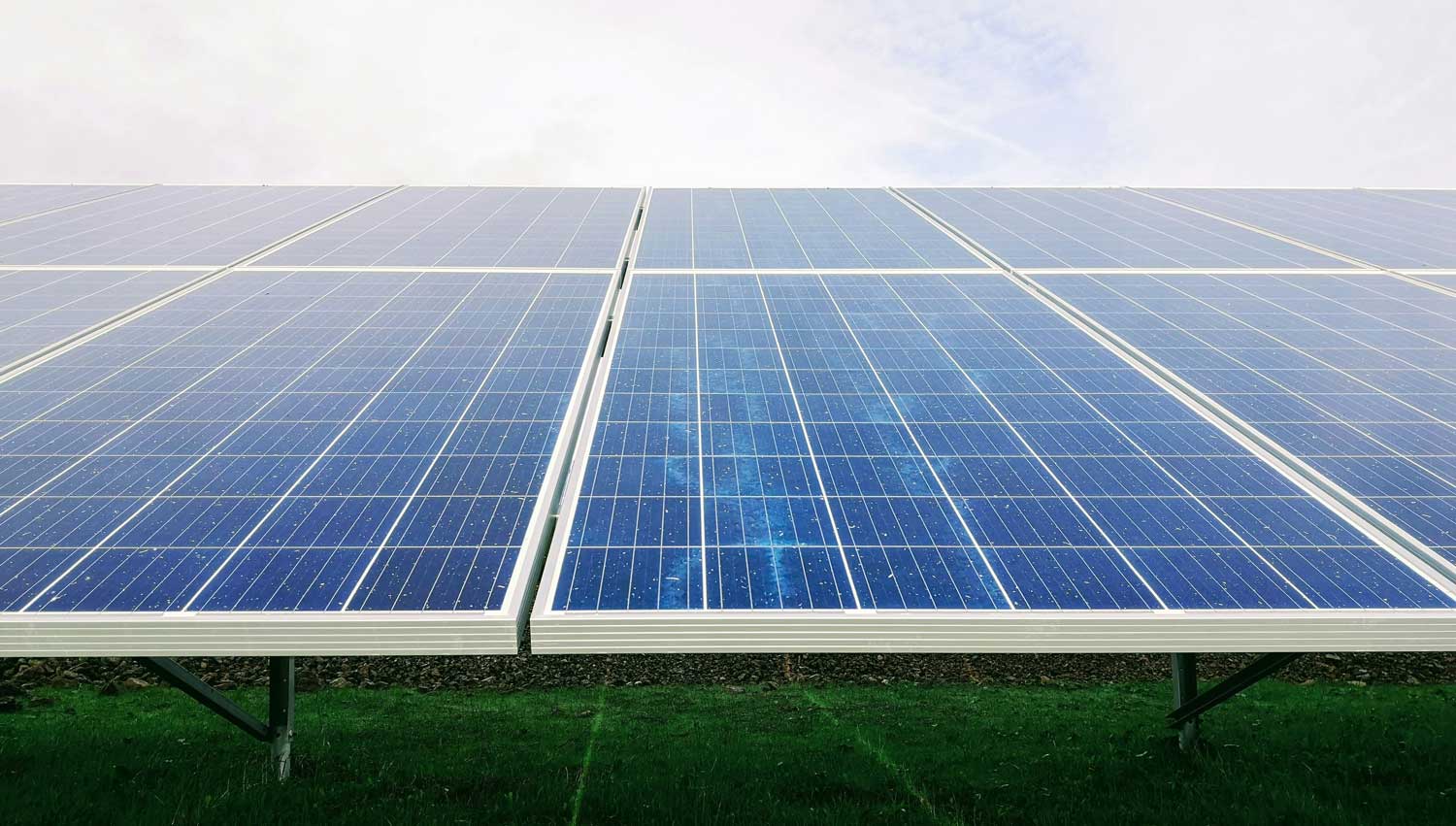
Among residents living within 3 miles of large-scale solar energy developments, positive attitudes about the projects outnumbered negative attitudes by a nearly 3-to-1 margin, according to a new survey of nearly 1,000 large-scale solar neighbors across the United States.
The nationally representative survey, led by Berkeley Lab and including University of Michigan researchers, sheds light on community perceptions of large-scale solar projects. For the study, a large-scale solar project was defined as a ground-mounted photovoltaic system that generates 1 megawatt or more of direct current.

“We’re encouraged by the generally positive responses from residents living near large-scale solar projects, but the survey also reveals opportunities to better incorporate resident preferences during the planning process,” said Karl Hoesch, co-investigator and researcher at the Center for EmPowering Communities, a program of U-M’s Graham Sustainability Institute.
Among those surveyed, positive attitudes are more common in residents living farther from large-scale solar projects than in those living nearer. The largest projects tend to provoke negative attitudes, while projects under 100 megawatts—those requiring less than roughly 600 acres or 1 square mile—tend to receive mostly positive responses.
Factors like aesthetics, economics and perceptions of fairness in the planning process strongly influenced attitudes.
While 42% of respondents support additional large-scale solar projects in their community compared to 18% who oppose them, respondents favor disturbed sites such as landfills over forests and farmland for future large-scale solar projects.
Residents largely oppose increased state-level decision-making on future large-scale solar siting, preferring increased opportunities for community participation and feedback. They also expressed a preference for local hiring, procurement and ownership.
For reliable information about what impact a proposed project might have on their community, residents trust existing energy project neighbors, community organizations and university staff.
Despite a high prevalence of large-scale solar projects, more than 80% of respondents were unaware of their local project before construction and a third remained unaware until surveyed, leaving room for improvement in informing and engaging project neighbors to enhance awareness and participation.
“Our findings underscore the importance of local engagement and transparency in the development of solar projects. To ensure the energy transition proceeds with equity and justice, it is crucial to understand and acknowledge community preferences and foster inclusive decision-making,” said co-investigator Sarah Mills, director of the Center for EmPowering Communities.
The survey marks the first nationally representative study of large-scale solar neighbors, providing valuable insights into community perceptions. Further analysis is planned to better understand influencing factors and equity concerns.