COP30 climate conference in Brazil: U-M experts available to comment

EXPERTS ADVISORY
Negotiators from nearly 200 countries have gathered in Belém, Brazil, for the annual international climate change conference—known this year as COP30—in an effort to advance global climate solutions. University of Michigan experts are available to comment.
CLIMATE ACTION
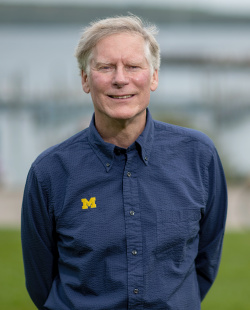
Jonathan Overpeck, professor and dean of the School for Environment and Sustainability, is an expert on climate and weather extremes, sea-level rise, and the impacts of climate change and options for dealing with it. He served as lead author on the authoritative Intergovernmental Panel on Climate Change 2007 and 2014 reports.
“COP30 needs to continue the acceleration of climate action globally in several important ways. The first is to be clear that the goal of global decarbonization is more important than ever, and that every country needs to increase efforts to transition to low-carbon energy. The second is to strengthen efforts by wealthy countries who have contributed the most to climate change to help low- and middle-income countries decarbonize their energy systems and mobility. And the third is for wealthy countries to increase their ‘loss and damage’ funding to help low- and middle-income countries recover from the increasing rate of disasters due to the global climate change they did little to cause.
“Despite a new fossil fuel-friendly administration, the U.S. continues to deploy low-carbon energy and mobility solutions. These solutions are becoming more affordable and less polluting than fossil fuels everywhere around the globe, and COP30 needs to make it clear that the nations of the world are committed to halting climate change and helping those who need assistance. Climate action must continue to accelerate even more starting with COP30.”
Contact: [email protected]

Jennifer Haverkamp, professor from practice of law and public policy, recently retired as director of the Graham Sustainability Institute. She was an ambassador and special representative in the U.S. Department of State during the Obama administration, where she led U.S. negotiating teams to successful climate agreements under the Montreal Protocol and the U.N. International Civil Aviation Agreement. Her areas of expertise include climate change diplomacy and negotiating dynamics, short-lived climate pollutants such as methane and hydrofluorocarbons, and issues at the intersection of climate change and international trade and competitiveness.
“As always, financing climate action—by whom, by when and how much—is a central issue for this COP. The Brazilian hosts want an agreed road map for implementing last year’s commitment of $300 billion per year—a heavy lift as the global economy shudders from trade wars and the U.S. has shuttered its international aid program. It’s actually good that the Trump administration isn’t sending a high-level delegation, seeing how they’ve worked to undermine a landmark climate agreement at the International Maritime Organization and teamed up with the Saudis to torpedo a global plastics treaty. The U.N. has a much better shot at advancing its climate agenda without saboteurs at the table.
“Set in the heart of the Amazon, the Belem COP’s success will also hinge on Brazil’s ability to launch its Tropical Forests Forever Facility, designed to compensate countries for preserving tropical forests. Keeping those trees standing—and their vast carbon stores from being released—is critical to avoiding the worst impacts of climate change.”
Contact: [email protected]
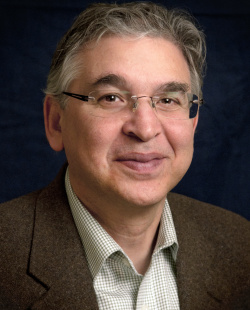
Greg Keoleian is a professor of environment and sustainability and co-director of the Center for Sustainable Systems and of MI Hydrogen, U-M’s hydrogen initiative. He develops life-cycle models to analyze decarbonization pathways and accelerate sustainability solutions for clean energy transitions, alternative vehicle technologies, buildings and infrastructure, and food systems.
“Lack of participation by high-level officials from the White House is irresponsible and represents a major setback for COP30 and climate action. Climate change is a global threat and requires international cooperation and trust. The Trump administration withdrew from the Paris Agreement and has attacked multiple policies that curb climate pollution. Deeply rooted in the president’s false declaration that ‘climate change is a hoax,’ there has been a major assault on science-based policy and climate action. Challenges to the Endangerment Finding, termination of EV tax credits and stoppage of offshore wind farm developments highlight just a few examples.
“Despite the White House’s alarming actions, industry, state and local governments, NGOs, communities and individual households are continuing to play a vital role in implementing solutions to curb climate pollution. These stakeholders are continuing to stand up for climate along with the other national governments committed to COP30.”
Contact: [email protected]
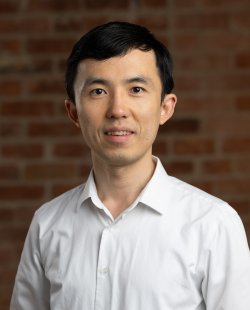
Kai Zhu, associate professor of environment and sustainability, examines the ecological responses to climate change, with a particular focus on biodiversity. His recent study highlights the rapid shifts in grassland communities driven by climate change, offering crucial insights for restoration strategies and conservation efforts in these ecosystems.
“This past year, we have witnessed record-breaking heatwaves, wildfires and floods, which highlight that climate change is not a distant threat but a present-day crisis. To tackle these escalating impacts, we must urgently focus on both mitigation (reducing emissions and conserving carbon-storing ecosystems) and adaptation (supporting communities and biodiversity in adjusting to rapidly changing conditions). Scientific evidence demonstrates that healthy, resilient ecosystems play a crucial role in both strategies. It is more important than ever to invest in solutions that protect both nature and people, ensuring a sustainable future as climate risks intensify.”
Contact: [email protected]
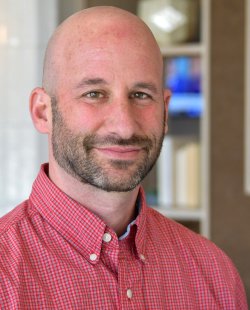
Mike Shriberg, professor of practice and engagement in environment and sustainability, directs the U-M Water Center. He is an expert on environmental policy and planning, with a focus on the intersection of water and climate issues.
“The way many people in the region and around the world are experiencing the impact of climate change is through changes in water access, availability and variability. Our water cycle is changing rapidly, leading to increasing flooding, drought and other forms of extreme weather. The impacts for people, communities and wildlife are extreme.
“The COP process represents our best chance to turn the tide globally and to head off the increasingly severe water-based impacts of climate change. While we can’t stop the changes already taking place and those already destined to happen due to current emissions, we can lower the consequences and move toward a more resilient and equitable future through making and following through on global commitments to reduce pollution and fund adaptive measures.”
Contact: [email protected]
ARTIFICIAL INTELLIGENCE AND ENERGY DEMAND

Mosharaf Chowdhury is an associate professor of computer science and engineering and principal investigator of the ML Energy initiative, a research group focused on understanding the energy consumption of artificial intelligence and making AI systems energy-optimal so that they can scale responsibly and sustainably. He can talk about how current trends in AI and data center development are impacting emissions goals, as well as solutions that could reduce AI’s energy demand.
“AI is advancing rapidly, and the development is unlikely to stop given the potential benefits that some people think AI could provide. We need to make sure we are making AI as energy-efficient as possible so that it can run without consuming a huge amount of resources. My group has already found inefficiencies hidden in current AI training methods, and correcting them can reduce the energy demand by up to 30% without impacting training speed and accuracy. We are continuing to find new ways to help keep AI’s energy demand as low as possible.”
Contact: [email protected]
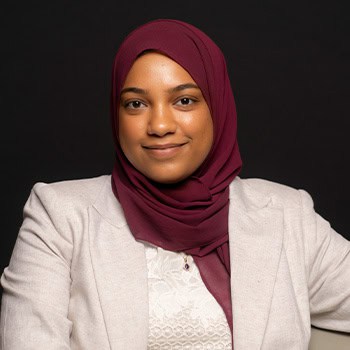
Rabab Haider, assistant professor of civil and environmental engineering, researches methods to optimize and plan power systems, motivated by the influx of renewable energy resources and growing energy demand from data centers, industrial manufacturing and the electrification of transportation and heating. She can address how AI could help keep the grid running smoothly despite increasing demand, as well as the negative consequences of data center development.
“There’s a lot of potential for AI to have a positive impact on society, but the question is ‘Are we using data centers for positive impact?’ We can do so many powerful things with AI, so let’s invest in those uses. I don’t know that all of the powerful companies in this space are finding good uses for AI and prioritize social good and equitable outcomes over profit.
“The unprecedented load growth from AI data centers comes at the same time where we are struggling to reduce emissions from electricity generation and update old power grid infrastructure. The need for more power means we are delaying decommissioning high-emitting coal plants, fast-tracking new fossil-fuel generators onto the grid, and potentially looking at more generation located on-site at data center complexes. But this challenge also presents opportunities for innovation and research, and to translate them rapidly into impact on the ground. Our energy systems have to be sustainable, reliable and affordable for all people—and we can get there, but we have to work together and align our priorities.”
Contact: [email protected]
STORM TRACKING AND DISASTER RESPONSE

Chris Ruf is a professor of climate and space sciences and engineering and principal investigator of the Cyclone Global Navigation Satellite System, a NASA mission that launched in 2016 to study how hurricane forecasting can be improved by measuring wind speed over the oceans. He can discuss how hurricanes have been intensifying much more rapidly in recent years due to unusually high sea surface temperatures, and how satellite constellations can provide better warnings.
“It is especially important to monitor the growth of hurricanes as often as possible because they are intensifying more rapidly. Constellations of satellites drastically reduce the time between measurements from several days, for a single satellite, to three to four times per day, with CYGNSS. The more frequent observations have been shown to improve forecast accuracy for hurricane intensity and track, providing improved warnings about the location and strength of a storm as it nears landfall.”
Contact: [email protected]

Sue Anne Bell is an associate professor of nursing, whose research focuses on the long-term impact of disasters on health and public health emergencies, particularly among older adults. She is clinically active in disaster response through the U.S. Department of Health and Human Services National Disaster Medical System.
“At COP30, there is a critical opportunity to bring attention to the role of the global health workforce as a frontline defense against the climate crisis. Public trust depends on directly addressing disinformation in order to steer outcomes in a positive direction, something health care providers are well positioned to do. Keeping evidence and science at the forefront is essential to build healthy, resilient communities and sustain meaningful progress.”
Contact: [email protected]
ENVIRONMENTAL JUSTICE
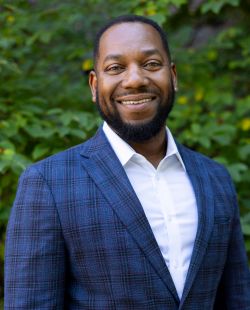
Tony Reames, associate professor of environment and sustainability, founded the Urban Energy Justice Lab and the Energy Equity Project and currently serves as director of the U-M SEAS Detroit Sustainability Clinic. His research centers on advancing fair and equitable access to affordable, reliable and clean energy, and on examining the root causes and persistence of energy disparities across race, income and geography. Prior to joining U-M, he was a presidential appointee in the Biden administration, serving in several senior roles within the U.S. Department of Energy, including deputy director for energy justice.
“The hope for climate and environmental justice activists and advocates is that COP30 becomes a real opportunity to translate pledges into real action. COP30 appears to be making climate and environmental justice central themes, focusing on community-led adaptation, increased financing, the protection of environmental defenders, and greater inclusion and participation of marginalized communities, Indigenous peoples and civil society in climate negotiations and decision-making.
“The Justice and Human Rights thematic day at COP will continue the growing emphasis on integrating justice and human rights into climate action discussions. Although the U.S. government has pulled back from climate action and environmental justice under the Trump administration, these issues maintain salience on the global stage. Despite this shift in federal posture, the hundreds of state and local leaders and other attendees representing the U.S. will highlight that many Americans and decision-makers remain committed to climate and environmental justice aligned policies.”
Contact: [email protected]

Ana Paula Pimentel Walker is an associate professor of urban and regional planning. She investigates how disenfranchised communities engage with urban governance and evaluates the significance of participatory institutions in planning socially and environmentally just cities. Her research has been funded by the U.S. National Science Foundation and the Foundation for Urban and Regional Studies.
“The ‘Peoples’ Summit’—Cúpula dos Povos—is a parallel event to the official United Nations climate conference, COP30. This summit serves as an essential platform for marginalized communities to advocate for climate justice, especially those who are adversely affected by climate change. Participants include urban populations living in peripheral areas who face significant challenges in securing resilient housing and developing sustainable neighborhoods, particularly in informal and often precarious settlements.
“The pre-COP meetings held in Brazil focused on sharing innovative solutions to displacement caused by climate change and the adaptation and mitigation policies associated with it. Discussions centered on implementing green infrastructure, making strategic housing investments, and promoting grassroots initiatives for climate action. Various community-led initiatives in the energy, water and construction sectors were shared during these meetings. However, the question remains: Will these voices and their insights be included in the decision-making process when government officials convene?”
Contact: [email protected]
NUCLEAR ENERGY
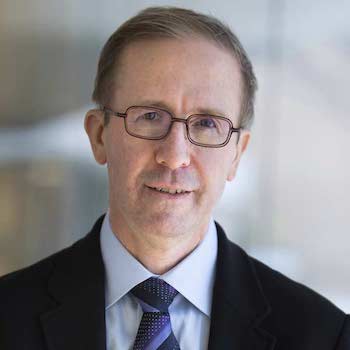
Todd Allen is professor of nuclear engineering and radiological sciences, director of the Fastest Path to Zero Initiative and co-director of MI Hydrogen. He can discuss the role of nuclear power in the ongoing global energy transition.
“The international community’s support for nuclear energy deployment is extremely strong as countries look for energy security with sources that are clean and affordable. The range of new technologies and business deployment models being considered for nuclear energy is larger than ever and being considered in many countries for the first time. In this period of exuberance, we need to take special care to ensure only the best new technologies and business models become commonplace to ensure the safety, security and public acceptance of nuclear technology.”
Contact: [email protected]

Denia Djokić is an assistant research scientist in nuclear engineering and radiological sciences and member of the Fastest Path to Zero Initiative team. Her research focuses on the social, political and equity aspects of advanced nuclear energy technology and nuclear waste. She is project lead and co-author of the upcoming Science, Technology, and Public Policy report “The Reactor Around the Corner: Understanding Advanced Energy Futures.”
“There has been much debate, hope and anxiety about nuclear energy’s growing role in the transition to low-carbon energy systems since COP28, where over 20 countries signed a declaration to triple their nuclear energy capacity by 2050. If nuclear energy technologies—including small modular reactors—are to be seriously considered as a crucial component for achieving climate goals, governments, industry and civil society must work together to ensure that the growth of global nuclear capacity does not harm the world’s most vulnerable populations.
“Techno-optimistic attitudes make us think that nuclear energy could save us from accelerating climate change, and cause us to gloss over the potential negative implications of the expansion of nuclear energy. While nuclear energy could indeed be an important tool in meeting nations’ climate targets and energy security needs, we need innovative and responsible global, national and local governance frameworks to minimize the potential harmful impacts of widespread nuclear energy deployment.
“Specifically, international collaboration and national regulation should provide guardrails for nuclear energy to elevate the public interest over those of powerful nations and corporate actors, ensure sustainable local economic development, honor local and Indigenous knowledge, protect the environment and vulnerable communities along the nuclear fuel cycle, and ameliorate existing global disparities. Discussions around nuclear energy at COP30 should include, if not center, these considerations.”
Contact: [email protected]
SUSTAINABILITY AND SPORT
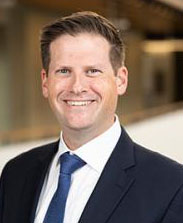
Brian McCullough, associate professor of kinesiology, studies the environmental impacts of the sport sector, sport spectator environmental behaviors and attitudes, environmental messaging and narrative for internal and external stakeholders, and fan engagement with a sport organization’s sustainability initiatives.
“The fight against climate change requires the collective effort of everyone on the team. And that includes the massive global enterprise of sport. At COP, we need to see a strong emphasis on the U.N.’s Sports for Climate Action Framework. It’s not just about one team or one event; it’s about a unified commitment across the entire industry. Sport has a dual role: to drastically reduce its own emissions, from sustainable supply chains to minimizing massive event travel, and to be an influential educator and mobilizer. When a favorite team or athlete speaks and acts, millions listen.
“Ticket holders, fans, sport participants, local sport organizations, athletic departments, professional organizations and sport venues and events have a part to play. This platform enables climate action to reach an audience that may not otherwise be receptive to such messages by relating abstract concepts in practical and tangible ways. These messages have an impact and inspire change that will help preserve the natural environment, ultimately protecting and preserving the sports we love to watch and play.”
Contact: [email protected]