2026 Olympic Winter Games: U-M experts available

EXPERTS ADVISORY
University of Michigan experts are available to discuss the 2026 Winter Olympic Games in Milan and Cortina d’Ampezzo, Italy, Feb. 6-22.
FACILITIES

Judith Grant Long, associate professor of sport management and of urban and regional planning, has studied venues used for the Olympic Games, FIFA World Cup and major league sports in North America, as well as golf, tennis and auto racing. Her research emphasizes the complex trade-offs hosts face when planning, financing and building large-scale sports facilities.
“In the years since hosting the Winter Olympics in 2006, Italy has watched cities like Vancouver, Sochi and Pyeongchang grapple with the lasting impact of Olympic venues and infrastructure,” she said. “Vancouver’s focus on multiuse sites set new standards for community legacy. Sochi’s approach, by contrast, involved extensive new construction at enormous cost, leaving many venues struggling to find a purpose once the games ended.
“Pyeongchang tried to sidestep long-term underuse by relying heavily on temporary Olympic structures, but this strategy came with substantial expenses for both construction and removal. As Milan and Cortina d’Ampezzo prepare for 2026, attention is on how venues—from the Mediolanum Forum in Milan to the sliding track in Cortina—can avoid the fate of underused or neglected facilities and genuinely serve the needs of their communities long after the Olympic torch is extinguished.”
On adapting Olympic venues for everyday use: “In Milan and Cortina d’Ampezzo, the real Olympic legacy will depend on how well venues like the Mediolanum Forum or the sliding track in Cortina are woven into the life of local communities after the games, whether that means hosting grassroots sports, public events or serving as recreational centers. The goal should be for these sites to be as relevant 10 years from now as they are during the Olympics.”
On public spending and long-term value: “The success of Milano Cortina’s Olympic investments shouldn’t be judged on two weeks of competition alone. Lasting value comes only if the estimated 6 billion euros spent on venues and infrastructure improvements continue to serve residents, local businesses and visitors decades into the future. Without a clear plan for ongoing public benefit, even the most spectacular spending loses its value.”
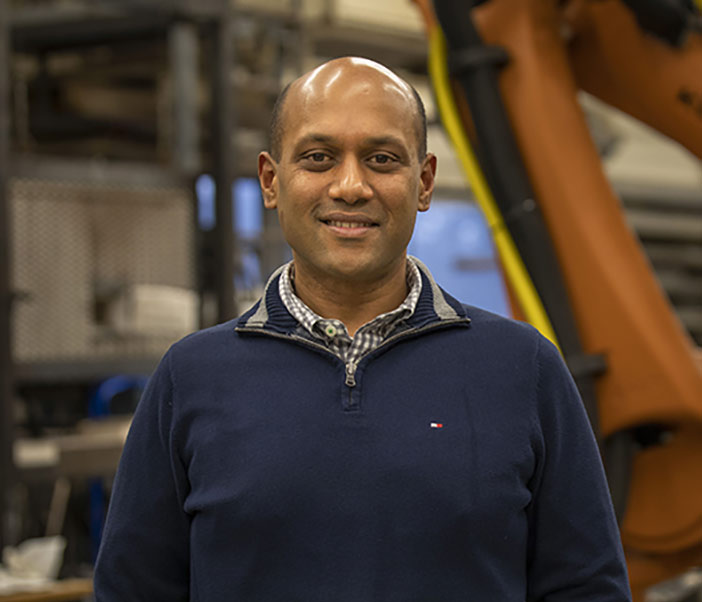
Vineet Kamat, professor of civil and environmental engineering, focuses his research on automation and robotics in the construction, operation and maintenance of civil infrastructure and the built environment.
On construction delays: “Major projects like the Milano-Cortina venues are especially vulnerable to delay when scope, governance and market conditions shift between the bid phase and delivery phase, and that appears to be what we are seeing with the Santagiulia hockey arena. Italy committed to a largely existing-venues model, but then added a few complex new builds late, under intense international scrutiny, in a post-COVID cost-and-labor environment that looks very different from 2019. In that context, a privately financed arena that did not break ground until 2023 was always going to face schedule pressure, especially once design choices around rink size, spectator capacity and temporary facilities had to be revisited in real time to reconcile Olympic requirements, NHL concerns and budget constraints. When you combine late starts, evolving technical specifications, fragmented responsibilities between public agencies and private developers, and a very hard deadline that cannot move, the result is what we see now: a venue that is structurally on track but still an active construction site only weeks before competition.
On ice venues: “Ice venues add another layer of complexity, because ‘substantial completion’ is not enough. You need very tight environmental control, reliable building systems and well-sequenced commissioning to deliver safe, consistent ice and functional back-of-house operations. The test events in Milan showed exactly what happens when construction, systems commissioning and event operations overlap too much: soft, snowy ice and even a hole in the surface, unfinished locker rooms, incomplete practice facilities, and ad‑hoc circulation and media areas. From a construction-management perspective, this reflects compressed schedules that force trades to work in parallel rather than in sequence, limited float for testing and fixing defects, and a deliberate choice to prioritize the ‘TV-facing’ core like rink, spectator bowl and basic hospitality, while deferring noncritical finishes and some surrounding infrastructure to the last minute. It is likely the hockey tournament will go ahead safely, as is common with many new major sports venues, but with venues that are operational rather than fully polished, illustrating how mega-events often trade long-term quality and resilience for short-term schedule certainty once they enter this kind of race-against-the-clock phase.”
ENVIRONMENT AND SUSTAINABILITY
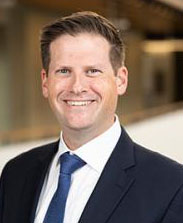
Brian McCullough, associate professor of sport management and director of the Center for Sport & Sustainability, studies the environmental impacts of the sport sector, environmental behaviors and attitudes of spectators, environmental messaging and narrative for internal and external stakeholders, and fan engagement with a sport organization’s sustainability initiatives.
“We find that sports can be a platform for social change and to engage broad audiences. As we approach the Winter Olympics, we know that winter sports are under threat, but that the IOC and event planners are making sustainable changes to reduce their environmental impact,” he said. “While sport is disproportionately impacted by its contribution to climate change, events like the Olympics provide strong platforms to influence sustainable behaviors while people attend the games, and these behaviors also carry over into their everyday lives after returning home.
“Our research clearly shows the power of sport to bring people together and convey important messages about protecting and preserving sport through messaging campaigns, whether to increase the use of public transportation, purchase carbon offsets for personal travel, or engage with on-site environmental initiatives such as recycling and food recovery efforts. The behavioral changes inspired by campaign messages also transfer over into spectators’ everyday lives. Considering this, the games have a powerful platform to promote more sustainable behaviors that will help protect and preserve the games, winter sports and sports in general.”

Shelie Miller, professor of environment and sustainability, is co-director of the Center for Sustainable Systems. She uses life cycle assessment and scenario modeling to identify environmental problems before they occur to help identify new, more creative solutions to avoid or reduce negative consequences.
“When it comes to these huge worldwide events, climate impacts must be weighed against the benefits of connecting across cultures to celebrate athletic achievement and the human spirit,” she said. “Since most of the climate impact comes down to travel, spectators can help reduce emissions by being selective when considering visiting multiple venues, taking advantage of Europe’s excellent train system rather than flying, and using public transportation over personal vehicles.”
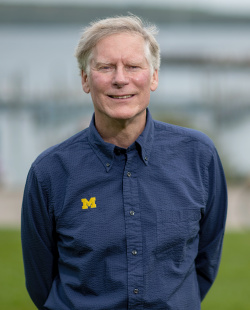
Jonathan Overpeck, professor and dean of the School for Environment and Sustainability, is an expert on climate and weather extremes, sea-level rise and the impacts of climate change and options for dealing with it. He served as lead author on the authoritative Intergovernmental Panel on Climate Change 2007 and 2014 reports.
“The Winter Olympics and outdoor winter sports have a big problem with worsening climate change and will have to adapt to what’s only going to get more challenging. Many favored winter sports locales are seeing shorter winters, less reliable cold and snow, and, sadly, more precipitation falling as rain,” he said. “A spreading dearth of snow will increasingly require winter sports enthusiasts to look to more northern, and higher altitude places to practice, compete and enjoy their sport. Hopefully, the rapidly falling costs of low-carbon energy will mean a faster end to climate change and a preservation of the winters we love, but people have to work harder to make this happen. Winters are at stake, but also so much more.”

Sara Soderstrom, associate professor of organizational studies and environment, is director of the Program in the Environment. She is also core faculty at the Erb Institute and co-lead of the Environmental Justice Humanities Hub. In her research, she focuses on how people inside organizations lead change efforts to address environmental and social issues and how businesses can develop solutions to critical global sustainability challenges.
“The Olympics provide a great opportunity to showcase how sports can engage with sustainability and climate change,” she said. “The International Olympic Committee has made sustainability commitments around its facilities and infrastructure, resource use and mobility that they work toward in each games, as well as across their network of sports organizations. They can lead in showing how they’re working toward climate and sustainability goals and spread these insights to all who participate in the games.
“Athletes have a unique platform to highlight environmental and social concerns that may be amplified in the Winter Olympics, where so many sports have been directly impacted by climate change. Athletes through sponsorships, social media and interviews can bring attention to impacts of climate change and sustainability efforts. They leverage the power of sport to make more people aware and help others see how they can engage in their own actions towards a more sustainable future.”
SECURITY

Javed Ali is an associate professor of practice of public policy and former senior U.S. government counterterrorism official.
“As the 2026 Winter Olympics in Italy draw near, there most certainly has been a significant amount of planning, coordination and effort involved from the U.S. government to ensure the American contingent will be well protected and that protocols are in place to respond to a crisis working in tandem with the Italian hosts if one such were to occur,” he said.
“The U.S. State Department has likely led such efforts these past months to oversee a wide range of activities in the run-up to the games—and has considered a range of threat scenarios. The 1972 Munich Summer Olympics attack against the Israeli athlete delegation still stands as one of the most infamous terrorist incidents in modern history. Since then, every Olympics has had to consider the threat of similar attacks by terrorist groups or even ideologically motivated lone offenders like in the 1996 Atlanta Summer Olympics, ones from potentially hostile nation states, and more recently, possible cyber attacks that seek to disrupt aspects of the games without causing physical damage.”
On ICE’s role at Olympics: “Based on past practice, the State Department’s Bureau of Diplomatic Security is the lead on-the-ground U.S. federal law enforcement element for high-profile events overseas like Olympic Games. There can also be other U.S. law enforcement agencies like ICE or FBI based on the types of missions or support required at any particular games, and their roles would have to be coordinated with the DS Bureau and the U.S. ambassador in country, in addition to the host nation’s law enforcement or security elements.”
RACE AND NATIONALITY

Doo Jae Park is a lecturer in sport management whose research interests include Asian racialization, identity politics, and cultural citizenship in contemporary sport and physical culture. In a recent study, Park and colleagues examined U.S. media portrayals of Asian-American Winter Olympians Eileen Gu and Chloe Kim.
“We found that U.S. media framed Chloe Kim as the embodiment of the American Dream, while portraying Eileen Gu as an ungrateful traitor for choosing to represent China at the Winter Olympics,” he said. “Yet, despite these different discourses, both athletes were still viewed through the lens of the model minority and perpetual foreigner stereotypes, which are racialized sentiments racializing Asian Americans. Our study shows that for Asian Americans, belonging in the U.S. is always conditional—highly dependent on national loyalty and athletic success.

NaRi Shin is an assistant professor of sport management whose expertise is focused on the field of sport and development, and in particular on sport and globalization, diaspora and cross-cultural interactions.
She can discuss athlete migration and athletes’ change of sporting nationality (naturalization); Asian American athletes on the U.S. Olympic Team; the geopolitics of the Winter Olympics; Individual Neutral Athletes at the 2026 Olympics; and diversity and representation within European and North American national teams.
“As we approach this Winter Olympics, we’re observing an important trend: at least 20 athletes competing have naturalized to represent countries other than their country of birth,” she said. “This pattern of athlete naturalization has grown markedly in recent years, particularly in the context of the Olympic Games. Increasingly, nations that are historically not strong in winter sports are recruiting talented competitors to bolster their national teams.
“While this might appear to enhance global representation, it often leads to a concentration of elite athletes in a handful of countries. Many of these athletes originate from winter sport powerhouses and seek Olympic opportunities elsewhere when unable to qualify for their native teams. This development challenges the diversity of the Olympic field, as it shifts the athlete pool rather than broadening it, raising important questions about the evolving nature of international sport and competition.”
DIGITAL TECHNOLOGY AND SOCIAL MEDIA

Michal Lorenc is a clinical assistant professor of sport management whose interests include sports marketing in the digital age (digital marketing, social media, video on demand, web-based content distribution and monetization).
“For decades, the Olympic narrative was curated primarily by traditional broadcasters, leaving athletes to hope their story would make the two-week prime-time cut. Today, the digital ecosystem has democratized that dynamic, shifting the power directly to the games’ competitors,” he said. “We have moved from an era of passive visibility to active community building, where athletes are no longer just engaging in a sporting event every four years, but are running 24/7 global media enterprises.
“This shift allows athletes to bypass traditional gatekeepers, build their personal brands and monetize their personalities in real-time, independent of podium results. The Winter Games now represent a critical window not just for medal hunting, but for launching long-term digital brands that sustain careers far beyond the closing ceremony. In this new landscape, the smartphone is as vital a piece of equipment as the snowboard or skates.
On niche visibility: “Many Winter Olympic sports (curling, luge, biathlon) struggle for airtime outside the games. Social media allows these athletes to educate fans and build personality-driven followings during the ‘off-season’ years.”
On global reach: “There is also the opportunity for borderless fandom or global reach. Unlike television broadcasts, which are geoblocked by region and limited by expensive rights deals, social media allows athletes to access a global marketplace instantly, allowing winter athletes to find and cultivate their specific tribe wherever they exist on the map.”
On real-time narrative authority: “Social media empowers athletes to tell their own story in the moment, regardless of the outcome. Whether celebrating a gold medal or contextualizing a heartbreaking defeat, athletes can frame their own experience instantly. This vulnerability deepens fan connection, proving that authentic engagement is often more valuable for long-term brand building than the result on the scoreboard.”
On monetization: “By owning their audience, athletes can create revenue streams (social media channels, merchandise, influencer sponsorships) that protect them from the ‘financial cliff’ that often occurs after the games end.”

Cliff Lampe, professor of information, researches the social and technical structures of large-scale technology-mediated communication, working with sites like Facebook, Wikipedia, Slashdot and Everything2. He has also been involved in the creation of multiple social media and online community projects, usually designed to enable collective action. He can discuss the social media platforms used during the Olympics.
PARALYMPICS AND SPONSORSHIP

Dae Hee Kwak is an associate professor of sport management and director of the Center for Sport Marketing Research. He can discuss corporate partners wishing to advertise with para-athletes during the Paralympics.
“With the exit of major long-term partners like Toyota, Panasonic and Bridgestone after Paris 2024, the Milano Cortina 2026 Paralympic Games face a narrative reset,” he said. “Emerging sponsors have a unique opportunity to define a new era of Paralympic branding that skips the ‘supercrip’ clichés.
“For years, sponsors have used para-athletes to signal ‘corporate heart,’ often sliding into ‘inspiration porn’ that treats disability as a tragedy to overcome. The 2026 Winter Paralympics represent more than just a competition; they are a test for the future of inclusive branding. Whether it’s the high-speed precision of Para Alpine Skiing or the tactical grit of Para Ice Hockey, these are high-performance athletes first. The IOC/IPC and new corporate partners should highlight the technical 1% margins of victory just as they do in Olympic competitions. Disability should be treated as a logistical reality of the sport rather than a sentimental hurdle.”
DETROIT’S BID TO HOST OLYMPICS

Silke Maria-Weineck, professor of comparative literature and German studies, is co-producer of the documentary “Detroit’s Olympic Uprising,” which tells the story of Detroit’s bid to host the 1968 Olympics and how that was impacted by the Detroit civil rights movement. Weineck collaborated with U-M sports economist Stefan Szymanski and Detroit filmmaker Aaron Schillinger (“Boblo Boats: A Detroit Ferry Tale”).