As binational representatives convene for Great Lakes Day, U-M experts are available to comment
EXPERTS ADVISORY
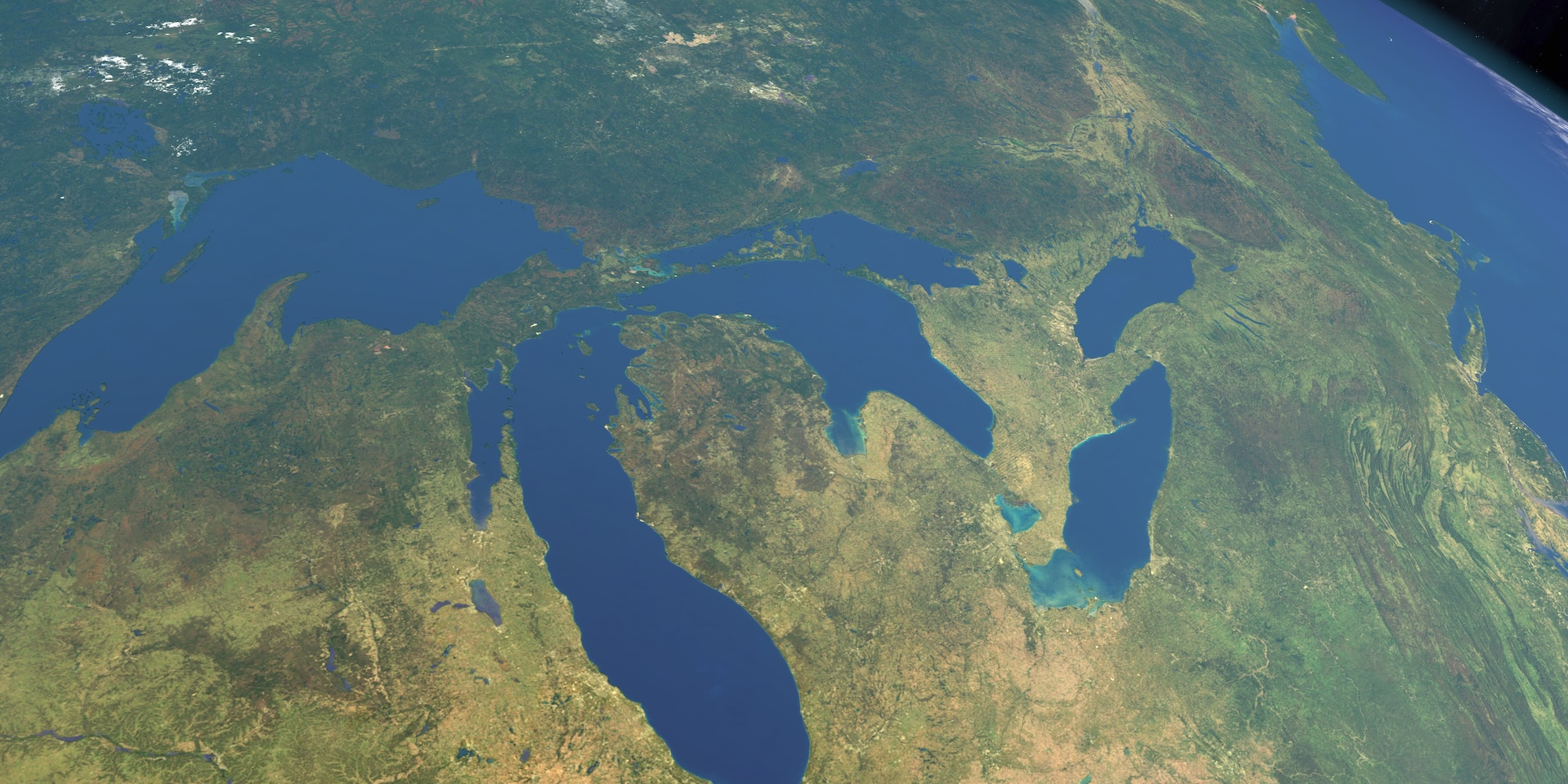
In the decades since eight U.S. states and two Canadian provinces formed the Great Lakes Commission—or the GLC—protecting the lakes has been a unifying cause across borders and the political spectrum.
While that is still true, the pillars supporting that cause are becoming increasingly suspect. For example, relations between the U.S. and Canada are fraught at the federal level. The U.S. has put environmental research and regulations on the chopping block.
Against this backdrop, representatives from both countries are convening in Washington, D.C., for GLC events before and on Great Lakes Day, March 5. University of Michigan experts are available for interviews before and after the events to discuss the importance of Great Lakes Day and what it can tell us about the outlook for the Great Lakes region.
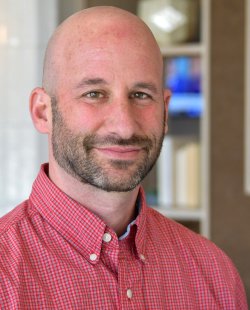
Mike Shriberg, professor of practice and engagement at the School for Environment and Sustainability, is the director of the U-M Water Center. He previously served as Great Lakes regional executive director for the National Wildlife Federation and co-chair of the Healing Our Waters-Great Lakes Coalition. His research and expertise is on Great Lakes water policy and politics. He recently authored a column for Planet Detroit calling on Congress to step up for the Great Lakes. He will be in D.C. for Great Lakes Day.
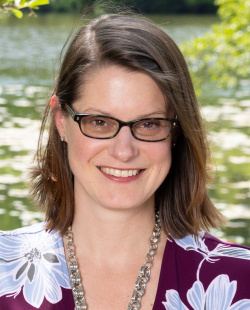
Silvia Newell, professor at the School for Environment and Sustainability, is director of Michigan Sea Grant, a cooperative program between U-M, Michigan State University and the National Oceanic and Atmospheric Administration, or NOAA. She is a nutrient biogeochemist and microbial ecologist whose research focuses on the effects of excess nutrients from fertilizer and wastewater on inland and coastal waters, particularly harmful algal blooms. Her current collaborative work in the Lake Erie watershed focuses on engaging stakeholders—farmers, managers and policymakers—to develop realistic pathways for nutrient reduction. She will be in D.C. for a Sea Grant meeting during Great Lakes Day.
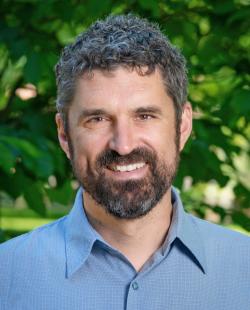
Andrew Gronewold, associate professor at the School for Environment and Sustainability, is the lead investigator for the U.S. contribution to the Global Center for Understanding Climate Change Impacts on Transboundary Waters. He and his team conduct research across a range of hydrological science projects that explore methods for quantifying and communicating uncertainties arising within long-term hydrological monitoring networks and data, and incorporating those uncertainties into models and risk-based water resources management decisions. Much of his recent research has focused on monitoring, analyzing and forecasting the long-term water budget and water levels of large lakes including the Laurentian Great Lakes, the African Great Lakes and terminal lakes in North America’s Great Basin.
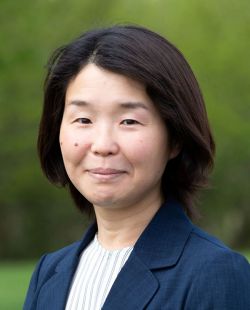
Ayumi Fujisaki-Manome, associate research scientist at the School for Environment and Sustainability, is the associate director for the Cooperative Institute for Great Lakes Research, a collaboration with NOAA’s Great Lakes Environmental Research Laboratory. Her research aims to improve our ability to predict hazardous weather, ice and water events in cold regions to better support coastal communities. She also works with stakeholders to collaboratively design forecast products for better information uptake.
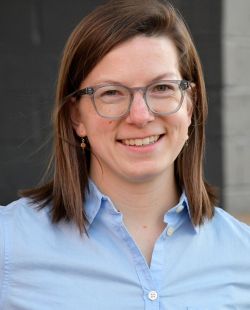
Lauren Mullenbach, assistant research scientist at the School for Environment and Sustainability, is research program manager for Michigan Sea Grant. She is an expert in environmental justice and conducts research on equitable climate adaptation and resilience strategies for Great Lakes coastal communities. As an interdisciplinary applied social scientist, her work centers community perspectives and seeks actionable policy solutions. Related ongoing work includes measuring effects of green infrastructure developments in underinvested communities in Detroit.
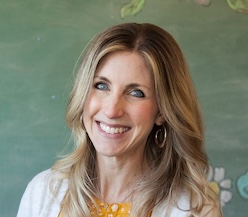
Mary Ogdahl is managing director of the U-M Cooperative Institute for Great Lakes Research, or CIGLR, a partnership between Great Lakes universities, nongovernmental organizations, businesses and NOAA. She manages administrative, operational, programmatic, personnel and financial matters for CIGLR and leads CIGLR’s Engagement, Career Training, and Outreach Program.