Isotope analysis reveals sustainable diet of ancient culture
Study: Dietary Stability in Ancient Serbia: Isotopic Analysis of two Middle Bronze Age Moriš Cemeteries (DOI: 10.1371/journal.pone.0344463)
Chemical analyses of bone demonstrate the stability of diets in an ancient society in Serbia, suggesting that diets remained steady for more than 550 years.
It’s a very long time for diets to remain unchanged—especially as the culture experienced economic and population change, including metalworking and herding horses, according to the University of Michigan researchers who led the work.
The researchers focused on the Moriš culture, a Bronze Age society living in what is now Serbia, Hungary and Romania, between about 2700 BCE and 1500 BCE. Examining 78 human and 23 animal bone samples, the researchers determined that the culture’s pastoral way of life—herding livestock and eating some plants such as barley and wheat—persisted for 550 years.
Senior author Alicia Ventresca-Miller says the findings, published in PLOS One, show that the Moriš way of life could inform how people today can sustainably manage food systems.
“When you have a population living off the land, engaging in pastoralism, and you have 550 years of dietary stability, that often suggests that the pastoralism they were engaged in was sustainable,” said Ventresca-Miller, associate curator of archaeological sciences and associate professor of anthropology at U-M.
“One of the things that’s happening right now is that people aren’t really engaging with archaeology in terms of our understanding of the past. These deep archives of the past are being ignored, and we can learn a lot about sustainable pastoralism by understanding these places and people that have been engaging in herding for long time periods.”
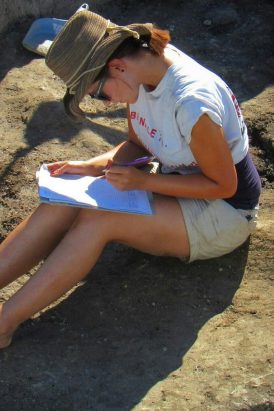
The Moriš culture lived in the marshlands of eastern Europe, and settled in smaller hamlets and larger communities across a region with about a 100 kilometer radius, according to first author Iride Tomažič, a doctoral student in the U-M Department of Anthropology. The society buried their dead in two cemeteries located within the region that were separate from the settlements (habitation sites).
To determine the diets of the Moriš, the researchers examined chemical signatures—stable isotopes of carbon and nitrogen in bone collagen—from individuals buried in the cemeteries, as well as animal bones and other artifacts from two settlements that showed signs of farming and animal herding.
Analyzing the isotopes in animal bones allowed the researchers to determine what kinds of plants the livestock were relying on, and gave the researchers a baseline against which they could compare the Moriš people’s diet. The researchers then measured the same isotopes in human bones, which allowed them to determine that the Moriš diet relied heavily on livestock protein.
“The idea is, what you’re eating—this is what you are,” Tomažič said. “The bones served as a record of diets over long periods of time, basically homogenizing carbon and nitrogen values.”
The researchers were surprised to learn that even though the Moriš culture was changing more broadly, the society’s diet remained stable. Late in the period, people began increasingly working with metal, populations among the Moriš were growing, and people were beginning to keep horses as livestock.
“Almost every time you’re getting a new domesticate coming into a region, there is an expectation that there will be a dietary change. But what I think is interesting about horses is that they are often only a very small part of the diet,” Ventresca-Miller said.
“We also see increased metallurgy and there is some discussion about whether populations were starting to farm. With a population shift, you would inevitably see some sort of dietary shift, but we’re not seeing any change.”
Tomažič says their findings have lessons for challenges people may face under current climate change.
“These people were living in environments that we thought were uninhabitable, yet learning how to live within this environment became their most important strength,” Tomažič said. “When we’re looking at living today, we have lost a lot of touch with nature and with our environment. Learning how to live within our environment—not isolated from it—can show us how we can become more resilient.”
The next steps for this team will be to continue studying diet and herding practices in the region.