U-M researcher Marbely Micolta awarded prestigious 51 Pegasi b fellowship
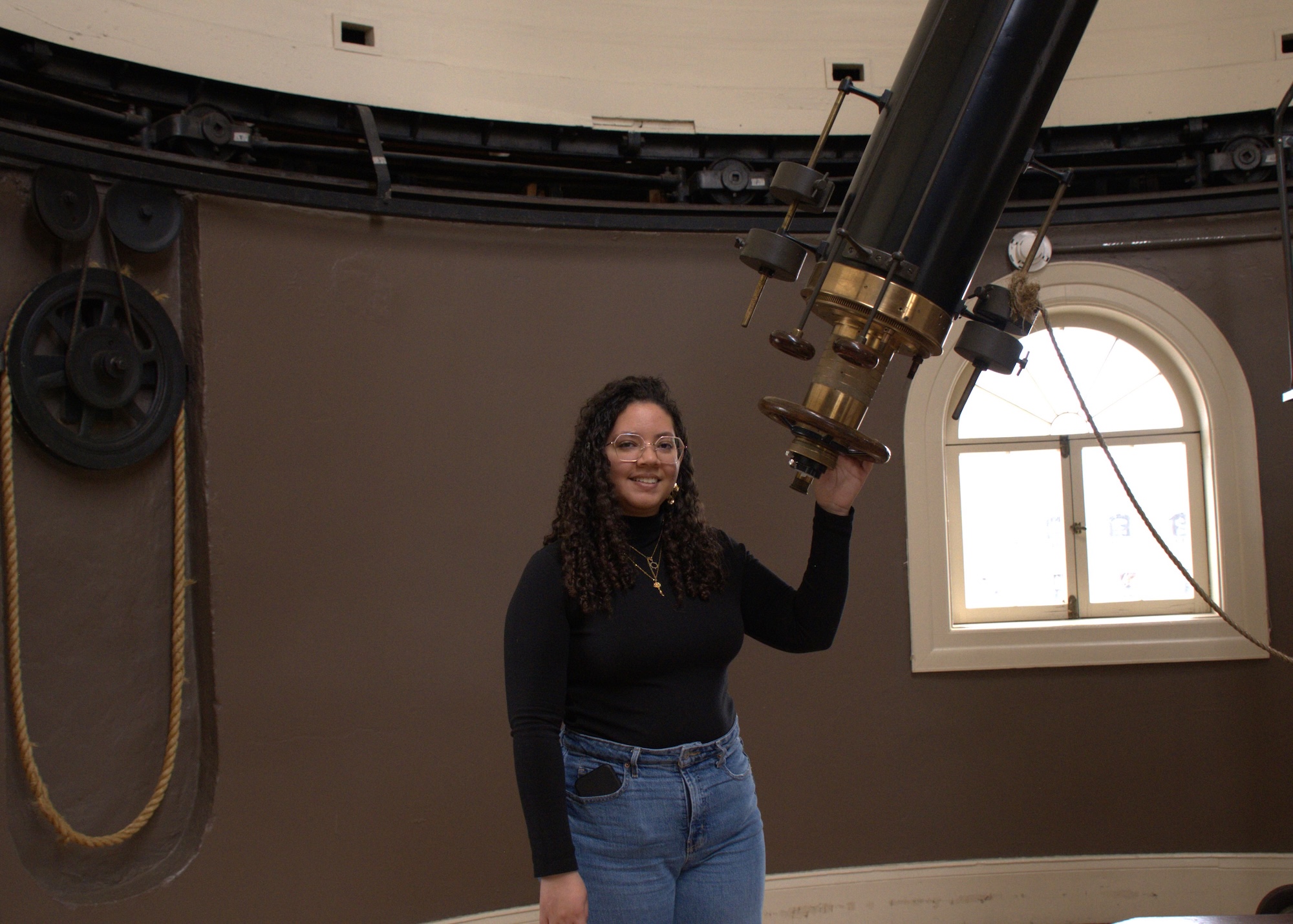
Marbely Micolta, a doctoral student in astronomy and scientific computing at the University of Michigan, has been selected as one of eight new 51 Pegasi b Fellows for 2026.
“It’s been pretty surreal. This is one of the biggest fellowships in astronomy, especially in my field of astronomy,” said Micolta, whose work is helping explain how planets form. “I don’t think the news has fully sunk in yet.”
Established in 2017, the fellowship received a record number of applications for 2026, according to the Heising-Simons Foundation, which created and funds the fellowship.
The Heising-Simons Foundation is a family foundation that funds research in numerous fields, including work in fundamental science research that can transform our understanding of the universe. The 51 Pegasi b Fellowship—named after the first planet discovered outside of our solar system that orbits a sun-like star—provides a three-year grant to cover salary, benefits and flexible research-related discretionary spending.
Micolta’s fellowship will begin once she has completed her doctoral studies at U-M later this year and joins Carnegie Science to better understand something she discovered serendipitously at U-M.
The case of the missing metals
After graduating with a bachelor’s degree in physics from the University of the Andes in Venezuela, Micolta came to U-M to earn her doctorate studying the clouds of dust and gas that surround young stars. These clouds, called protoplanetary disks, are where planets, comets and asteroids are born.
Micolta was curious about how what are called refractory elements are distributed throughout different disks. Refractory, which means stubborn, is used to characterize chemical building blocks that are hard to vaporize and can exist as rocky solids in the disk. To begin her project, Micolta needed to select which elements she’d trace throughout protoplanetary disks. She thought calcium and magnesium would be as good a choice as any.
“It was by complete accident that I started looking at the emission lines of calcium and magnesium. Then I realized that some stars had this material falling in toward them and some didn’t,” Micolta said. “That was weird and unexpected, but that’s nature for you.”
Her thesis work became focused on explaining why some disks seemed to be missing these materials while other disks near similar stars did not. Her work showed that one explanation was that the missing calcium and magnesium is gathering into planetary cores.
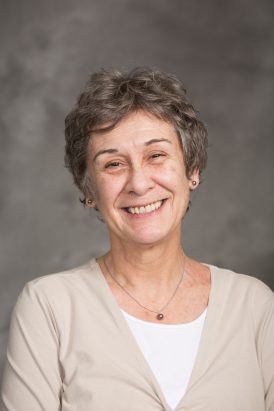
“Marbely has come up with a completely innovative program in a very competitive field. She has achieved this because of her high dedication, perseverance and motivation,” said Nuria Calvet, a professor of astronomy and Micolta’s faculty adviser. “I am looking forward to seeing how Marbely continues to expand her wings and becomes the best scientist that she can and wants to be.”
At Carnegie Science, Micolta will build on this research to examine whether this behavior holds other elements, such as iron. She’ll also continue investigating other planetary systems to better understand this link between the chemical composition of a disk and planet formation, which could help researchers better understand how our own solar system evolved.
“At the end of the day, that’s what we actually aim to do. We want to understand how our solar system formed and how all these other planetary systems formed,” Micolta said. “Because we just don’t know. And I’m not saying I’m going to solve it, but it’s a huge, huge question and it really takes everybody in the community working on smaller parts to put the whole story together.”
Building community
As Micolta finishes her thesis work, she said two things about her time at U-M stand out as being uniquely helpful in preparing her for the next steps in her career. Technically, the university’s offering doctoral training in astronomy and scientific computing was ideally suited for her work. She was able to make observations with the Magellan Telescopes in Chile, which were built with help from U-M, and then used computational models to help analyze and interpret the results.
The second factor was the sense of community at and around the university, which began in the astronomy department and she was able to foster and build through outreach and organizations. The best example of that, to her, was the Astronomía en Español group she co-organized for Spanish-speaking people in the astronomy department at all stages of their careers.
“We meet at least once a semester to just have food, share advice and talk, and celebrate what everyone has been doing—maybe someone got into grad school or got a new job,” said Micolta, who’s particularly proud of the way the group can support its undergraduate members.
“I think STEM can feel scary, especially when you’re an undergrad. And, when you’re in a minority group, it’s always good to have that community around you to show you, ‘Hey, you can make it.'”
This commitment to community also aligns with one of the fellowship’s stated goals of helping support its fellows holistically—as people, as scientists and as members of a vibrant community advancing progress in planetary astronomy.

And, with the fellowship, Micolta will have the chance to continue growing her community and the impact of her work, said Teresa Paneque-Carreño, U-M assistant professor of astronomy, who was selected as a 51 Pegasi b Fellow in 2024.
“Being a 51 Peg Fellow offers access to a vibrant community of planetary scientists, we support each other scientifically and professionally, even beyond academia. Ultimately, scientific advancements should be for all of humanity and it is great that Marbely sees the importance of this. Through her example, she is also inspiring younger generations of girls and Latin American students to believe that they have a space in science.”