‘No Strings’ art exhibition explores personal impact of guaranteed income
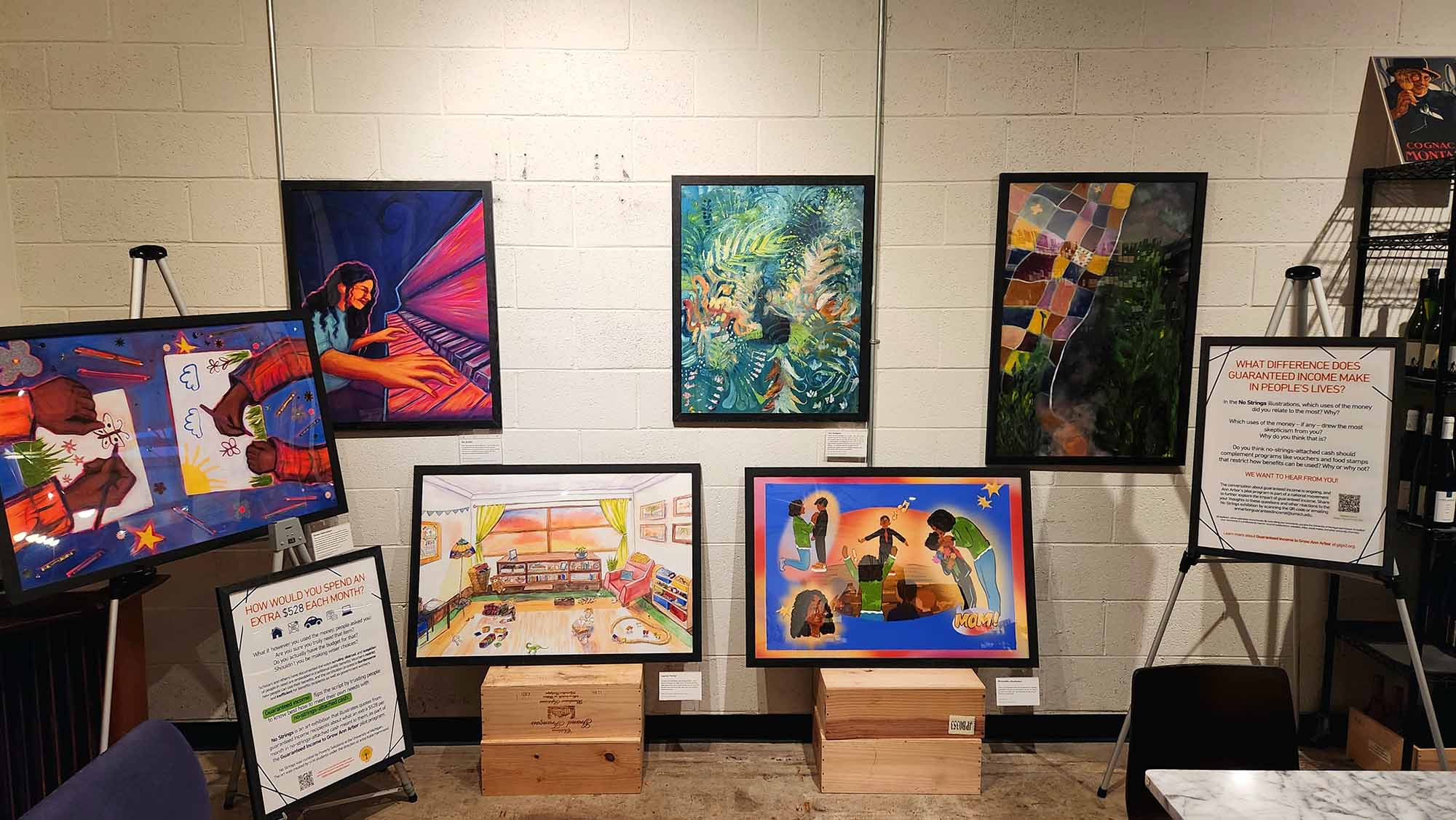
How would you spend an extra $528 each month? What if your answer was met with criticism? People who receive traditional public benefits are often met with scrutiny, distrust and suspicion from bureaucrats and the general public alike.
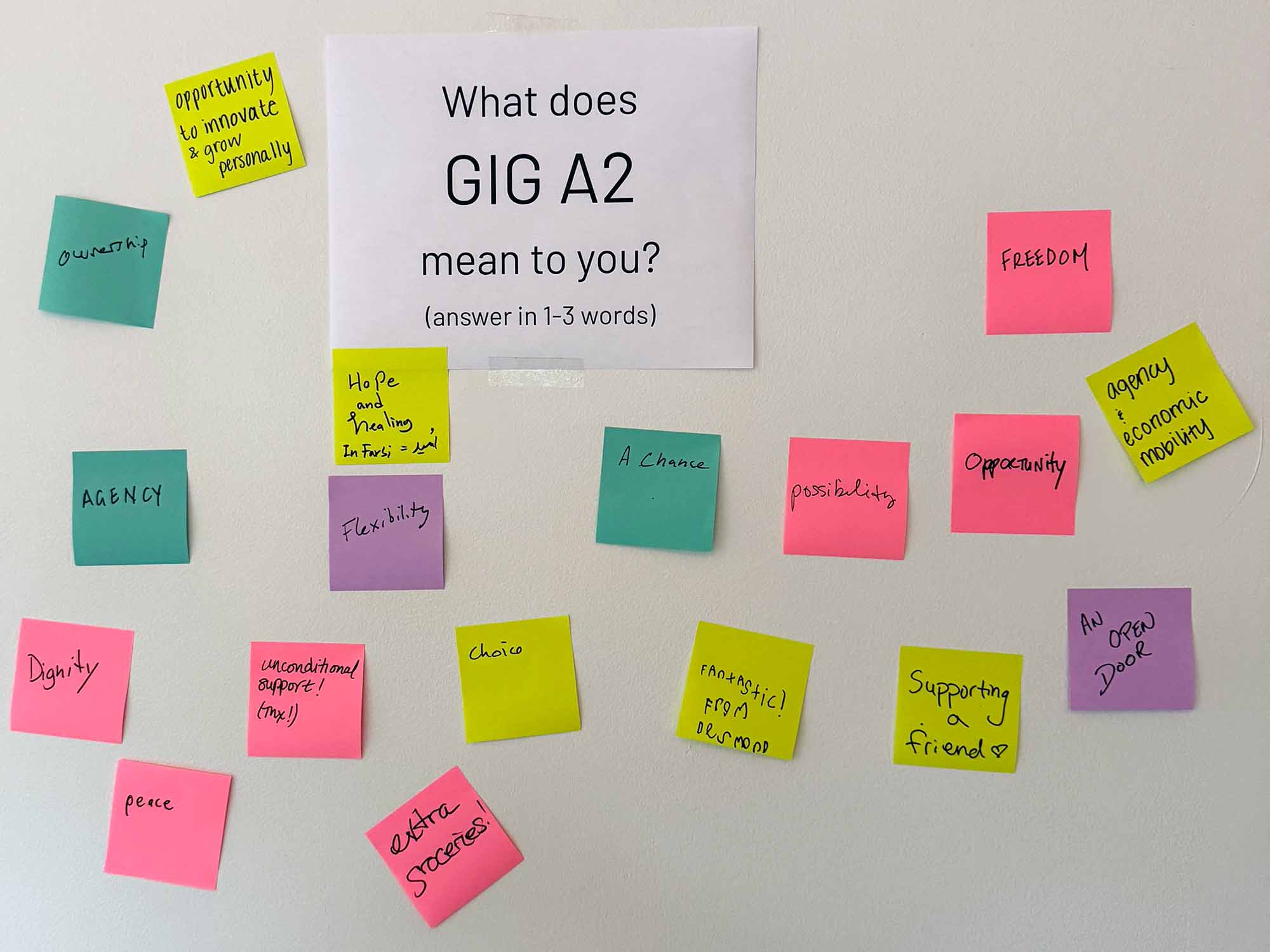
Guaranteed income is working to flip that script.
A new traveling art exhibition called “No Strings,” curated by University of Michigan’s Poverty Solutions, showcases art by six U-M students that illustrates quotes from participants in the Guaranteed Income to Grow Ann Arbor (GIG A2) pilot program.
Participant stories include using some of their monthly guaranteed income payments to provide resources for their kids, improve their mental health, support their entrepreneurial activities, and connect with their family and friends.
Artists include U-M undergraduate students Mia Echlin, Lila Hudgins and Emma Ostermeyer, and graduate students Lauren Parker, Mrinaalika Sivakumar and Victoria Sung.
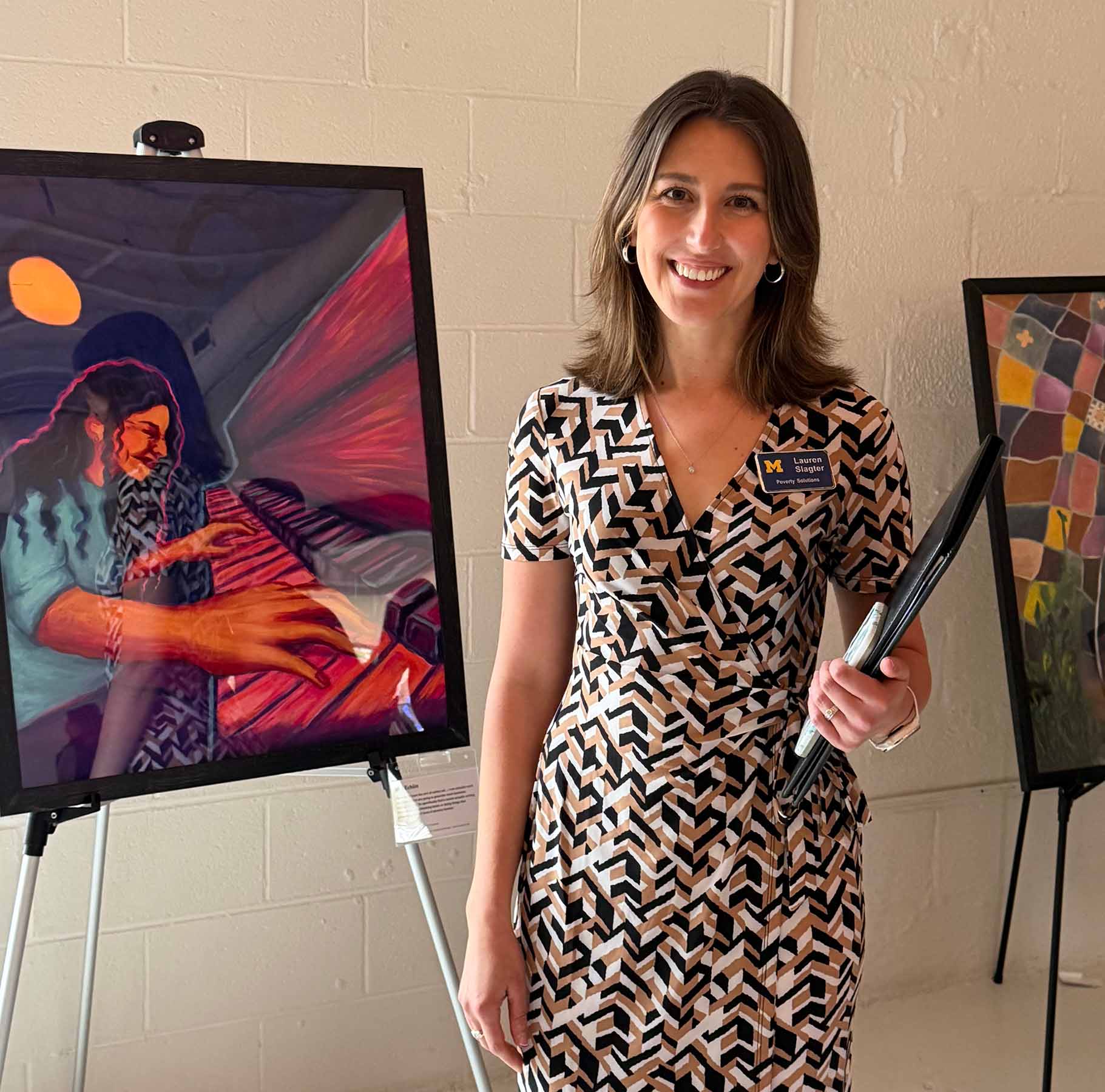
“Surveys show GIG A2 participants spent the monthly payments mainly on necessities like food, housing and household supplies. This exhibition zooms in on specific uses of the money that were especially meaningful to the guaranteed income recipients. The goal is to prompt people to think about the significance of no-strings-attached cash that trusts people to know best how to meet their own needs,” said Lauren Slagter, director of communications and public engagement at Poverty Solutions, who curated the exhibition.
Funded by the city of Ann Arbor and Ann Arbor Area Community Foundation, GIG A2 was a two-year pilot that provided monthly payments of $528 to 100 Ann Arbor entrepreneurs and gig workers with low incomes, from January 2024 through December 2025. Another 100 people from the eligible applicant pool participated in a randomized controlled trial, while receiving a small monthly stipend. U-M researchers are continuing to evaluate the impact of GIG A2, and they will publish a final report later this year.
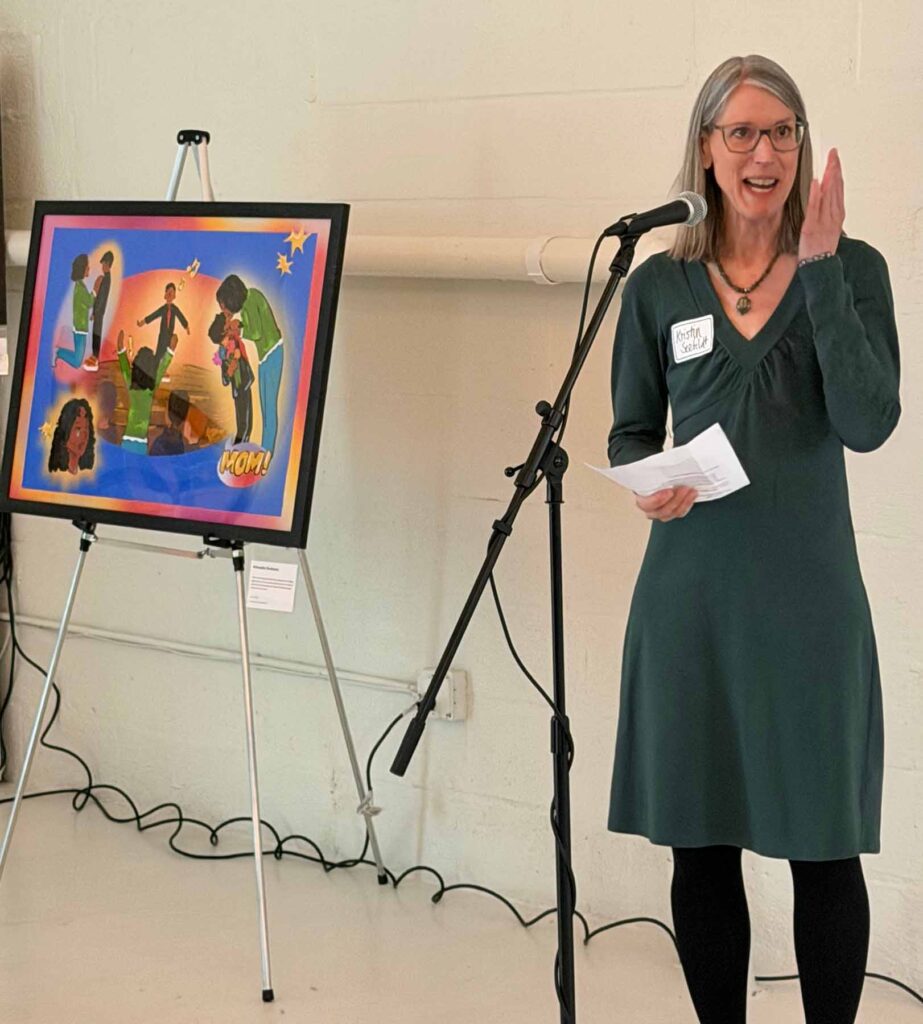
“While social science research methods are crucial to our understanding of a guaranteed income program’s impact, there are many other ways to communicate those impacts to others. We want to share the research findings as well as explore the narratives around public benefits, and art sparks conversations that probably would not occur just by looking at charts and graphs,” said Kristin Seefeldt, lead researcher for GIG A2 and faculty director of Poverty Solutions.
The No Strings exhibition opened April 29 at a celebration of GIG A2 held at YORK’s Space. About 100 people with ties to the pilot program gathered to reflect on bringing guaranteed income to Ann Arbor.
Katie Hammond, who owns Ann Arbor Artist Studios, hosted workshops with the U-M student artists to help them conceptualize their pieces and provide technical guidance.
“I’m honored to be part of the No Strings project. As a self-employed artist, I strongly believe in the power of guaranteed income,” she said. “Mentoring the University of Michigan students, most of whom were non-art majors, was a really enjoyable experience. Their diverse perspectives brought depth to the project, and I was truly impressed by the quality of their work.”
The public can view “No Strings” at:
- YORK, 1928 Packard St., Ann Arbor: Now through May 7
- Ann Arbor Artist Studios, 4844 Jackson Rd., Ann Arbor: May 30-June 26
- Ann Arbor Downtown Library, 343 S. Fifth Ave., Ann Arbor: June 1-July 24