Look out! U-M turns to student designers to advance bird-friendly campus
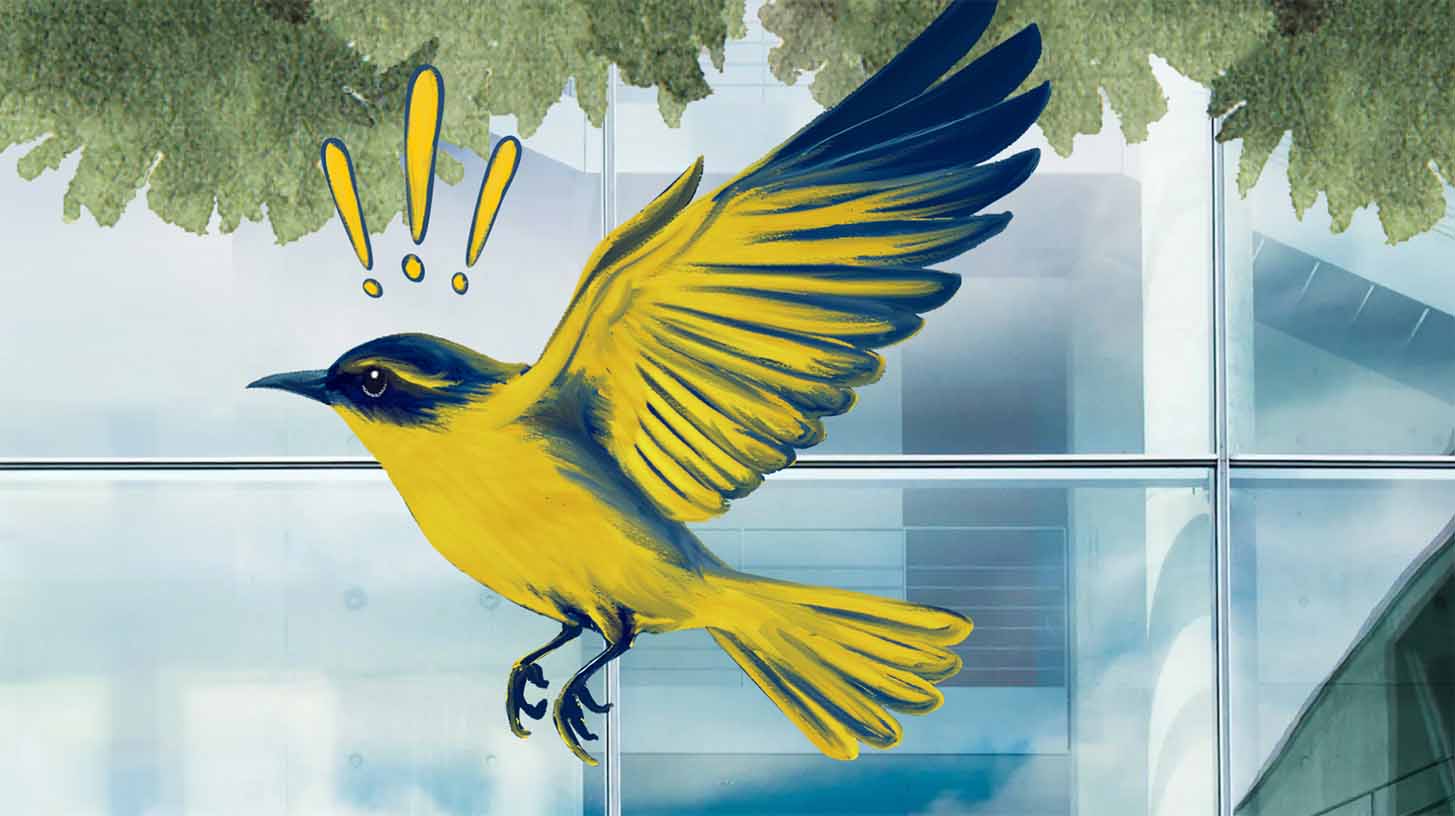
The University of Michigan is engaging student designers in a new effort to reduce bird collisions with windows on campus, integrating art, research and campus operations to advance biodiversity and sustainable design.
As part of its broader Bird Protection Program, the university has launched a bird-friendly window decal design competition that will translate years of collision-monitoring research into a visible, functional campus installation.
Building collisions are the second-leading source of direct human-caused bird mortality in the U.S., killing an estimated 1 billion birds annually. Most collisions occur when birds perceive reflections in glass as open sky or habitat.
“This effort reflects how we approach sustainability at U-M as a living-learning laboratory,” said Anya Dayle, manager of Campus as Lab in the Office of Campus Sustainability. “We’re using data collected on our own campus to inform design solutions, and students are helping translate research into something both functional and visually compelling.”
Each spring and fall migration season, U-M conducts systematic bird-collision inventories in partnership with faculty and researchers at the Museum of Zoology. The data collected helps identify high-risk buildings and inform operational and design responses, including retrofits and updated building standards.
Rather than applying a standard window treatment, the university is inviting students to design an original mural that meets established bird-friendly guidelines. The final installation will use a white pattern spaced to ensure birds recognize the glass as a barrier, while also enhancing the pedestrian experience.
The initiative is led by the Office of Campus Sustainability in partnership with the Arts Initiative and the College of Literature, Science, and the Arts, with research collaboration from faculty and scientists in the Museum of Zoology and coordination with Facility and Operations teams.
The effort builds on recent bird-friendly retrofits across campus, including work at Oxford Houses, and reinforces U-M’s commitment to integrating data-driven sustainability strategies into planning and facilities management.
“This project celebrates the creative work of students and highlights how the arts and environmental stewardship can work together to create lasting, positive change on campus,” said Adrienne Frank, program specialist for student engagement in the Arts Initiative.
The competition is open to currently enrolled U-M students, with submissions accepted through March 27 and the winning design announced in April. The winning design will be installed on the elevated walkway connecting Weiser Hall and the North University Building along North University Avenue, an area identified through seasonal monitoring as a higher-risk location for bird strikes.