Defining the future of local, global learning
Serving as a backbone of support, the University of Michigan has a powerful driver for helping faculty deliver breakthroughs in academic learning experiences.
Launched in 2014 with a mission to support academic innovation across campus, what is now known as the Center for Academic Innovation has solidified its position as a catalyst for partnerships across disciplines and around the world, expanding the reach of the university’s life-changing education through innovative design, technology and creative solutions.
innovation at michigan
- From the start of an academic journey to the culmination of commercial success, innovation at U-M takes many forms. See more of the story:
The center provides a convening space and support to teams of faculty and staff who use emerging technology to promote student success and equity, creating learning experiences that serve students and learners throughout their lives.
The center’s impact on Michigan and global learners continues to grow. The CAI supports online programs across campus, and has partnered with academic units to develop more than 10 online degree and certificate programs and over 300 open online courses, which together have reached more than 12.5 million learners in more than 195 countries.
“We work with faculty across the university to design new ways for people to learn, explore, and succeed throughout their lives, and to extend the impact of a Michigan education far beyond the boundaries of our campus,” said James DeVaney, the founding executive director of CAI and the associate vice provost of academic innovation.”
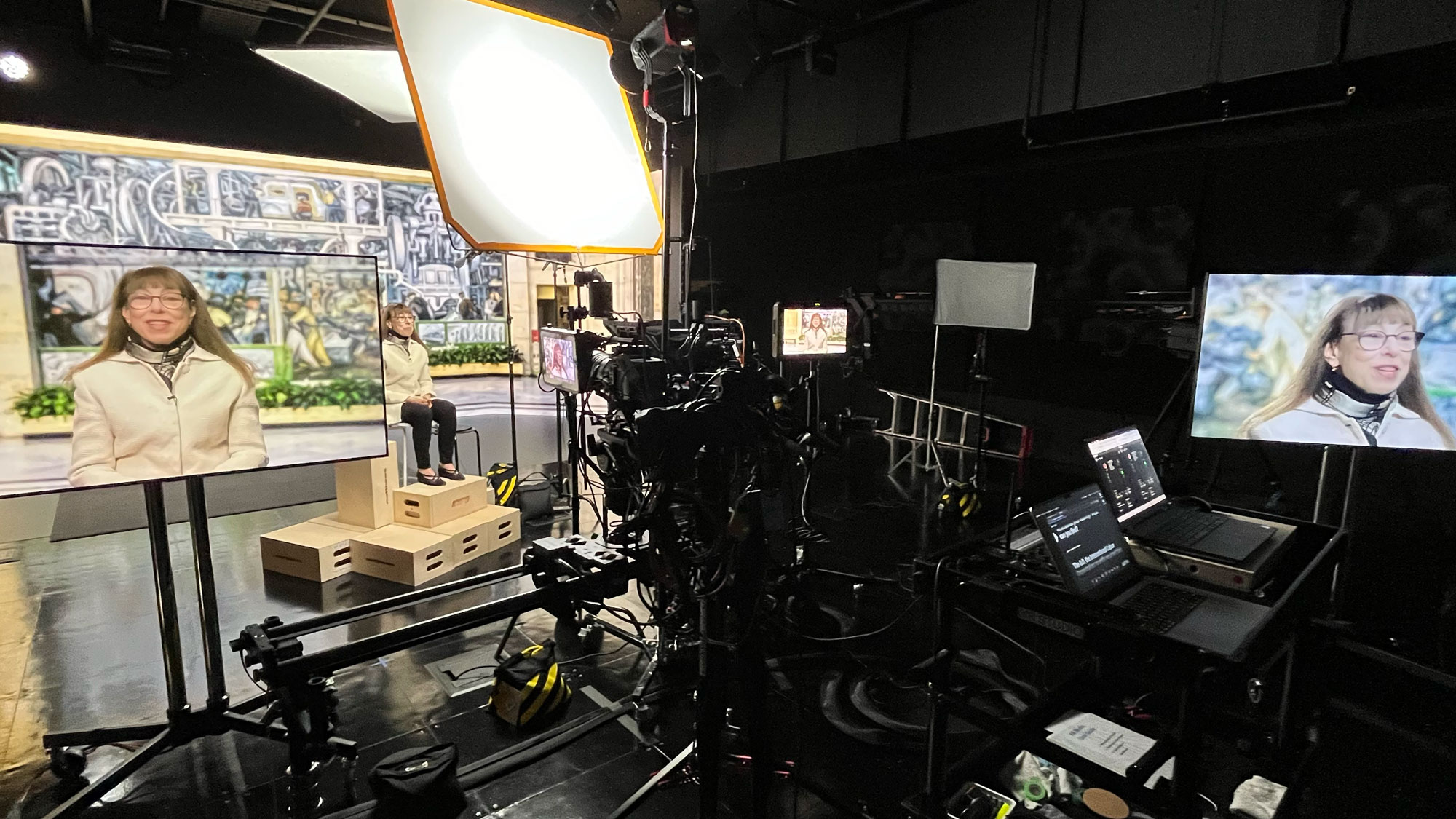
State-of-the-art studios offer traditional and virtual production capabilities, allowing course design and production teams to create powerful immersive learning experiences. Faculty partner with the center to explore ambitious new methods to educate students of all ages and disciplines.
“Some of the most exciting innovations happen when faculty bring us complex teaching challenges. Our job is to give them the tools, the creative space, and the support to experiment and turn those ideas into something transformative for learners,” DeVaney said.
Global reach, local impact
U-M has accelerated its offering of online training, classes and degree programs. The center established Michigan Online, a destination for faculty-created non-credit online learning experiences, including courses on artificial intelligence, programming, healthcare, and leadership, as well as online educational resources and degree programs.
Many of U-M’s “massive open online courses (MOOCs)” allow learners to gain skills that bolster current work or lead to new career paths. Deb Lee, clinical assistant professor of nursing in the School of Nursing, partnered with CAI to develop a unique open online nursing course featuring innovative XR components. The course has enrolled more than 4,000 learners from across the world to engage in professional training, broadening the accessibility of a U-M education.
“People who haven’t had to handle wound care in two to three years, for example, can get back into it and receive quality instruction,” Lee said. “But even when I’m teaching a digital education class for U-M students, I can incorporate some of the coursework from these MOOCs so the students can use them as well.”
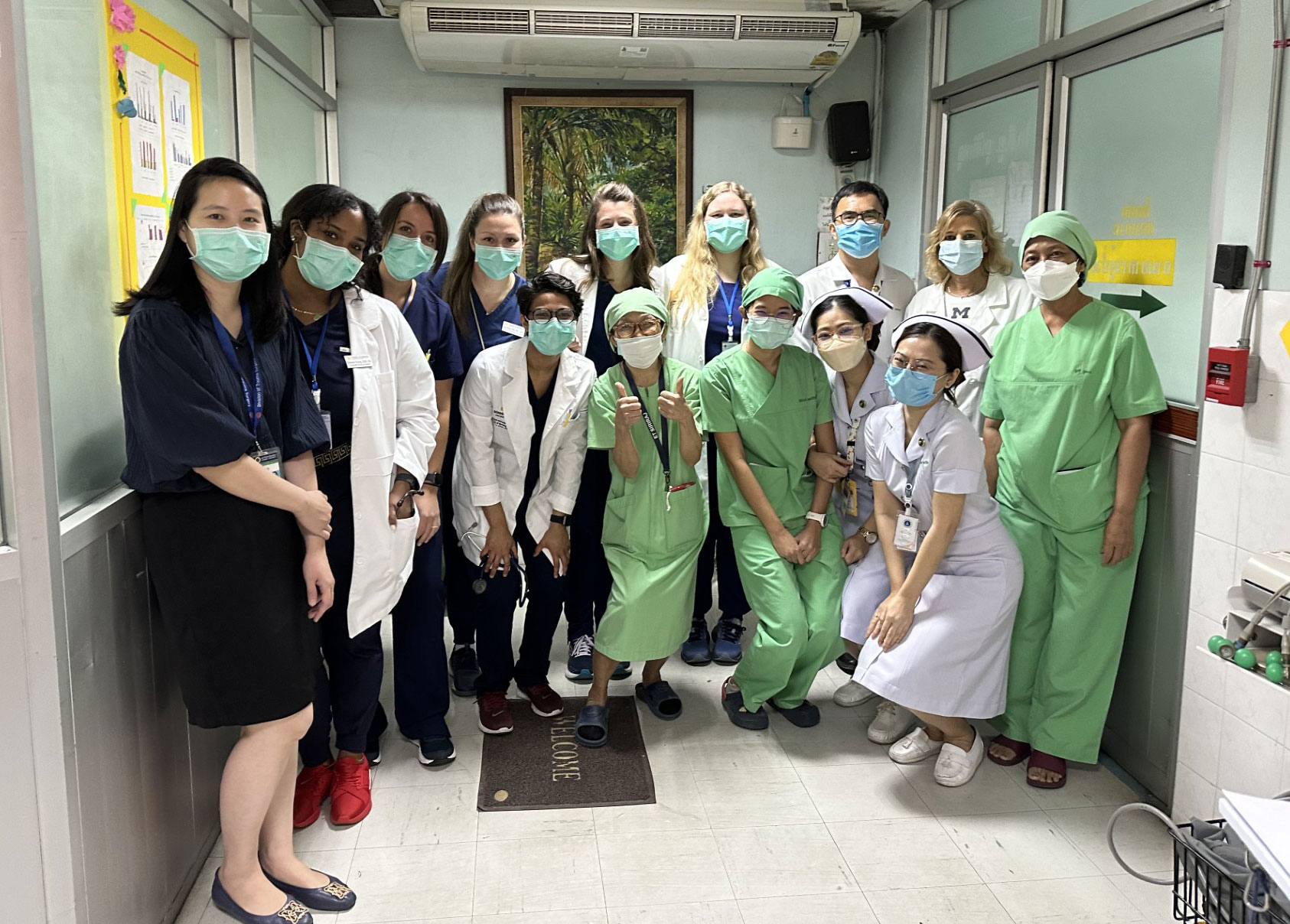
Teaching online through CAI opened her up to new perspectives, which improved her instructional approach for all students.
“It humbled me to realize there are different cultures and different ways to do medical care in different cultures. It does translate, and it has moved me to reach out and find experts in those countries and find how it’s applicable,” she said. “I have a trauma surgeon on speed dial in Thailand, and a midwife from the Caribbean. I never would have had that confidence if not for CAI.”
The center’s impact runs deep in the state of Michigan. On campus, the Atlas academic planning tool, developed by CAI in partnership with the Office of the Registrar, Office of the Vice Provost for Undergraduate Education and faculty innovator Gus Evrard, is used by 99% of Ann Arbor undergraduate students, and all U-M students and alumni enjoy free access to Michigan Online open online courses to supplement their academic careers.
Around the state, learners access Michigan Online courses to gain new professional skills. Thousands of people in Michigan have enrolled in Michigan Online courses as individual learners or via their employer. In an innovative partnership led by the City of Detroit and supported by Ally Financial, the University of Michigan Center for Innovation Detroit collaborates with the Center for Academic Innovation to provide online learning courses for adult learners via the “Saturdays in the D” program.
“We are proud to support City of Detroit residents,” said Sarah Dysart, CAI’s chief learning officer. “Our work to support the Center for Innovation in Detroit and Saturdays in the D adult learner program shows how online learning can support Michiganders gain new skills and further their careers.”
Christopher Brooks is an associate professor of information in the School of Information. He participated in the creation of U-M’s online master of applied data science degree, which came about in part because of the MOOCs developed in partnership with CAI. Despite being an online degree with learners around the world, Brooks notes that the largest contingent of students in the degree are actually Michiganders.
“Academic innovation through this online program has been powerful in helping us engage the Michigan public, and many of our students pursue this degree while they work in businesses across the state,” he said. “As an example, we’ve got students living and working in the U.P. while pursuing our degree — that’s been powerful to carry the Block M across the state.”

Leading-edge tech
The Center for Academic Innovation’s physical space on Maynard Street in Ann Arbor blends welcoming meeting areas with high-powered multimedia creative spaces.
A suite of modern recording studios, with staff support, enables faculty to build robust online courses. An extended reality studio, resembling a Hollywood movie set, embeds instructors and students into environments limited only by imagination.
Course design and the use of technology are carefully considered, Dysart said. “We work closely with faculty on the course development process because teaching a course online requires more than just putting your lecture on the internet. The mode of learning is different, and the needs of learners are different.”
Those technological experiences translate across campus. Lee can make her nursing lessons come to life with help from CAI professionals.
“I can put three to four students in a simulation replicating an ER or hospital setting, and project it onto the main screen. Students learn as much watching as they do the simulation,” she said. “We’ll do escape rooms, murder mysteries, doing an autopsy report to figure out what was the cause of death.”
The more ambitious a faculty member’s idea, the more the expertise the center can provide – from recommending technologies, navigating licensing and procurement, to understanding regulations.
“They make it seamless for a faculty member. I’m not a tech whiz,” Lee said. “It’s scary to be edgy. They give you confidence and allow you to try things in the classroom you wouldn’t try otherwise.”
Creative space for faculty
New digital tools and online classes are driven by passionate faculty. The CAI is the ideal place for that creative process, Brooks said.
“A lot of people aspire to have a thought partnership. One of the great joys of CAI is that they have talented people to engage in a partnership,” he said.
“We live in a world of turmoil and change. We need people who can see through that and identify possibilities and challenges and put them on our radar,” Brooks said. “CAI is a big player in bringing faculty, administration and students together to identify those opportunities and challenges that are helpful in charting Michigan forward.”
The U-M Academic Innovation Fund was created and is stewarded by the center and has been integral to engaging faculty innovators in redefining teaching and learning at Michigan since its inception in 2014.
“One of the most inspiring aspects of the fund is the breadth of ideas it supports across more than 400 awards. Faculty from every school and college at U-M are experimenting with new ways to engage students, and those innovations are influencing learning both on campus and globally,” DeVaney said.
And while the center helps professionals advance their careers in hundreds of countries and industries, it does the same for U-M instructors.
“When I go to a conference, I’ll often meet someone who has taken my MOOC. As a brand-new assistant professor, it was huge for me,” Brooks said. “That helps you tell your story and empower you more than you would have thought. It’s a great way to grow as a faculty member.”
Dysart said having a centralized resource to consult with when applying new technology in online teaching and learning helps to flatten the learning curve.
“Michigan faculty are a source of constant invention and experimentation,” said Dysart. “The Center for Academic Innovation helps turn great ideas into learning experiences that change people’s lives.”