Look to Leadership: Honoring a legacy, advancing the work
For more than two decades, the University of Michigan’s National Center for Institutional Diversity has served as a hub for interdisciplinary scholarship, institutional partnerships, and community engagement.

Join us as we enter our next chapter as the Phillip J. Bowman Center for Scholarship to Practice.
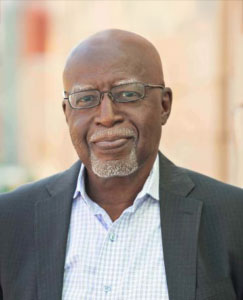
The new name honors Dr. Phillip J. Bowman, professor emeritus of education, alumnus of the Rackham Graduate School, and our founding director (2006-13). Dr. Bowman is a social psychologist whose scholarship focuses on higher education, racial and ethnic diversity, and related public policy issues including workforce inequalities, urban family poverty, health disparities, and social justice.
His work reflects the principle that has long guided our work: Research not only helps us understand institutions and social systems — it equips us to strengthen and transform them.
As the Bowman Center, we continue our commitment to scholarly inquiry, collaborative partnership, and higher education for the public interest.
An ecosystem of scholarship and engagement
The Bowman Center is home to a portfolio of initiatives that advance research, support scholars, and build bridges between knowledge and action. Our programs sustain intergenerational communities of scholars, practitioners, and leaders to support research and develop evidence-based approaches to address contemporary social issues.
Our work spans faculty research networks, graduate and faculty fellowships, student research support, and public-facing initiatives that engage campus and community partners. Together, these efforts create an ecosystem where scholarship informs institutional practice and where institutional experience shapes new lines of inquiry.
That work ranges from long-term historical research through the Inclusive History Project, which examines the University of Michigan’s record of inclusion and exclusion across its three campuses and Michigan Medicine, to practice-oriented initiatives such as CASCaDE (Change Agents Shaping Campus Diversity and Equity), which equips institutional change agents with research-informed tools and strategies.
Resources like the open-access CASCaDE toolkit extend this work by translating research insights into practical guidance for advancing equity within higher education. The center is also home to the Bowman Center Scholars, a global network supporting the professional success of diversity scholars through academic, educational, and social connections and environments.
Across all of our initiatives, the focus remains consistent: supporting scholarship that is intellectually sound, publicly engaged, and responsive to contemporary challenges.

Engaging faculty and students
Faculty collaboration is central to the Bowman Center’s work. Scholars across disciplines partner with us to lead research initiatives, mentor students, and contribute to conversations that extend beyond campus.
Students are vital participants in this work.
Many engage through faculty-led research projects connected to Bowman Center initiatives. Others serve as graduate research fellows or interns, contributing directly to projects that address institutional and societal questions.
The Graduate Anti-Racism Research Grant — currently accepting applications through March 13 — supports graduate students conducting original research that advances anti-racism scholarship. Opportunities like this create pathways for students not only to study systems and institutions, but to actively contribute in shaping them.
Looking forward
The transition to the Phillip J. Bowman Center for Scholarship to Practice marks both continuity and renewed clarity of purpose.
More information
In alignment with the university’s Life-Changing Education commitment, our work strengthens an educational environment that supports learners’ full intellectual development and expands access to meaningful scholarly opportunity. Through fellowships, research grants, faculty networks, and institutional partnerships, we cultivate spaces where rigorous inquiry, collaboration, and mentorship prepare scholars, and future scholars, to contribute thoughtfully to complex social challenges. In doing so, we advance an educational model that broadens opportunity, supports student success, and connects research to lasting public impact.
Though the name has evolved, the mission endures — to convene scholars, cultivate ideas, and translate knowledge into meaningful action.
— Elizabeth R. Cole is the director of the Phillip J. Bowman Center for Scholarship to Practice and University Diversity and Social Transformation Professor of Women’s and Gender Studies, Psychology, and Afroamerican and African Studies at the University of Michigan. Her interdisciplinary research bridges women’s studies and psychology, advancing theoretical and empirical work on intersectionality, women’s political attitudes and activism, body image and sexuality among diverse women, and the development of race and gender identity on diverse campuses. She has served as department chair, associate dean, and interim dean in LSA, and as president of the Society for the Psychological Study of Social Issues.