Statewide leaders convene at U-M to chart path for Michigan geologic hydrogen
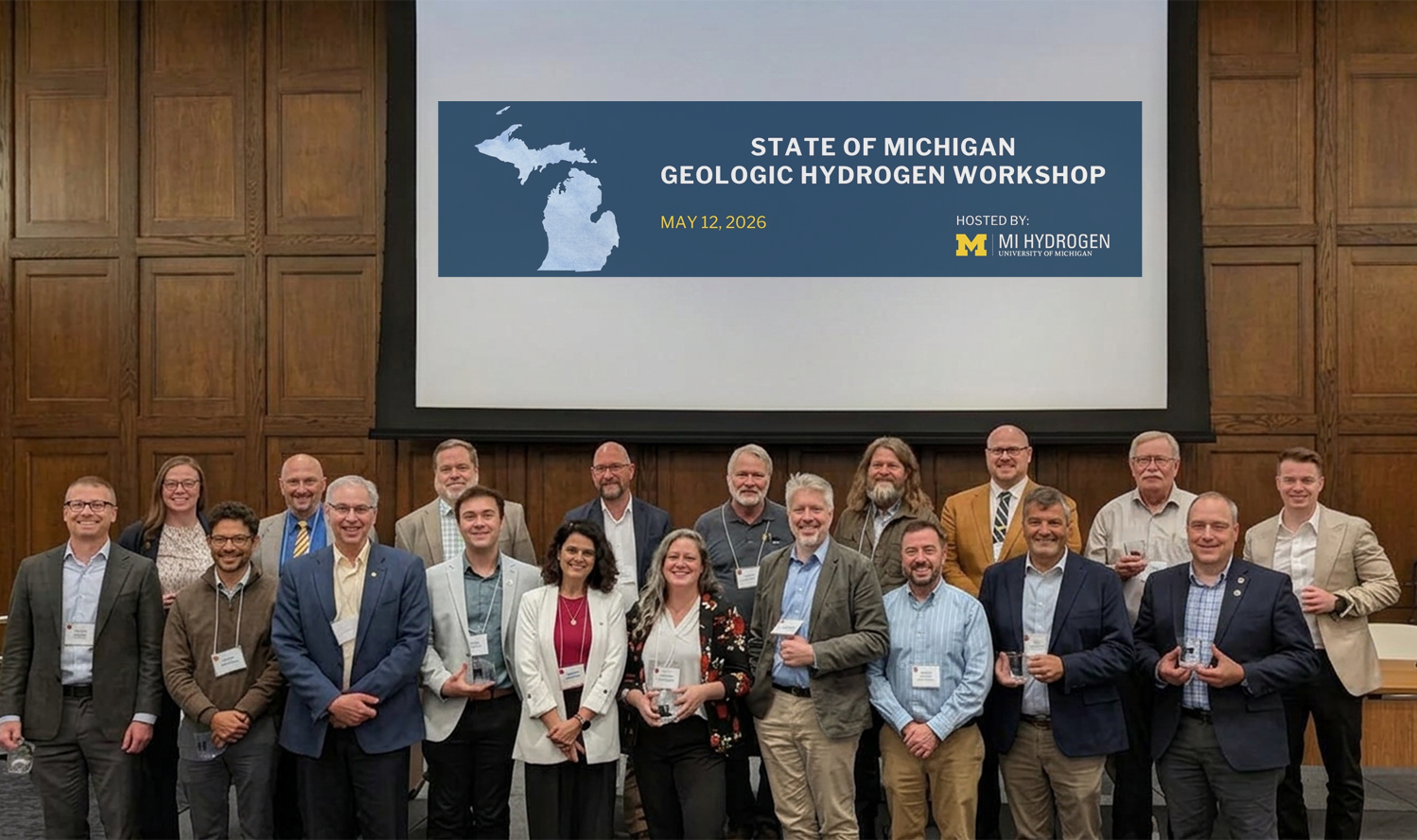
The University of Michigan hosted research experts across the field of geologic hydrogen for an in-depth discussion on the policies, research and investment needed to explore and develop this potential key energy source within the state.
The May 12 State of Michigan Geologic Hydrogen Workshop focused on both natural geologic hydrogen, which accumulates underground, and stimulated geologic hydrogen, which is produced through engineered processes.
The workshop included representatives from academia and national laboratories, industry leaders and state officials from the governor’s office.
Interest in geologic hydrogen has grown since the U.S. Geological Survey’s 2025 prospectivity map identified Michigan as highly favorable for naturally occurring hydrogen accumulation. In response, Gov. Gretchen Whitmer issued an executive directive in January to launch the Michigan Geologic Hydrogen Exploration and Preparedness Initiative.
The USGS has estimated that 5 million metric tons of hydrogen may exist in the Earth’s crust and report that recovering even a fraction of that hydrogen could equal twice the total energy content of proven natural gas reserves.
MORE INFORMATION
During the workshop, officials representing the governor’s office and state agencies outlined next steps under the directive and discussed early findings from initial planning efforts.
Geologic hydrogen could help reduce emissions in energy-intensive sectors such as manufacturing, trucking and shipping. Hydrogen production capacity and proximity to demand centers would influence how the fuel is distributed and integrated into Michigan’s energy system.
“Michigan is at an important moment given its geology, industry interest and geologic hydrogen’s potential as another clean energy resource,” said Greg Keoleian, co-director of MI Hydrogen. “There is growing national momentum to build upon, as well as scientific interest and key questions to address for advancing geologic hydrogen here.”
“This workshop brought together the expertise we need to identify near-term priorities, from the data and tools required for exploration to the standards for extraction and potential environmental impacts.”
The workshop included experts from Sandia National Laboratories, Argonne National Laboratory, the National Laboratory of the Rockies and the USGS, alongside industry stakeholders and representatives from U-M, Michigan State University, Western Michigan University, Michigan Technological University and Wayne State University.
State agencies — including the Department of Environment, Great Lakes, and Energy; Department of Natural Resources; Michigan Infrastructure Office; and Michigan Public Service Commission — provided updates on reports submitted to the governor’s office outlining early findings and identifying needs to accelerate Michigan’s readiness.
Discussions addressed remaining scientific uncertainties, exploration needs, environmental impacts, regulatory clarity and economic development opportunities. MI Hydrogen co-directors Brian Ellis and Keoleian met with the workshop planning committee the following day to develop a report of key findings and recommendations on data gaps.
“U-M has played an important role in developing Michigan’s hydrogen economy, convening multiple workshops and seminars on topics ranging from hydrogen-powered aircraft and ships to hydrogen ecosystem planning and now geological hydrogen,” said Brad Orr, associate vice president for research in natural sciences and engineering.
“The University of Michigan has a responsibility to bring research expertise and public engagement together to help address complex challenges and inform decisions that affect communities across our state.”