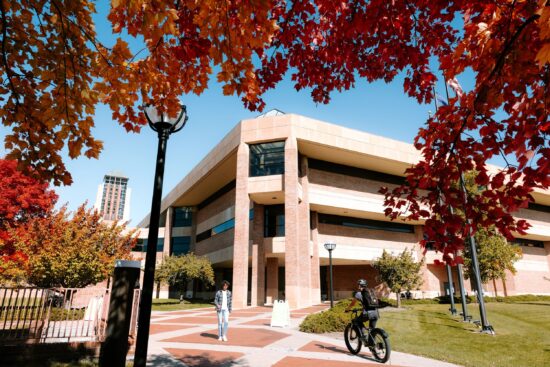
D. Dan and Betty Kahn Health Care Pavilion achieves LEED platinum certification
Designation makes it largest LEED version 4 platinum-certified healthcare building in the world
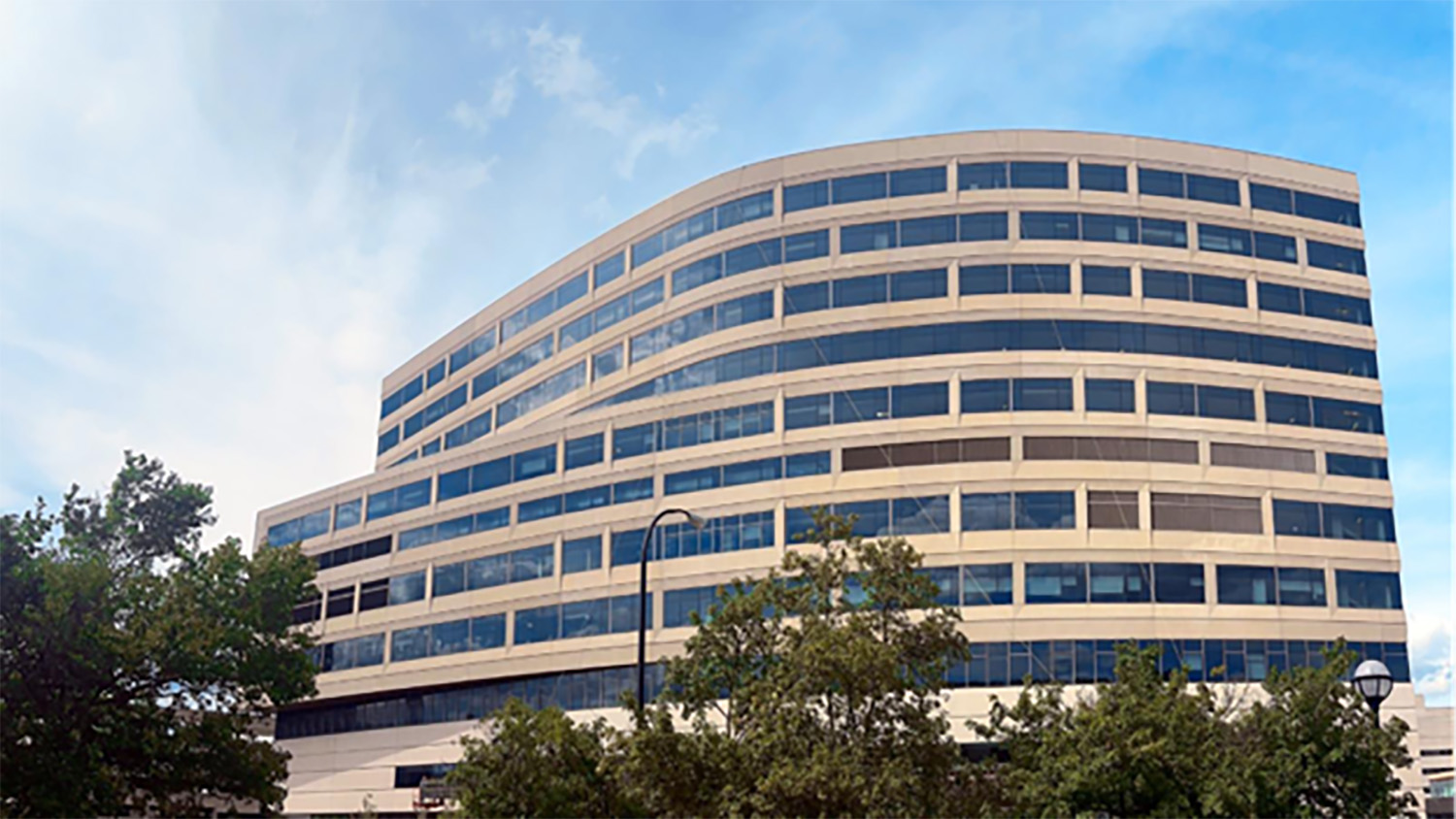
The D. Dan and Betty Kahn Healthcare Pavilion was designed and built with the goal of achieving LEED (Leadership in Energy and Environmental Design) Platinum Green Building Certification, the highest level of recognition from the U.S. Green Building Council, or USGBC, for building efficiency and sustainability.
Earlier this month, the design and construction were officially recognized with the prestigious designation, making the 695,000-square-foot pavilion the largest LEED version 4 platinum-certified healthcare building in the world.
“The new hospital project started with a primary goal to increase our capacity to improve access to high-acuity, complex care, reaffirming the talent and expertise uniquely provided by our excellent care teams,” said Tony Denton, senior vice president and chief environmental, social and governance officer at Michigan Medicine.
“But we also intended to demonstrate our long-standing leadership commitment to environmental stewardship and play a central role in advancing the university’s environmental sustainability agenda. It was always important for us to emphasize that, as leaders in the healthcare space, we are focused on environmental efficiencies and effectiveness, optimizing our resources to improve climate health.”
The USGBC uses a 100 points-based system to award its LEED designations for proficiency in sustainable design, construction and operations standards. To achieve “platinum” designation, an organization is required to earn 80 points or greater. U-M Health scored 84.
Planning for the pavilion goes back more than a decade, and its role in demonstrating Michigan Medicine’s — and the university’s — commitment to environmental sustainability was key to the planning and design process at its earliest stages.
Chip Amoe, U-M Health’s sustainability officer, said achieving LEED designation is a public reflection of Michigan Medicine’s sustainability priorities that are designed to improve the health and well-being of patients, employees and communities.
“For example, our recycling programs are designed to avoid landfill waste, our anesthesiology teams prioritize anesthetic agents that are less harmful to the atmosphere,” he said. “This recognition is a major chapter in our sustainability improvement book that’s much broader, and we are so proud of this achievement.”
Denton and Amoe recently answered some questions regarding this incredible achievement to improve planetary health.
Q&A
What does LEED designation involve?
DENTON: This designation reflects recognition by the U.S. Green Building Council that a building is healthy, efficient, cost effective and sustainable. LEED certification applies to all building types and involves aspects such as design, construction, operation and maintenance. Receiving LEED designation is the result of earning points in specific categories, including location, transportation, sustainable sites, water efficiency, energy efficiency, materials and indoor environmental quality.
AMOE: An application is submitted to the USGBC and an organization is required to submit information on actions it’s taking in each of the categories Tony noted. The process is generally the same, but there are some specific differences based on building type, such as retail, hospitality, manufacturing or healthcare. The metrics may also be different depending on whether a project is new construction compared to an existing building renovation or interior fit-out.
What sort of considerations or challenges did you face during the planning and construction phase of this project?
DENTON: Location of the facility was the first challenge, given that we are essentially landlocked on our medical campus. In addition to providing new capacity for additional patients, the facility needed to be accessible and connected to our existing facilities. Five months after groundbreaking, the pandemic caused the shutdown of the construction project for just over a year. We had a hole in the ground for that entire time and needed to plan for a restart as soon as possible to reduce costs and complete the project to meet our patient care objectives.
What will patients and visitors notice about the pavilion that is different from other hospitals?
AMOE: The pavilion is our second hospital to receive LEED certification. Our C.S. Mott Children and Von Voigtlander Women’s Hospital received LEED Silver designation after its opening in fall 2011. Patients, visitors and our caregiver teams experience lighter and brighter facilities that support health and wellbeing. What may be less obvious is our infrastructure, which includes more efficient use of energy, water and construction materials. Our LEED energy plan for the pavilion is to exceed the state of Michigan Energy Efficiency standards by just over 20%. Our exterior environment includes native plantings that require less irrigation and bicycle racks to encourage non-motorized commuting that reduces greenhouse gas emissions, consistent with our overall sustainability strategy.
What impact does LEED designation have on the care that patients receive?
AMOE: Our patients and families receive excellent levels of care daily. The LEED designation enhances the patient care environment and experience. Improving air quality, reducing greenhouse gas emissions through transportation alternatives, recycling programs that reduce landfill waste, efficient energy systems all contribute to a sustainable culture and quality improvement. When we do this well, we advance the health of our community overall, within and outside of the healthcare facility.
How does the LEED designation affect the working environment for doctors, nurses, healthcare professionals and staff?
DENTON: The LEED designation is one key part of an overall strategy to decarbonize healthcare, a challenge given the 24-hour, seven-days-a-week service provided in the hospital setting. Achieving LEED designation is validation of our commitment to sustainability, which includes a safer and healthier work environment. Our culture of healthcare sustainability includes LEED but is much broader to reflect that being sustainable is part of our commitment to healthy communities and planet.
AMOE: More natural light and bringing nature in helps with stress reduction. Rubber flooring is softer to walk on, more durable, easier and safer to clean, which also reduces exposure to harmful chemicals.
Which other buildings within Michigan Medicine have or will have a LEED designation?
DENTON: As mentioned earlier, our C.S. Mott Children and Von Voigtlander Women’s Hospital is LEED Silver certified, and the Taubman Health Sciences Library is LEED Gold certified. Future facilities are being planned across the U-M Health network with the intention of achieving at least LEED Silver recognition for those facilities.
Why is LEED designation important to Michigan Medicine and its overall sustainability efforts?
DENTON: Michigan Medicine has a mission to advance health to serve Michigan and the world. As a leading healthcare organization, our responsibility is to demonstrate safe and efficient use of resources to improve the quality of our environment while also saving lives through the expertise of our skilled caregiver teams who prevent illness, diagnose and treat injuries and diseases to inspire recovery, healing, health and hope. As a major provider and employer of choice, we are committed to a culture that informs, educates and inspires change in thinking about how we can impact health through sustainable practices, which in turn can lead to individuals doing the same where they live and work. If we can inspire change to reduce environmental harm to our patients and planet, we have made a meaningful difference for generations to come.