Preventing tragedy: How communities can use extreme risk protection orders to save lives


HOUGHTON, Michigan—Protecting every member of Michigan Technological University’s community is top of mind for Reid DeVoge, deputy chief of Public Safety and Police Services.
So last year, following the loss of a member of the university community, DeVoge realized that Michigan’s recently implemented Extreme Risk Protection Order law, or ERPO, could be a useful tool in saving lives. More commonly known as red flag laws, they allow for the temporary, court-ordered removal of firearms from someone deemed a threat to themselves or others, and temporary prevention of firearm purchases.
The roadblock, however, was knowing exactly how to use the law—which allows for a court-ordered temporary removal of a firearm—and to feel comfortable using a law that comes with concerns over Second Amendment rights, especially for many residents of his Upper Peninsula community.
His curiosity and motivation to prevent future tragedies led DeVoge to start researching.
That led him to the University of Michigan and its Michigan Firearm Law Implementation Program, or M-FLIP. Based at the U-M Institute for Firearm Injury Prevention, it provides free training across the state to law enforcement, health care organizations, schools, legal professionals, social workers, domestic violence and suicide prevention advocates, basically anyone concerned that a firearm could be used to take a life or lives.
“To say they were collaborative is an understatement,” DeVoge said. “They reached out immediately to discuss the particulars of our situation and to figure out what they could do to best serve our community.”

Working together, DeVoge and April Zeoli, director of M-FLIP and the leader of M-FLIP training around the state, convened a workshop that brought together representatives from across the community to learn what to do should they need to petition a court for an ERPO.
Zeoli has taken M-FLIP training to 18 Michigan counties, small and large, and more are happening and in planning. The free training sessions include background and data from other states’ red flag laws, something DeVoge said made him more confident and comfortable in the potential benefits of using the law to protect his community—and surrounding communities.
The program is funded by the Michigan Department of Health and Human Services in an effort to decrease deaths in injuries involving firearms, which are the leading cause of death for people under 18. In 2024, Michigan saw 1,400-plus firearm deaths and more than 2,900 firearm injuries.
“Firearm violence is preventable. If people have the tools and the knowledge to prevent firearm violence, perhaps we can save more lives,” said Zeoli, associate professor of health management and policy at the U-M School of Public Health and a leading researcher on ERPOs across the country.
“Extreme risk protection orders are just one tool in the toolbox that we can use in the future to hopefully prevent people from dying by suicide, from inflicting nonfatal firearm injuries and from committing homicides.”
Within a few months of the training workshop, DeVoge worked with two northern Michigan law enforcement agencies to use the law to prevent “a potential tragedy in another community.”
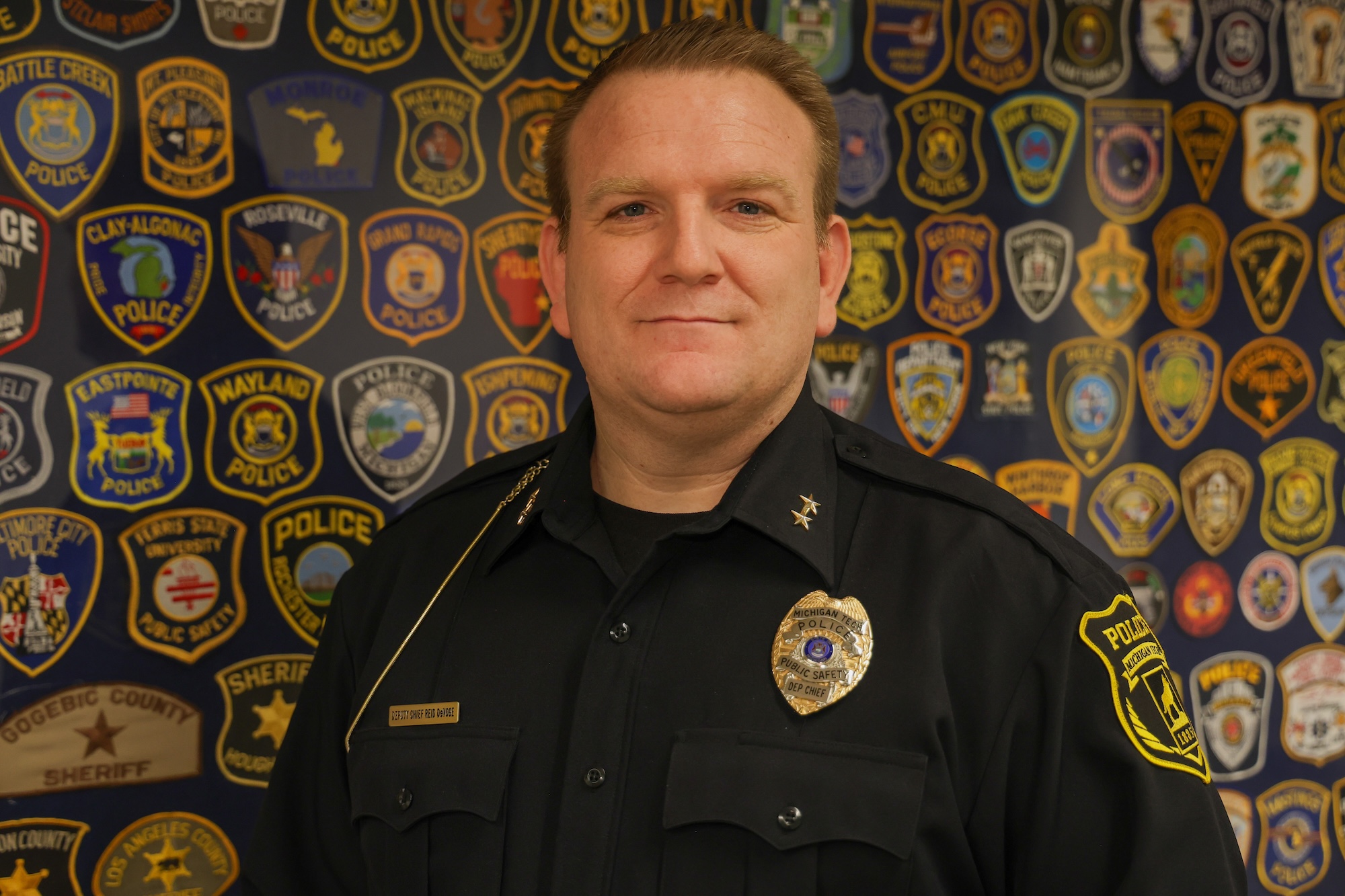
“One of the key things a lot of us took away was not to be intimidated by the process. Anytime you start to involve judges and courts and hearings and forms, it’s like, ‘Hey is this something I’m able to do?'” he said. “The training gave us confidence in the process. More importantly, we learned the research behind the laws and why these mechanisms are important and what they can prevent.”
Michigan’s Extreme Risk Protection Order law took effect in February 2024, following mass shootings at Oxford High School and Michigan State University. The law provides a way to petition a court to temporarily remove firearms from someone deemed a threat to themselves or others and prevent them from purchasing firearms while the order is in effect (generally one year).
For Zeoli, who has published research analyzing other states’ ERPO laws, seeing her expertise and research make the leap from research to real life is monumental.
“I never wanted my research to sit in a paywalled journal,” she said. “I always wanted to be out in the community because my goal as a researcher is to prevent suicide, homicide and other firearm violence.”
Zeoli hopes experiences like DeVoge’s encourages more groups to request M-FLIP training. Already, she has worked with cities such as Detroit, Ann Arbor, Warren and Muskegon.
“Inviting us in costs you nothing,” she said. “These are free services to answer any of your questions on extreme risk protection orders, tell you what others have done in this space to know how to use them, and provide any training or technical assistance your organization needs.”
To request training or other assistance, go to M-Flip or email [email protected].