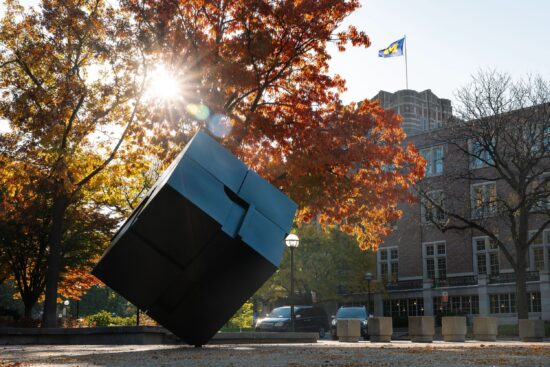
It Happened at Michigan: U-M alum was first American to walk in space
Edward H. White II, a 1959 graduate of the University of Michigan, became the first American to walk in space June 3, 1965.
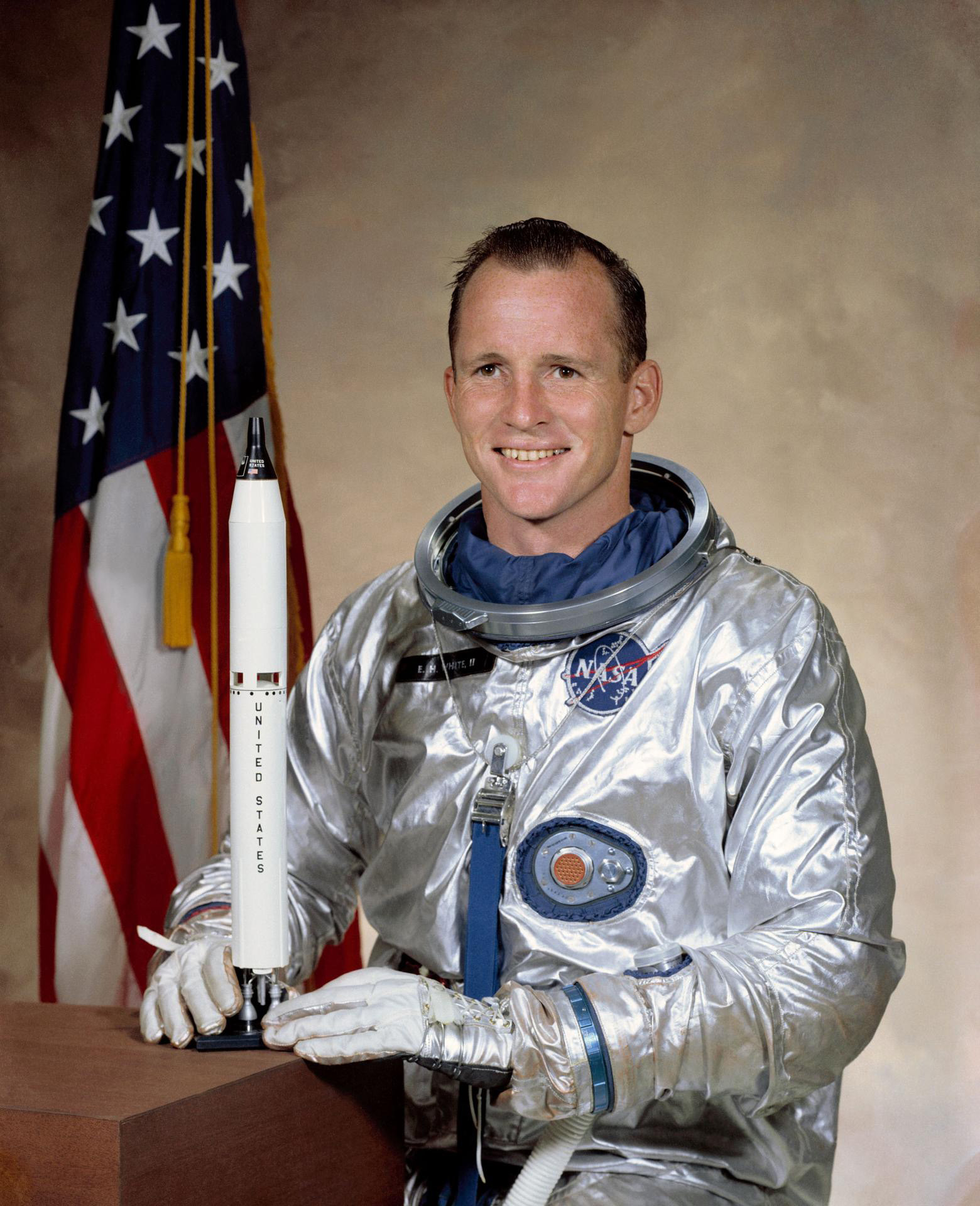
White was born in San Antonio in 1930 and earned his bachelor’s degree from the U.S. Military Academy in 1952. Seven years later, he received his Master of Science in aeronautical engineering in Ann Arbor and was later awarded an honorary doctorate in astronautics, also from U-M.
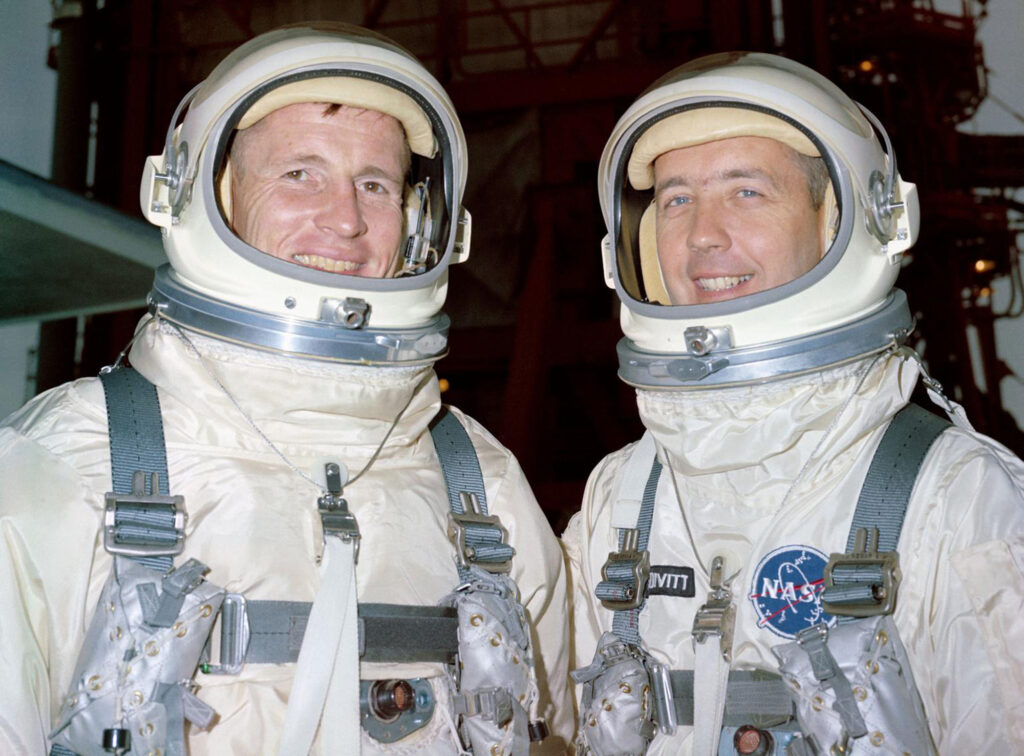
In 1965, White was the pilot of Gemini IV, a four-day mission that would orbit Earth 62 times between June 3-7. White was traveling with one other astronaut, James A. McDivitt — also a U-M alum who graduated first in his class in 1959 with a bachelor’s degree in aeronautical engineering.
Three months before the Americans’ flight, Russian cosmonaut Alexei Leonov had walked briefly in space, making him the first human to do so. The Gemini IV flight would be the U.S.’s first attempt to do the same. To mark the occasion, White and McDivitt bought American flags and had them attached to their space suits, kicking off a longstanding tradition of astronauts donning the Stars and Stripes.
On the first day of their mission, after they’d orbited Earth two times, White and McDivitt prepared for White’s spacewalk by depressurizing the cabin. As they flew over Hawaii, White threw open the capsule’s hatch and thrust himself outside. He was attached to the spacecraft by only a 23-foot tether and a 25-foot “umbilical cord,” which supplied him with oxygen. The two cords were wrapped together with tape. McDivitt remained inside.
Circling in space about 100 miles above the Earth and traveling at a speed of 17,000 miles an hour, White used a handheld maneuvering unit to propel himself around. He radioed to McDivitt and ground control, “I feel like a million dollars!”
As they flew over North America, toward the Atlantic Ocean, where the sun was setting, White was ordered to get back inside the capsule because he and McDivitt would soon be in total darkness.
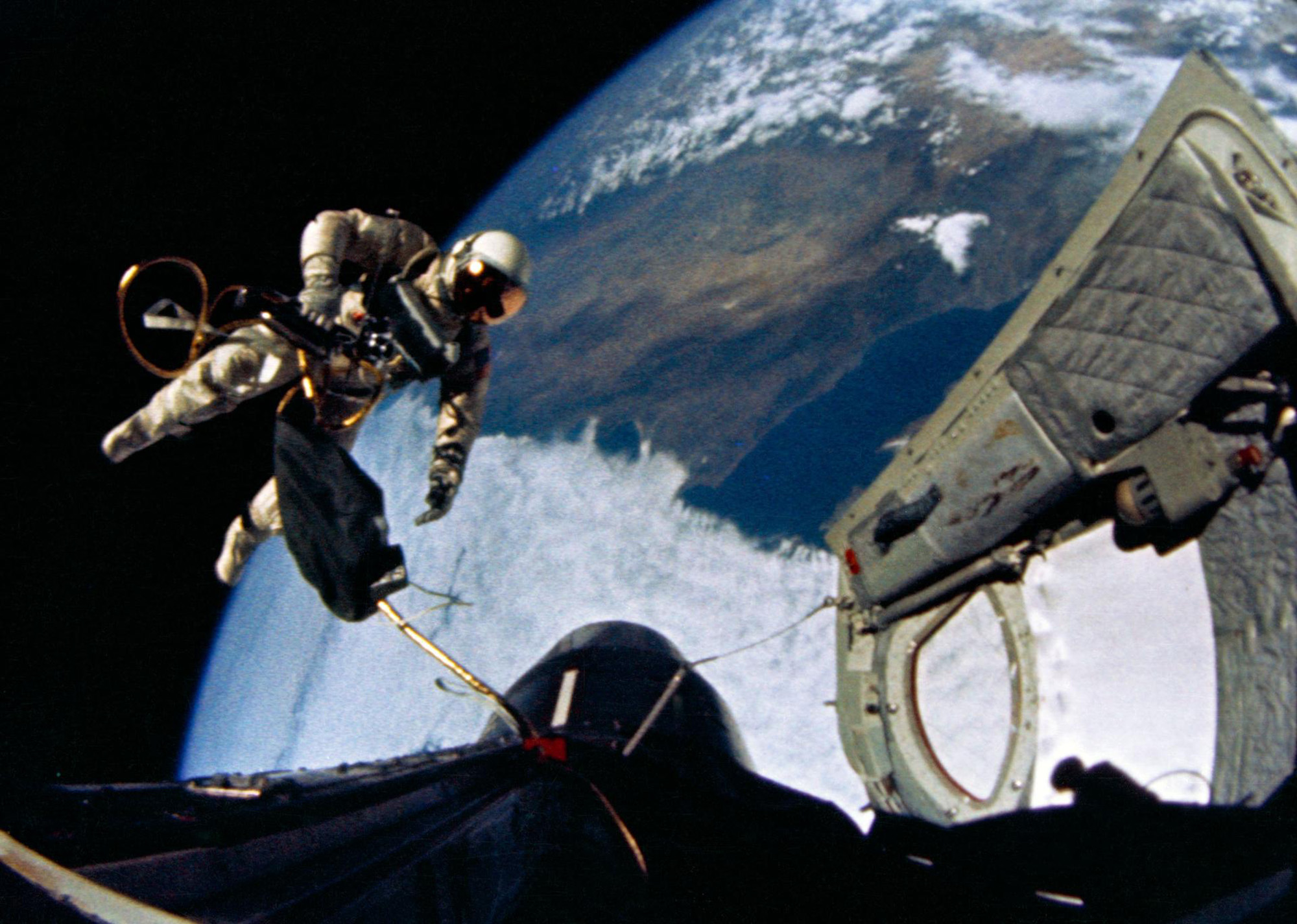
Reluctantly, White returned to the spacecraft, calling the end of his spacewalk “the saddest moment of my life.”
White’s spacewalk lasted 23 minutes, twice as long as Leonov’s excursion.
In his book “Flight: My Life in Mission Control,” NASA engineer Christopher C. Kraft Jr. wrote, “Ed White might have been euphoric during his spacewalk, but whatever he felt was tame compared to the American public’s reaction.”
White and McDivitt safely touched down in the Atlantic, returning to Earth as heroes. Their successful mission made sending a spacecraft to the moon suddenly feel like a reality.
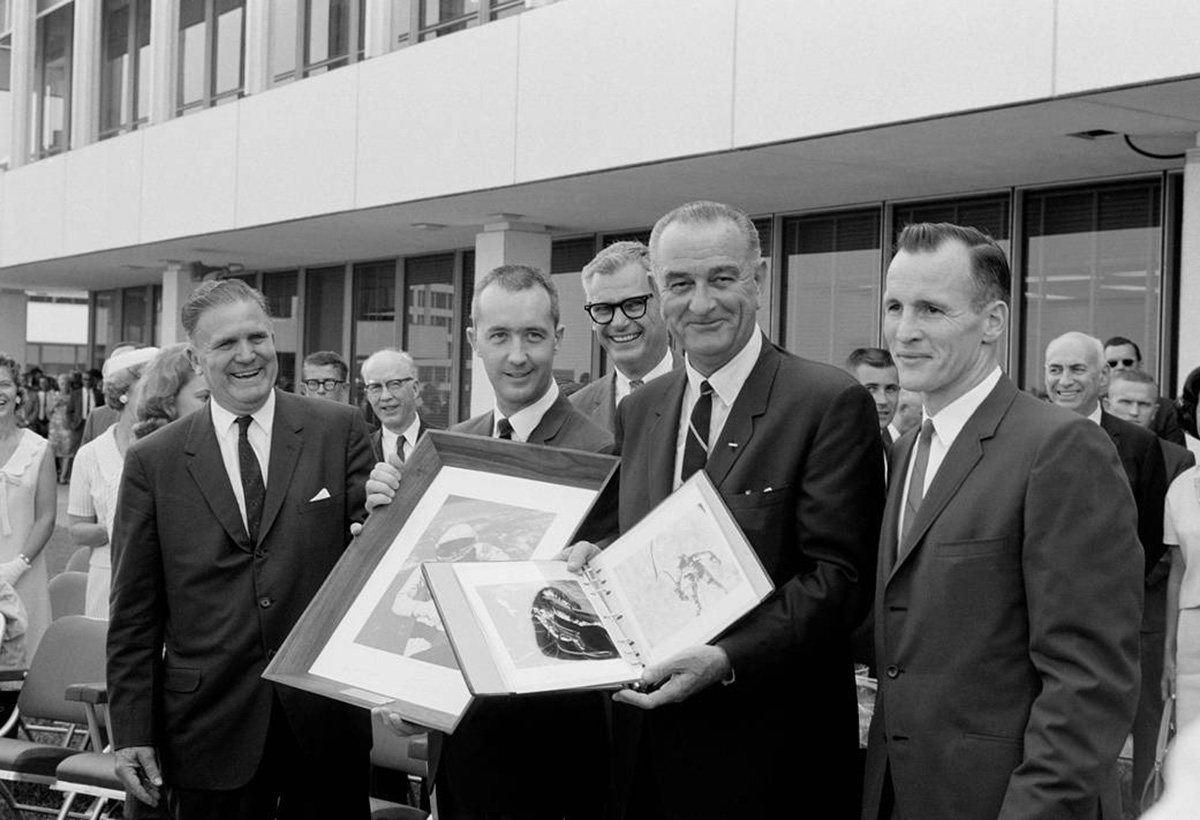
A year later, White was named a pilot on the AS-204 mission, the first three-man Apollo flight. Sadly, he would die Jan. 27, 1967, when a flash fire engulfed the Apollo spacecraft during a launch pad test at Kennedy Space Center in Florida.
White was buried at West Point Cemetery. Several years later, a plaque was installed on South University Avenue near East University Avenue in Ann Arbor to commemorate the historic flight of the two U-M alum.
In 1977, a photo of White’s 1965 spacewalk was encoded into the Voyager spacecraft’s “Golden Record,” launching a collection of sights and sounds from Earth into the solar system — and beyond.