Student Life Sustainability brings ‘campus as lab’ model to life
This year, HarvestFest 2025 will bring together students, faculty and staff to celebrate U-M’s commitment to sustainability, social change and campus creativity.
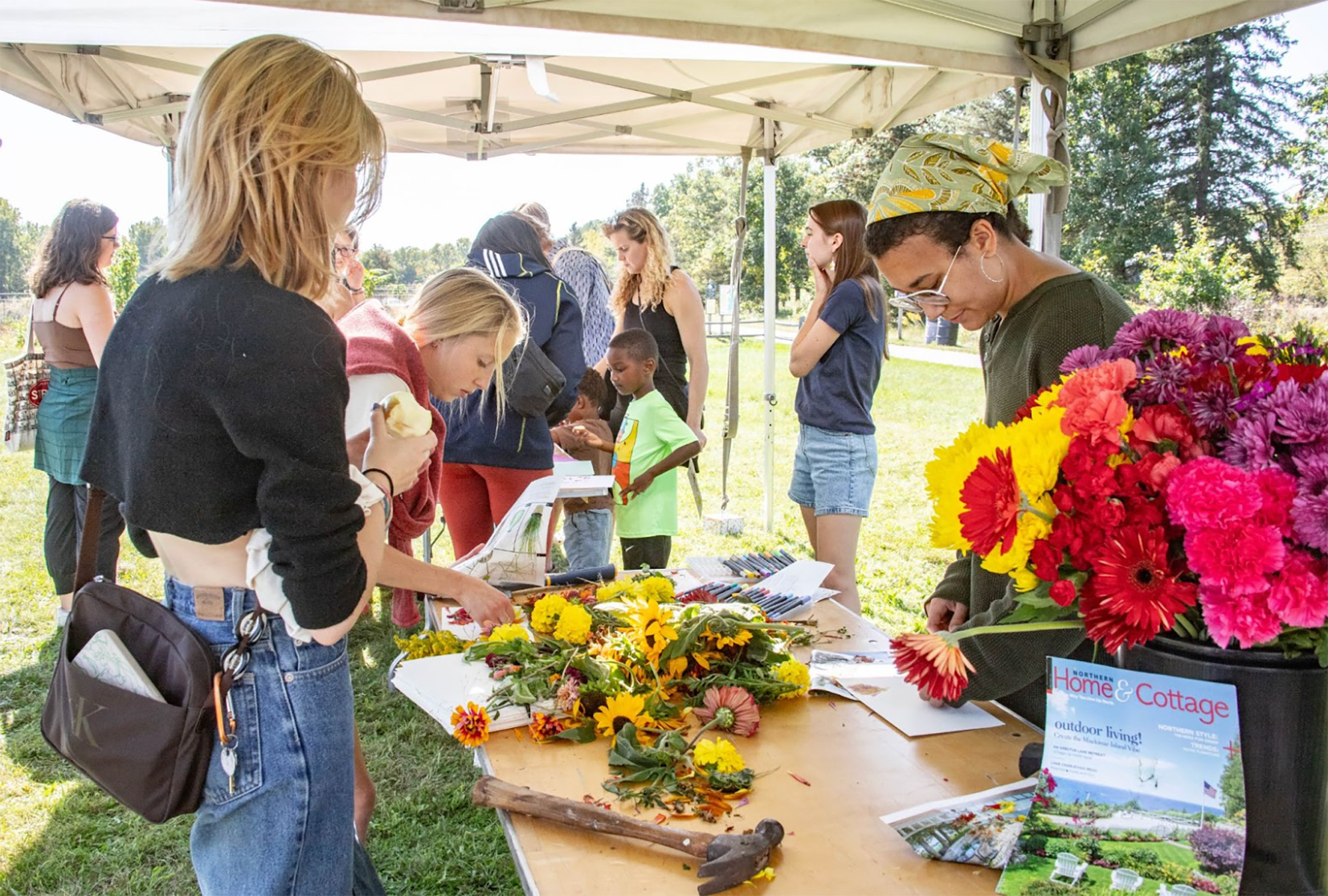
This annual event, established through a long-standing collaboration between Matthaei Botanical Gardens and Student Life Sustainability, will transform the Campus Farm at MBG into an open-air festival — from 1-4 p.m. Sept. 28 — as part of Climate Week. The U-M community can gather for student-led food programs, enjoy lawn games, arts and crafts stations, and connect around food.
HarvestFest highlights include faculty-led research on “pee-cycling,” plant-based recipes demonstrated by MDining chefs and a beading activity with the University Musical Society at the Power Center alongside with the Nigamon / Tunai show.
Student Life Sustainability uses the “Campus as Lab” model, turning the university into a place for testing bold ideas and new projects. Students learn by designing, planning and carrying new solutions to big issues such as food access, waste and energy use. By blending classroom knowledge with real-world practice, students will graduate ready to tackle today’s toughest climate and sustainability challenges.
Each year, more than 50 Student Life Sustainability interns lead campus projects and gain career experience through mentorships from the Student Life Sustainability staff and affiliates. They form unique leadership groups, including UMSFP, Sustainability Cultural Organizers, Planet Blue Student Leaders and the Student Sustainability Coalition. Together, they bring new energy and creativity to campus life while building climate-resilient communities.
Their projects have reached students, faculty and staff across the university, including the Farm Stand, a collaborative project that began in fall 2020 between students, faculty and staff across the U-M Sustainable Food Program, the Campus Farm, and the Sustainability & the Campus course.
In 2024 the Farm Stand expanded into a mobile trailer made of fallen campus trees, designed by students with support from Joe Trumpey, professor of art in the Penny W. Stamps School of Art & Design, professor of natural resources in the School for Environment and Sustainability, and professor of Program in the Environment in SEAS and LSA.
It has made local produce more accessible while also increasing the visibility of student-led sustainable farming at the Matthaei Botanical Gardens Campus Farm and UMSFP’s Student Food Empowerment Grant program, funded through the Farm Stand.
Other student projects also make a big impact.
- The FreeStore promotes a circular economy by helping keep items in use for longer.
- The Sustainability Lending Library lets students and organizations borrow items for events and activities instead of buying them.
- Joy Mapping helps highlight places on campus where people feel comfort and hope, reducing climate anxiety while encouraging joyful connections to the environment.
Student Life Sustainability also works closely with faculty and staff to support U-M’s long-term sustainability goals. Student Life Facilities staff partner with the sustainability program to study energy use, water systems, heating, cooling and waste management in Student Life buildings. These projects lower costs, save resources, and move the university closer to carbon neutrality. For students, they provide valuable hands-on learning and career preparation.
To keep growing these successes, Student Life Sustainability has launched a fundraising campaign focused on providing students with more opportunities to learn and lead. Donor support will help expand programs like the FreeStore and Lending Library, increase the number of student internships, and make U-M a national model for student-driven sustainability.