A closer look at Los Alamos, U-M research facility
University of Michigan is partnering with Los Alamos National Laboratory to develop a high-performance computational research facility that will soon provide resources needed for U-M and collaborators to tackle some of the most challenging problems society faces.
The facility will immediately increase capacity for existing U-M research on topics ranging from brain cancer treatments to earthquake-resistant building designs. It will enable teams to ask even more difficult questions, leading to bigger solutions that serve the public good.
The project is creating plenty of attention, excitement, support and opposition.
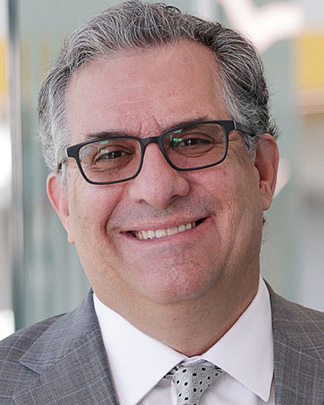
Helping unpack the complexities of this project is U-M’s Steven Ceccio, project lead and the Vincent T. and Gloria M Gorguze Professor of Engineering, and professor of mechanical engineering and of naval architecture and marine engineering in the College of Engineering.
Ceccio spoke with the Record to answer the most commonly asked questions he receives from U-M faculty, staff and students, community members and media.
What exactly is the purpose of this research facility?
Ceccio: “This research facility is not a commercial data center. It will be a high-performing computing center. We’ll use far less power, less than 1/10th of the energy required to fuel many commercial data center products. We are using specifically designed computers, chips and other technologies for specific research purposes and serving the public good. And, in coordination with the development of the facility, we are deepening our collaboration with LANL’s excellent researchers who will be working and living in Michigan as a result of this project.
The use of computational tools across the research landscape is accelerating. As the questions we ask, and the problems we try to solve, get more and more complicated, the computational resources needed to perform these advanced calculations and simulations get ever larger.
The high-performance computing facility we are developing will be a powerful tool for the U-M research ecosystem across a variety of fields, whether that’s accelerating drug discovery, conducting material science research or helping researchers rapidly identify new treatments for diseases such as cancer and infectious diseases. We can model flood risks and extreme weather with street-level precision, giving local families and emergency responders more time to prepare.”
Is a partnership with Los Alamos new?
Ceccio: “University of Michigan researchers, faculty and students have worked with Department of Energy labs like Los Alamos since Los Alamos was created. Since 1973, LANL and U-M have co-authored 1,985 publications on a wide range of technical fields. And we have an outstanding collaboration through the LANL Michigan SPARC here on campus.
A few years ago, Los Alamos leadership began searching for a partner to help them meet their future needs for computational hardware and the many scientists and engineers who will work on their problems. After examining options offered by different universities and states, Michigan and the University of Michigan won that competition.
LANL determined that U-M would be an attractive partner for both the development of the facility and the creation of a satellite campus. While the intersection between academia, these laboratories and the government goes back to the very beginning and still exists today, this is the first time Los Alamos has expanded to partner with a university in this way.”
From a scientific partner perspective, what will the U-M community gain from this?
Ceccio: “A real advantage U-M has is our people. LANL chose a location with immediate access to experienced — and budding — scientists which makes our institution a global leader in innovation. Los Alamos wants to collaborate and we want that collaboration with them. We want to have their experts, their researchers, close to our faculty, students, and collaborators — providing jobs and learning opportunities in the process.
Los Alamos will open a satellite campus here in Ann Arbor that brings scientists to Michigan to work on public projects. And to be clear, they are not moving people from New Mexico to Michigan — this facility will create 200 new, permanent jobs.”
Our portion of the research facility will feature public projects, but what’s happening at the Los Alamos side?
Ceccio: “Los Alamos researchers work on national security and classified projects. It’s important to remember that ‘national security’ in this context is much broader than people realize. It includes protecting our infrastructure from cyber threats, predicting extreme weather and securing our power grid. In fact, our first joint faculty appointment between Michigan and Los Alamos is focused specifically on making the power grid more resilient.
From a defense standpoint, Los Alamos is tasked with nuclear stewardship — not conducting live tests on weaponry, but instead using advanced computation to ensure the safety and reliability of our existing stockpile without the need for nuclear testing, especially as our stockpile ages. Computation provides an important tool for LANL to achieve this mission.”
And from a facilities standpoint, why Ypsilanti and not Ann Arbor?
Ceccio: “A big question I’ve often received is, ‘Well, if it’s such a great thing, why don’t you just build it on campus?’ And the short answer is: We’d love to. We actually tried to do that.
The main requirements for any new research center, manufacturing facility or other light industrial complex begin with the need for power and cooling. We first looked for sites on our campus, but U-M property does not have adequate electrical power line access. Therefore, we began to explore sites near campus that had the required power, water and zoning for light industrial activity.
We are exploring two sites in Ypsilanti Township that meet those needs. They offer direct access to high-transmission power lines and access to ample municipal water for cooling — not groundwater or nearby surface water.”
Expand on the environmental impact — what’s the energy consumption?
Ceccio: “Again, this is not a commercial data center. It’s much, much smaller, and our footprint reflects that. Commercial data centers often use well over 1,000 megawatts of electrical power annually. Our computational facility will use less than 1/10th that amount and also be much smaller in size.
When the facility opens, we expect to initially use around 50 megawatts annually, and it will be several years after before we ramp up to the 100 megawatt capacity being planned. But even at that upper end of usage, it’s comparable to a modest manufacturing facility, similar to the countless facilities that already exist across southeast Michigan.”
What about water usage?
Ceccio: “The Ypsilanti Township locations under consideration have access to utility water that meets our needs without putting any strain on residents or our Great Lakes environment.
We aren’t using groundwater for this, nor water from the Huron River. We would purchase water from the Ypsilanti Community Utilities Authority, which gets its water from the Detroit River.
And the authority has ample capacity. At our eventual highest operating level, we could potentially draw 500,000 gallons of water per day. The water utility currently has an excess supply of 8 million to 10 million gallons per day. So the utility actually has way more capacity than it can actually sell to their customers right now.”
What will daily life look like for neighbors of this facility, regardless of its final location?
Ceccio: “It would be a University of Michigan construction project, and we would build to the same standards that we would design any building we design and build. We are designing it in a way that’s attractive and not obtrusive, both from a visual and noise perspective.
Our plans will have to pass through the state’s regulatory review process from an environmental standpoint, including its impact on wetlands and wildlife.
We aren’t assembling products here, we aren’t doing chemical engineering, and residents won’t have the noise, sights and smells of an industrial site. We aren’t taking away residential space — the sites we are exploring are already zoned by Ypsilanti Township for light industrial use.
In fact, Amazon was a previous party exploring purchasing one of the sites we are considering. They would have used the facility as a last-mile distribution center — which would have been allowed under the zoning rules. Our research center would be much smaller and not have the truck traffic that would have accompanied that proposed project. And, if located there, only one-third of the property would be developed, leaving two-thirds of the northern boundary of the site undisturbed.”
How will U-M engage in the local community?
Ceccio: “We recognize that many members of the community have questions and concerns, and that has led to some frustration. We want to be clear: Our goal is to be a long-term, trusted partner in any community where this site will be located.
We’ve made significant efforts to communicate with Ypsilanti Township and the political leadership at all stages of this project, and we will continue to do so. We’ve held multiple public events with community members, and we will continue to plan outreach events. U-M strives to partner with our neighboring communities, and we look forward to having conversations about potential projects we could undertake in partnership with Ypsilanti Township should the facility be sited there.