Distinguished University Professor lectures set for Feb. 11
Three recipients of one of the University of Michigan’s most prestigious honors, the Distinguished University Professorship, will share highlights of their careers Feb. 11 at the Michigan Union in the Rogel Ballroom.
Christian Davenport, Sergey Fomin and Anna Stefanopoulou will each speak, followed by brief question-and-answer sessions, between 4 and 6 p.m. The public is welcome to attend, and the event will also be livestreamed.
Davenport and Stefanopoulou were named Distinguished University Professors by the Board of Regents in fall 2025, while Fomin was named in 2024.
The Distinguished University Professorship was established in 1947 by the regents to recognize senior faculty members with exceptional scholarly or creative achievements, as well as national or global reputations for academic excellence and superior records of teaching, mentoring and service.
Honorees name their professorship after a person of distinction in their field, often someone associated with the university. Newly appointed recipients also give an inaugural lecture that highlights their professional and scholarly experience.
Here is a brief summary of each honoree’s career and a preview of what each will present:
Christian Davenport
Lecture: “Rebels, Repressors, Regular Folk and Me: A 30 Year Reflection of the last 75 years (in 20 Minutes)”
Davenport is the Charles Tilly Distinguished University Professor of Political Science. He is also a professor of political science and a professor of AfroAmerican and African studies in LSA, and a professor of public policy in the Gerald R. Ford School of Public Policy.
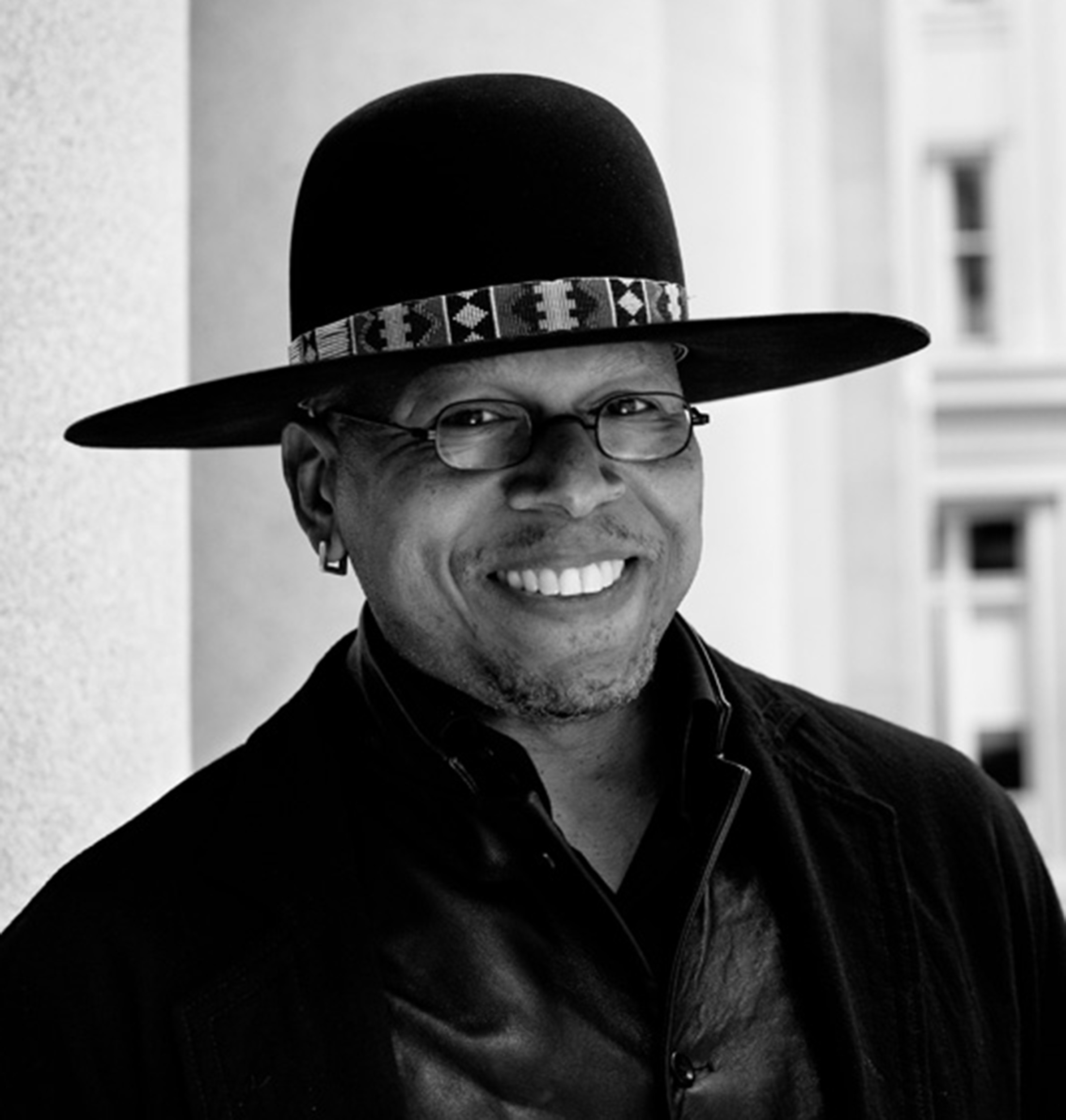
For nearly 30 years, Davenport has been at the forefront of studying state and non-state uses of coercion and force.
Across five books and more than 50 articles, Davenport has examined onset, escalation, de-escalation, termination, recurrence and co-evolution in relevant behavior both globally and across diverse cases — most notably in the United States, India and Northern Ireland.
His work has received numerous grants, including 12 from the National Science Foundation, as well as awards, including a fellowship with the American Academy of the Arts and Sciences, the Victoire Ingabire Umuhoza Prize for Democracy and a best book award from the American Political Science Association. Insights from this scholarship have influenced not only other academics but also governments and civil society institutions throughout the world.
More recently, Davenport has engaged in more artistic endeavors, including a collaboration with the artist Rick Lowe to be shown in the U-M Museum of Art next year. His newest interest involves what he calls “Political Love.”
In their recommendation letter to the Board of Regents, Laurie McCauley, provost and executive vice president for academic affairs, and Michael Solomon, Rackham Graduate School dean and vice provost for academic affairs – graduate studies, wrote, “Professor Davenport’s work is characterized by a blend of rigor and accessibility, contributing significantly both to scholarly discourse and policymaking, garnering global recognition.”
Davenport’s presentation will explore what political conflict and violence is — genocide, human rights violations, protests, protest policing, terrorism, counter-terrorism, insurgency, counter-insurgency, revolution, counter-revolution, everyday resistance and domestic spying. He will also examine what is less known: why these activities take place, as well as what they influence when they do occur. The lecture will synthesize quantitative, qualitative and artistic explorations from global to group-specific analyses of the last 75 years.
Sergey Fomin
Lecture: “Weave Patterns and Projective Geometry”
Fomin is the Richard P. Stanley Distinguished University Professor of Mathematics. He is also a professor of mathematics in LSA.
A native of St. Petersburg, Russia, Fomin came to the United States in 1992. After seven years at MIT, he joined U-M.

Fomin has made breakthrough contributions to mathematics, including, in collaboration with Andrei Zelevinsky, the introduction and development of the theory of cluster algebras. This groundbreaking concept has found important applications across multiple fields and was recognized by the Steele Prize for Seminal Contribution to Research (American Mathematical Society, 2018).
Fomin is a member of the American Academy of Arts and Sciences. He is also a fellow of the AMS, a member of its council, and a former chief editor of its flagship journal.
“Professor Fomin has been honored for his field-shaping research at the highest level. His creativity and the warmth and respect he exhibits to colleagues is also evident in his teaching and mentorship,” wrote McCauley and Solomon in their recommendation.
Fomin’s presentation will discuss a recently discovered connection between two classical subjects: the combinatorics of interlacing weave patterns and the geometry of line configurations in the projective plane.
Anna Stefanopoulou
Lecture: “Battery Middle Life Crisis and Decisions”
Stefanopoulou is the Huei Peng Distinguished University Professor of Mechanical Engineering. She is also the William Clay Ford Professor of Technology and a professor of electrical engineering and computer science in the College of Engineering.

Stefanopoulou received a diploma in naval architecture and marine engineering (1991) from the National Technical University of Athens and a Ph.D. (1996) in electrical engineering and computer science from U-M.
After working at Ford Motor Co., she joined U-M’s faculty in 2000, founded the world’s first academic research group in fuel cell and battery control, led breakthrough work that created digital twins of advanced propulsion systems, and developed robust sensing and calibration algorithms critical to electrified powertrains.
Her scholarship, patented inventions, and industry collaborations have informed U.S. and international policy, including work with the EPA, the Department of Energy, and the United Nations. As a mentor to over 50 doctoral and postdoctoral researchers and hundreds of students each year, Stefanopoulou has built U-M into a global epicenter for powertrain education and research. She is also an elected fellow of IEEE, ASME and SAE, and a recipient of major international awards for innovation and education.
“A hallmark of Professor Stefanopolou’s work has been bridging the worlds of academia, industry and policy. Her engine breathing models are now ubiquitous in production engines,” wrote McCauley and Solomon in their recommendation letter.
“As a result of her expertise, she consulted for the U.S. Department of Justice in several diesel emission investigations. Her battery models and algorithms span the entire lifetime of batteries … Due to this vast impact, she was one of the three academics the U.S. Department of Energy invited to participate in the Li-Bridge committee, one of the DOE Committees for The National Blueprint for Lithium Batteries.”
Stefanopoulou’s presentation will focus on her recent efforts in managing aged, dead and exploding batteries, because battery durability and safety are key concerns for electric vehicles and grid- or home-connected energy storage. She will show how validated digital twins protect and estimate battery state of health from manufacturing to end-of-life. These digital twins also avert mid-life crises and guide decisions to repair, replace, repurpose and finally recycle.