LSA lecturer encourages his students to be free thinkers
One of Randy Tessier’s earliest acts of rebellion was publishing the Liberal Student Dispatch and distributing it on a public bus in the Upper Peninsula. In 1968, he handed out 25 copies of a one-page mimeograph that, among other things, satirized his school’s dress code. He was subsequently expelled from Gwinn High School.
It was the 1960s — a time of transformation and turbulence, and the long-haired, musically inclined Tessier was not immune.

“In 1962, I wanted to be an Army man. I had a Daniel Boone cap. By 1963, I was against war and wanted to be one of the Beatles. It was that time of transition,” said Tessier, a lecturer II in comprehensive studies and in English language and literature in LSA.
“Who knows how enlightenment comes, but all of a sudden it came to me that we live in a racist, homophobic, misogynistic society.”
That impulse to question authority and create space for collective expression would shape his life. In his role today as a U-M lecturer, Tessier brings that skepticism of hierarchy to his classroom, labor organizing and music.
Around Ann Arbor, he is well known for organizing and performing at the affectionately named “Geezer Happy Hour” on Friday nights. At these outings, a crowd of adults 60 and older gathers at Live Nightclub on South First Street to dance to classic rock, soul and blues. In 2022, The New York Times called the weekly meet-up “the coolest rock show in Ann Arbor.”
“There’s been ladies there with walkers that are 80-some out on the dance floor. I just think dancing and music is a more immediate way of connecting as a community of people,” Tessier said.
For Tessier, counterculture is more than rebellion; it’s about questioning who holds power, whose voices are heard, and who gets to belong. Bringing together his generation — who he calls the “silver tsunami” — is a loud refusal to fade quietly from public life and instead claim space on the dance floor.
After his expulsion from high school, music became central to Tessier’s life. He formed a band called Walrus and moved to Ann Arbor with his wife. After the birth of his son, Tessier earned his GED at the age of 36, got a bachelor’s degree at Eastern Michigan University and earned a Ph.D. from U-M.
Since arriving in Ann Arbor in 1972, Tessier has been the party curator, making music and dancing with some of the same people for decades.


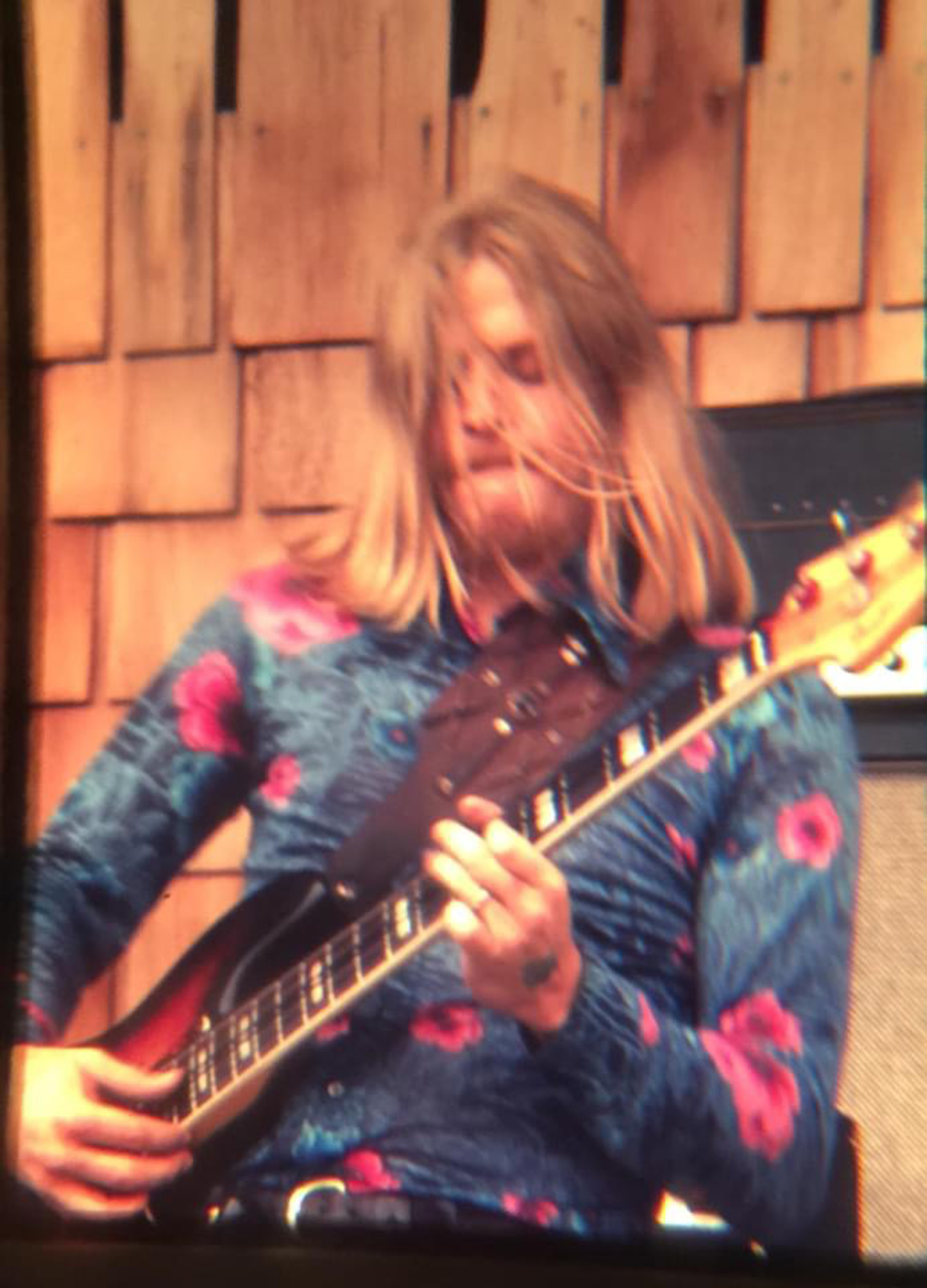
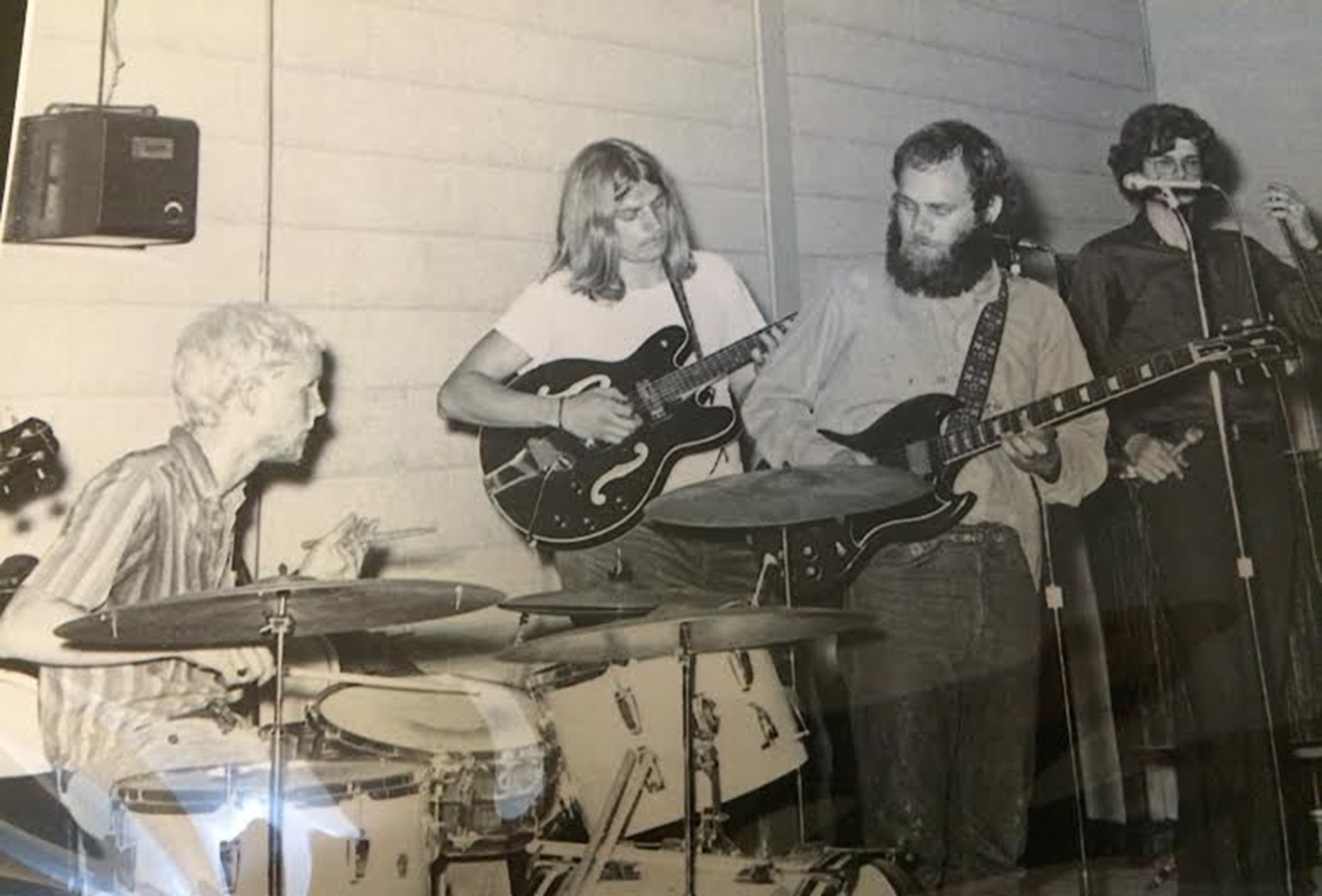
“We haven’t changed, we’ve just gotten older. So now we’re just older people trying to do what we always did,” Tessier said.
Over the years, Tessier has lent his talents to fundraisers for progressive causes. This includes benefits for recently incarcerated individuals and for Groundcover, the newspaper sold by and to benefit Ann Arbor’s homeless residents.
Tessier has used his music to express his political and social beliefs, although he describes his approach as prioritizing narrativism over didacticism. In other words, showing, not telling.
“If you listen to my song ‘Texas Blues,’ it’s about abortion and pro-choice issues, but it implies that, it doesn’t hit you over the head with a moral message,” Tessier said. “In my songwriting, I like to write songs that insinuate the moral of the song more than tell you what it is.”
Although he holds strong convictions, Tessier is comfortable living in gray areas. A self-proclaimed secular humanist, he wears a “What Would Jesus Do” bracelet gifted to him by a staff member at North Campus Recreation Center.
“I’m good with the teachings of Jesus, ‘feed the poor, heal the sick,’ those all resonate with me,” Tessier said.
“When I saw [the staff member] yesterday at the gym, he said, ‘Do you talk to Jesus, really?’ I said, ‘No, but I listen to him.’”
That same open-mindedness shapes Tessier’s teaching. In the classroom, Tessier rejects rigid hierarchies in favor of conversation, improvisation and trust — often sitting at the same level as his students and inviting them to wrestle openly with ideas rather than arrive at tidy conclusions.
“I want them to be free thinkers. My conservative students are very comfortable with me,” Tessier said. “I encourage them; some of them have conservative views. I welcome those, and we talk about them.”
NOMINATE A SPOTLIGHT
- The weekly Spotlight features faculty and staff members at the university. To nominate a candidate, email the Record staff at [email protected].
Being a lecturer in the Comprehensive Studies Program, or CSP, is a culmination of Tessier’s countercultural life; the program is housed in LSA and admits undergraduate students who identify with populations historically underrepresented in U.S. higher education.
“My great joy is being in CSP because I’m helping people that come from lesser socioeconomic circumstances,” Tessier said. “We’re trying to help students that might not normally get into the university because of class or race or geography.”
Although it’s been decades since Tessier was the age of his students, he sees the countercultural spirit in them.
“I see some of the best aspects of the highest ideals we did have in the ’60s about peace and love,” Tessier said. “They have an urge, just like we did with the counterculture, to think about themselves as a community rather than individuals.”
In 2022, that belief in community became more than philosophy — it became a necessity. Within nine days, he lost both his son and his best friend. Tessier kept playing. He kept organizing. He kept showing up, not for performance, but for survival.
“Grief is an absence without meaning,” Tessier said. “Most things in life, you can connect a meaning to. There’s no meaning when somebody close dies, and it’s unexpected.”
Music, and the community built around it, became a way to remain present rather than retreat. Friends, fellow musicians, dancers, and longtime collaborators in Ann Arbor carried Tessier through loss, offering continuity where explanation failed. The same collective spaces he had spent decades building became the spaces that held him.
The experience reinforced what he’s always known: that culture, community and collective joy aren’t luxuries, they’re lifelines. He hopes the scene he has helped build outlives him.
“I hope the legacy of our happy hour is that someday there’s going to be old people that want to hear somebody doing Taylor Swift’s catalog,” Tessier said.
— Editor’s note: This story has been updated from its original version to accurately reflect a T-shirt worn by Randy Tessier.