U-M adjunct assistant professor supports U.S. athletes as sports physiologist
Geoff Burns knew his dream job was a bit of a unicorn.
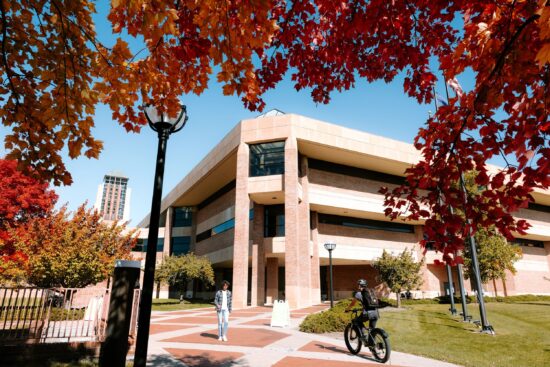
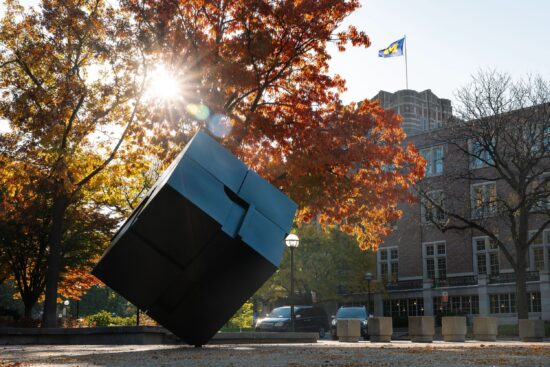
But he also knew his time at the University of Michigan had provided the kind of resumé employers could not overlook — bachelor’s and master’s degrees in biomedical engineering through the Engineering Global Leadership Honors Program at the Tauber Institute for Global Operations and a Ph.D. in kinesiology, along with working in the Department of Orthopedic Surgery as a biomechanics engineer and a two-year stint as a post-doctoral fellow.
RELATED STORY
“I wanted to be a sports scientist/physiologist at an elite level with sports that I cared about. There’s a handful of those jobs in the world,” he said. “I already started to think about this as I was doing my Ph.D. that I need to set myself up so that I have the experiences and skills that if one of these jobs ever opens up, there’s no chance I can’t get it.”
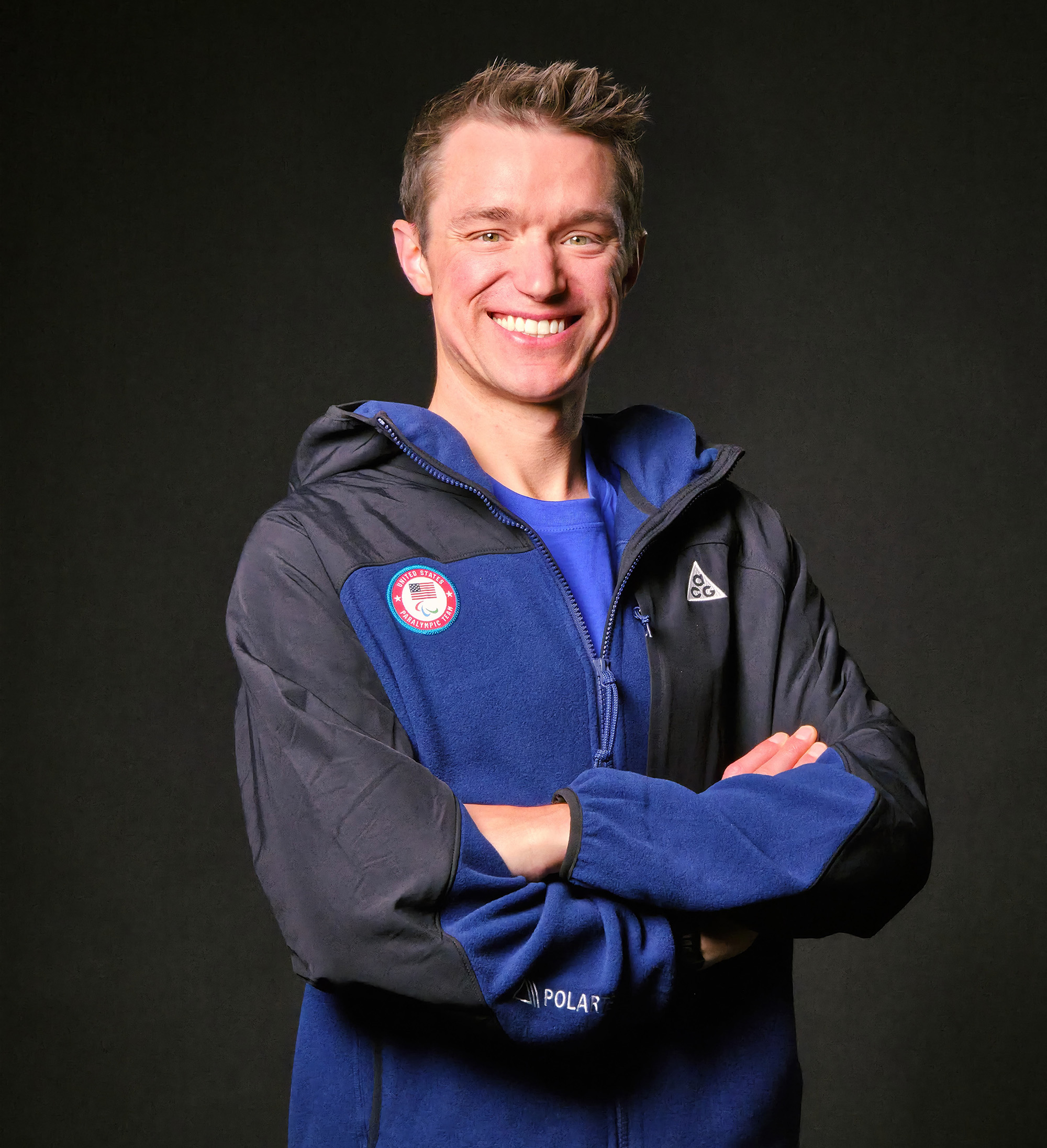
In 2022, one of those jobs opened up. Burns got it.
Burns, an adjunct assistant professor in the School of Kinesiology, is a sports physiologist for the U.S. Olympic and Paralympic Committee, putting him at the center of the preparation and training of the United States’ world-class athletes.
With the Winter Olympic Games underway through Feb. 22 in Milan and Cortina, Italy, and the Paralympic Games afterward from March 6-15, the work of Burns and his colleagues will be visible on a global stage where the stakes are as high as the Dolomites.
“That’s why I wanted to do this job and that’s why I love this job,” he said. “I’ll be the first to tell you it’s really stressful in the moment and during those periods, but that is where I feel I’m at my best. That’s an appeal to me.”
A suitable role
Burns’ role with the USOPC is working with athletes and coaches to assess the different aspects of an athlete’s physiology and biology to ensure they can train intelligently but also measure whether their training is effective.
The work combines all the skills Burns was exposed to during the Tauber Institute program, which combines traditional engineering curriculum with Stephen M. Ross School of Business and LSA courses.
Burns, a track and cross country letterwinner while at U-M, learned about process improvement and optimization while in the Tauber Institute. But those lessons weren’t tied to athletics, until Burns made the connection.
“It was all best practices in the supply chain world, the automotive world. And I remember being in those classes thinking, this is sports training,” he said. “So that informs a lot of what I do now in the sense that my goal is to make our processes in preparing our athletes for competition as lock-tight as possible, and my task is to use science to do that.”
A main point of the process, Burns said, is working backward from the competition year to set a strategy for success. Immediately after the Games, athletes are recovering, then one year later, they start workshopping training programs and structures. Two years out, those plans are put in place before being rehearsed a year from competition. By the time the year of the Games arrives, it’s muscle memory and refinement.
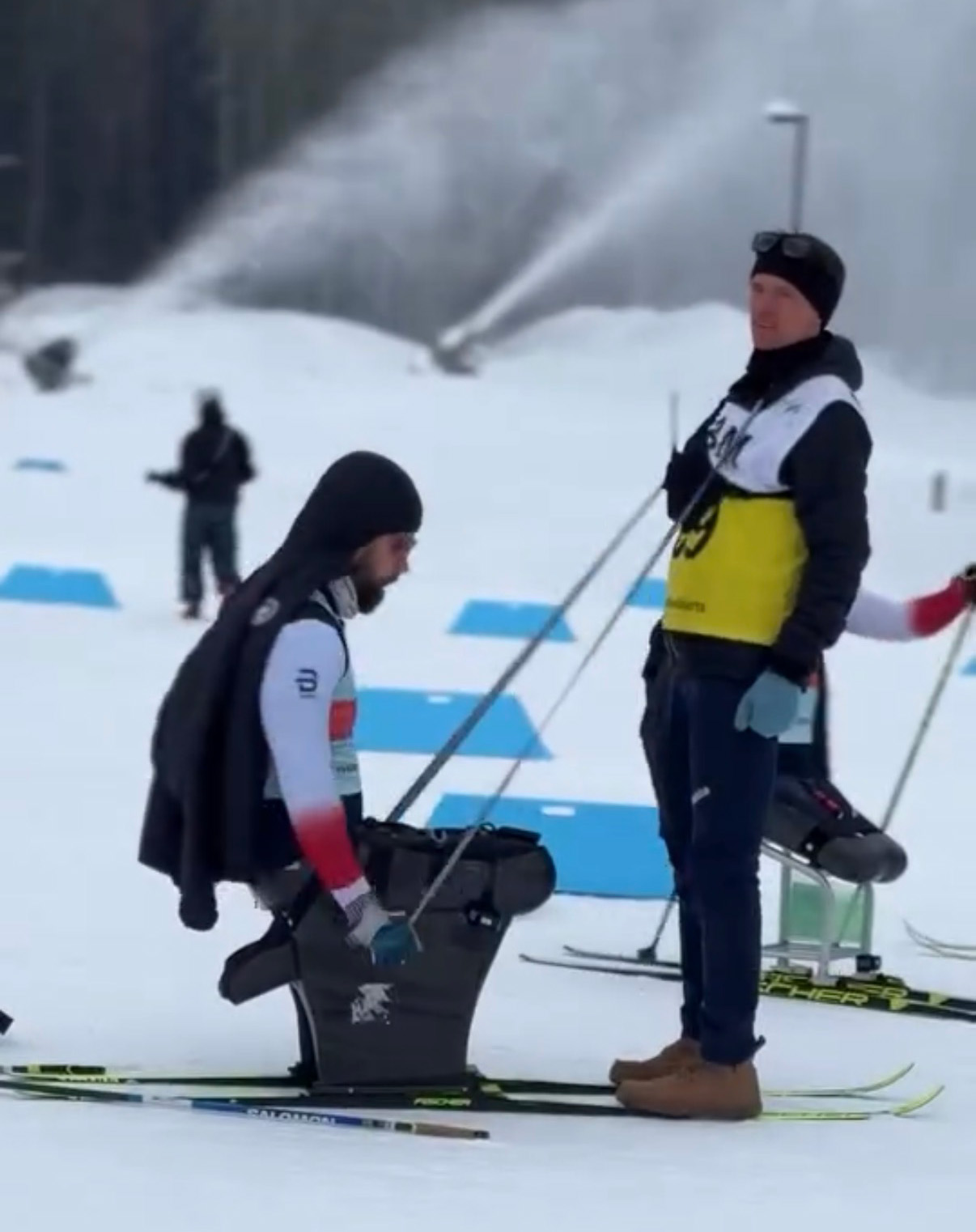
The first group of athletes Burns worked with when he started at the USOPC four years ago will compete in the Milan Cortina Games later this month. He will spend the bulk of his time in Predazzo, Italy, with the Paralympic cross-country and biathlon teams.
“I started working with them really the day I started,” he said. “I’m very, very excited for these Games because I’ve worked so closely with them. They were the team that more than anybody grabbed onto that idea and said, ‘OK, let’s implement these checks in our athletes and processes along the way and iterate them Year 1, 2 and 3.’ And now we’re there.”
Burns serves essentially as an assistant coach to athletes, refining an athlete’s training based on scientific data. Another big part of the responsibility is environmental preparation, whether it’s altitude or climate.
“Summer Games have always been hot, but they’re getting hotter and more unpredictable so environmental preparation is a huge piece of what I do,” he said.
From Paris
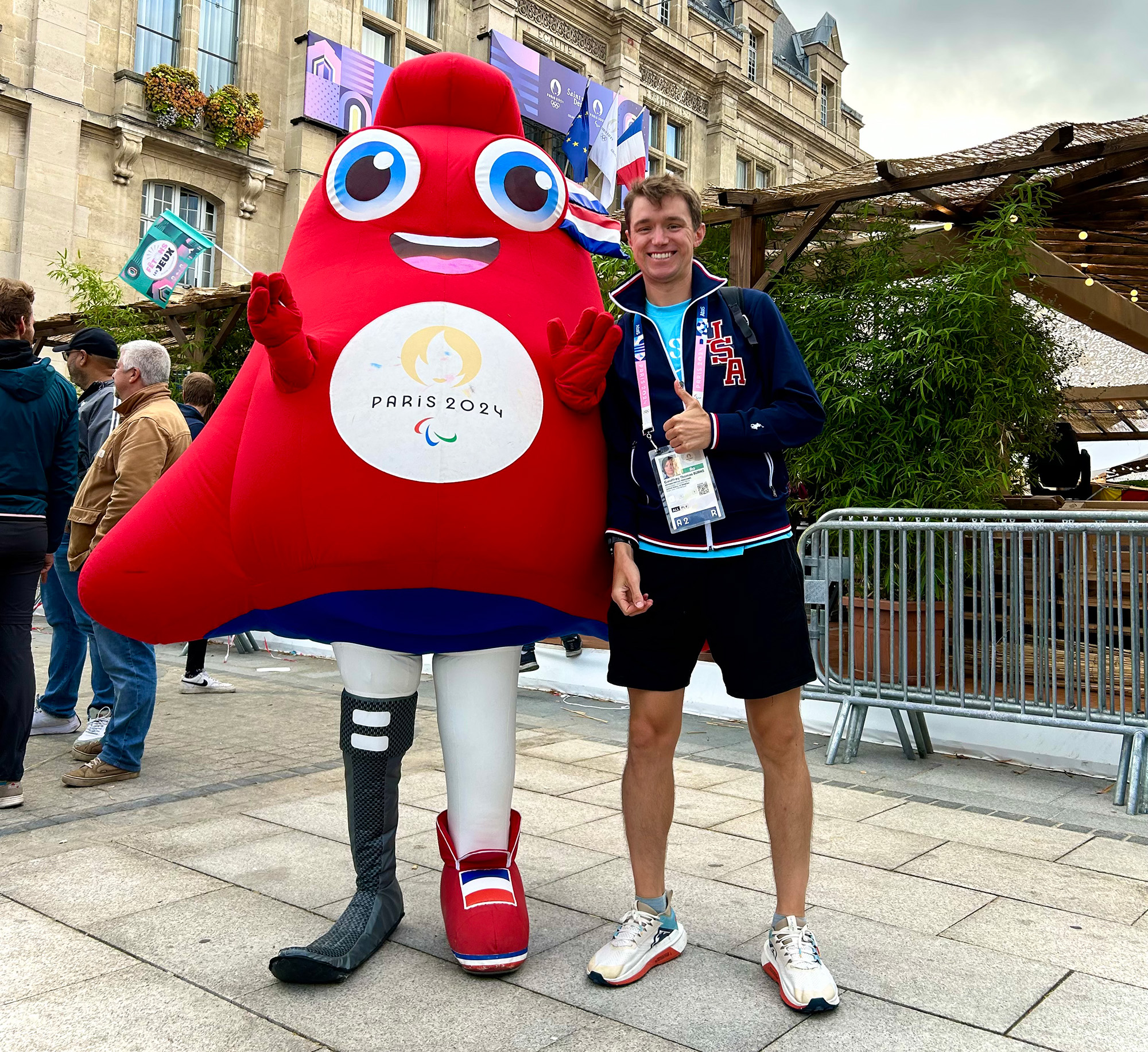
A Traverse City native, Burns said he was a big fan of the Olympics growing up, especially the Winter Games. Being on the inside of the USOPC and having been to the 2024 Paris Summer Games, his eyes have been opened to how much greater emphasis is placed on the Summer Games.
“The Winter Olympics are still a very important thing, but they don’t occupy the focus and the massive amount of resources that go in,” he said. “The scale of them is dramatically different, just how much smaller the Winter Olympics are in terms of sports and athletes.”
Being in Paris for the Games was transformative. Burns said he was prepared for the packed stadiums and venues for the competitions — “you go to a football game at Michigan Stadium, and you’ve got 115,000 people, so I’ve been in packed stadiums before” — but the Olympic and Paralympic village felt like it was from another world.
Hundreds of athletes from countries all over the world co-existing in a secure space being bused in and out, no currency necessary and food available day and night — it was an all-inclusive resort on a massive scale.
“The village felt as close to what a utopia could be. All athletes, all sports, all nations living together,” he said. “It’s impossible to describe the impressive logistics. That was something I had no frame of reference to expect.”
Burns worked most closely with the U.S. Paratriathlon team, first supporting them at their pre-competition team camp in Vichy, France, then on the streets of Paris during the races. That team took home eight medals collectively, more than any other nation previously in the sport. He also worked with other endurance sport athletes in para track and field, para swimming and para cycling.
Burns said he wasn’t surprised the 70,000-seat track and field venue was sold out for the finals of the Olympics, but he didn’t expect it to sell out for the Paralympic competitions, and it did.
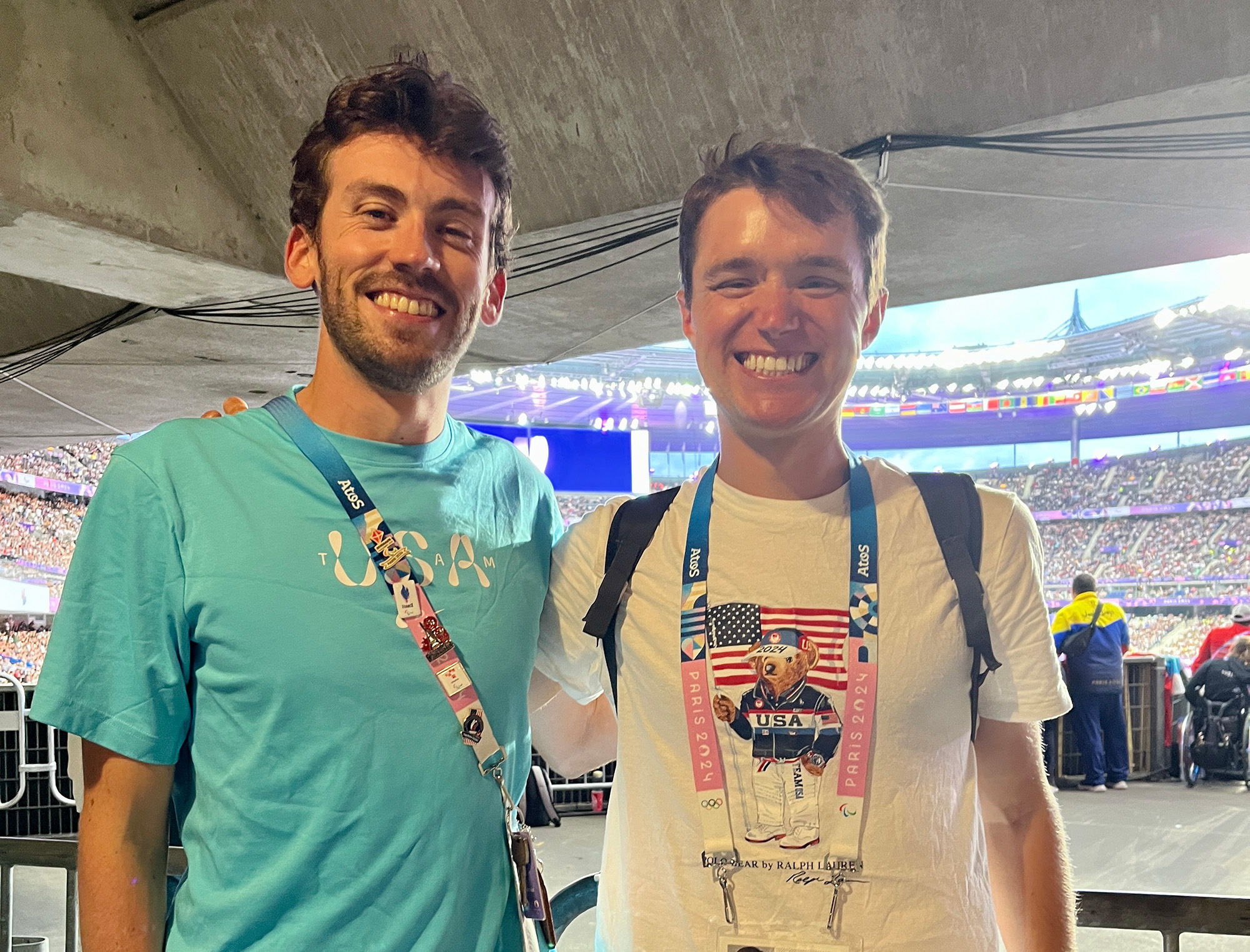
Because of his role with the USOPC, his credentials granted him wide access. Burns was at the swimming finals when a French swimmer unexpectedly won a gold medal. The place erupted in a way he’d never heard before.
“It’s all the red, white and blue of France, it was deafening. It was one of those moments that was like, ‘Holy cow, this is something altogether very different,’” he said. “My credential made me feel like I was kind of Charlie and the Chocolate Factory with the golden ticket. As a fan of sport in general, that was a very cool access thing.”
To Italy … and then L.A.
Burns said he will spend roughly a month in Italy, leaving in the middle or toward the end of the Olympic Games and returning in mid-March. His team will have already been in the country for a week or so, staying at a camp a couple of hours from the venue in Predazzo to get acclimated with the altitude.
“It’s getting back to this idea of the physiologist helping them dial in,” he said. “We like to be at altitude as long as we can before racing so we have a performance advantage.”
Winter competition provides a unique challenge that summer sports lack. In sports like track and field, cycling and swimming — what Burns called “stopwatch and tape measure sports” — an athlete can know whether they are performing well independent of the competition. The stopwatch or tape measure will tell them.
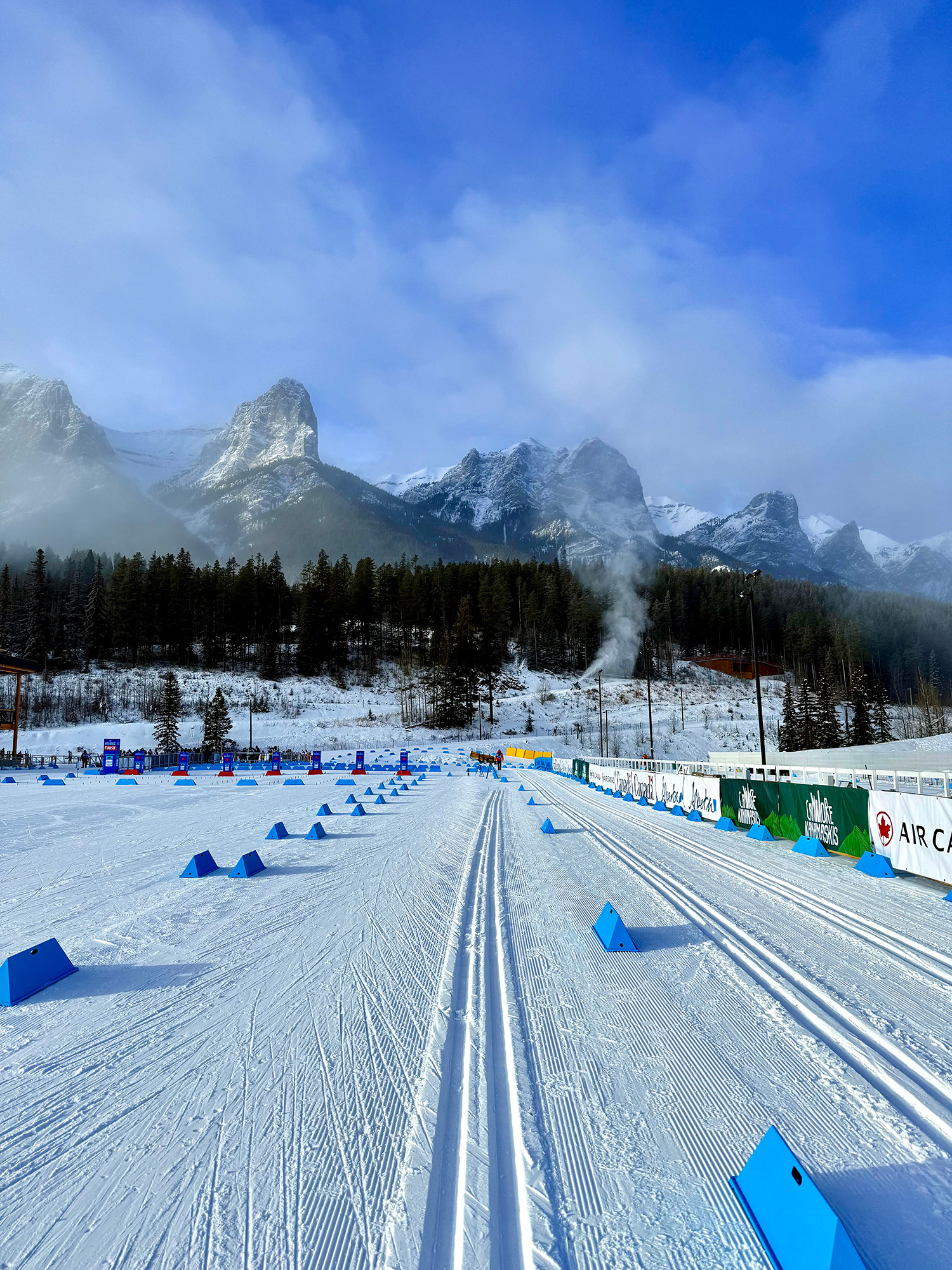
Snow sports are more prone to the elements. A course can change over a small amount of time based on snow conditions. For skiers, that’s where waxing comes particularly into play, and Burns said he’s intrigued to see the operation on the Paralympic stage after witnessing it at the World Cup racing level in December.
“I think that’s probably something that people watching at home will not know or have no concept of, but these half-dozen athletes might have a half-dozen or a dozen people testing their skis and taking snow temperature measurements and humidity and forecasts,” Burns said. “The level of complexity and dimensionality of the waxing of skis is insane.”
Because it’s such an important aspect of the competition, waxing can render any of the training Burns has implemented worthless if not done properly.
“It’s sort of frustrating to me as a physiologist. You can prepare an athlete perfectly, get them in the best physical fitness of their life, but if the waxing and the ski selection is not correct, they’ll get buried,” he said. “For a person with an engineering background, (the waxing process) is both overwhelming and also enamoring.”
Burns’ focus and attention have been on the athletes competing in Italy, but he’d be lying if he said one eye has not been on the 2028 Los Angeles Summer Games. Once the Milan Cortina Games conclude, he said he will turn his attention to both the Olympic and Paralympic teams that will compete in Summer Games on home soil for the first time since 1996.
Athletes who competed in Paris are already beginning to follow the process of charting training programs and putting pieces in place to ensure the most competitive teams are fielded when the Games roll around in two years.
“I left Paris thinking, ‘There’s no way we can top this. Paris won.’ But I think L.A. will bring their own brand of American exceptionalism to the experience, and I think the American public, if nothing else, adores sports, and I think that energy is going to be felt,” he said.
“The stakes could not possibly be higher with a home Games, and I’m excited to help our athletes chart that because that can be crushing if done wrong, but it can also be energizing if you harness it well and I’m excited for that for sure.”