Assistant professor explores the Asian diasporic family life
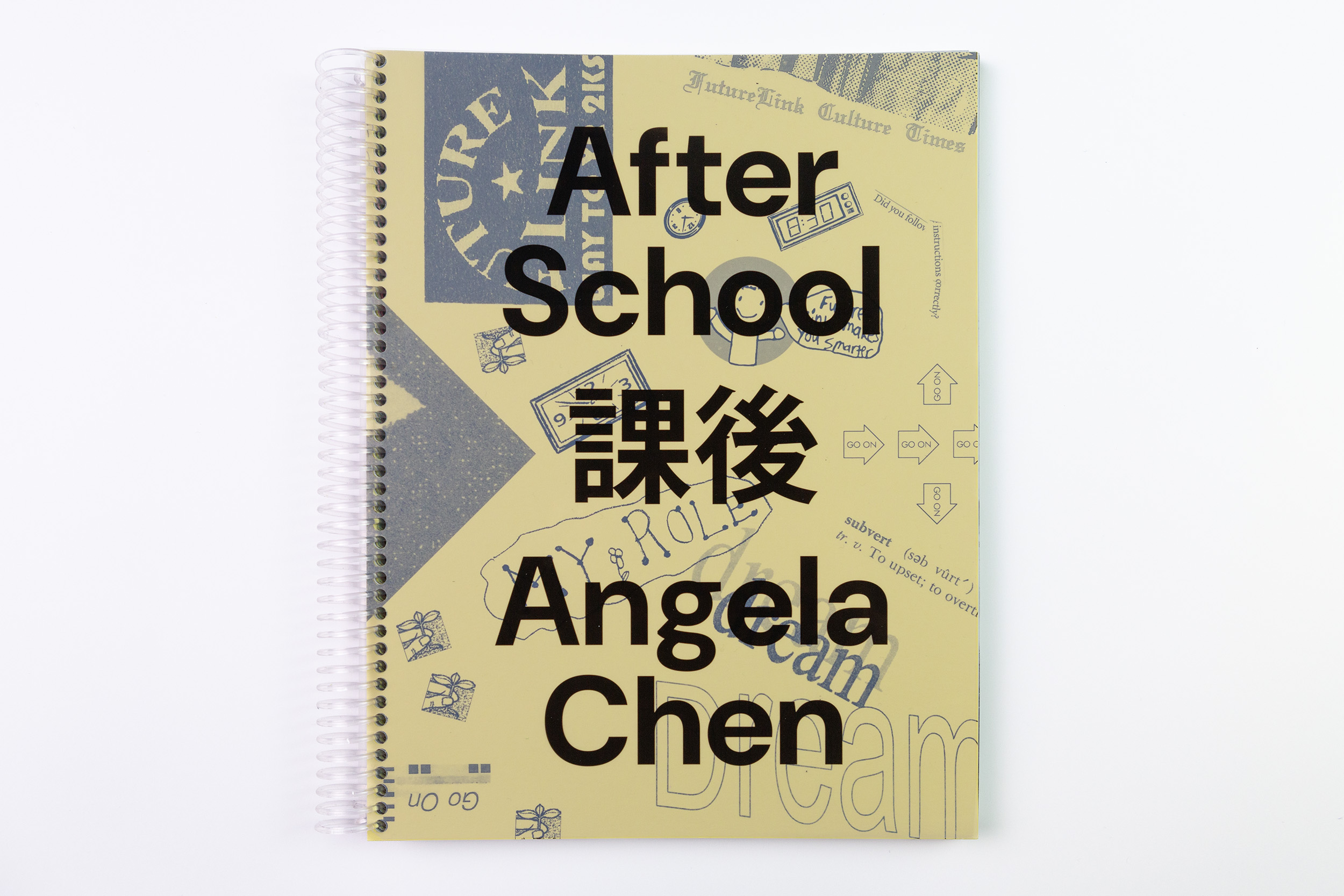
In her new project, “After School,” part memoir/part art installation, Angela Chen shares her personal experiences growing up in her family’s buxiban, an after-school tutoring center also known as a “cram school.”
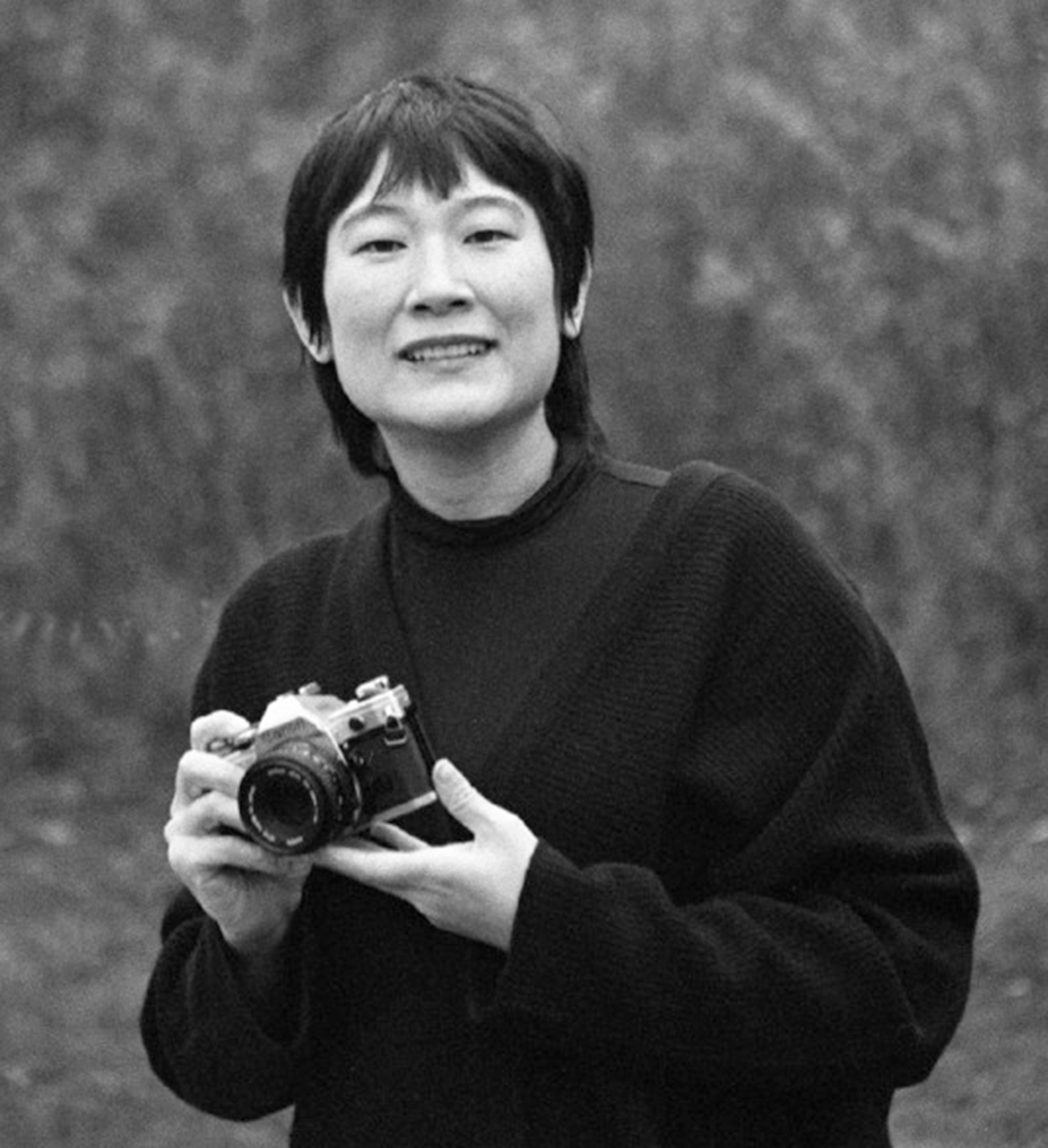
Her goal is to offer a deeply humanizing view of this little-documented reality of Asian diasporic family life.
“In the current political moment, I realized that this anti-immigrant rhetoric and action, the way politicians are vilifying immigrants and restricting their movements, is an echo of the same kind of anti-immigrant rhetoric from the Chinese exclusion era,” said Chen, an artist, writer and assistant professor of art and design in the Penny W. Stamps School of Art & Design.
She traces a line from today’s headlines, where certain immigrants are branded criminal or undeserving, to the decades before and after the Chinese Exclusion Act of 1882.
“Chinese people were the first people in America required to hold photo identification cards, and the photographs used on their cards followed the same conventions as mugshots,” she said.
While Chen describes her need to counter this dehumanization through personal narrative as urgent, the relevance of her work is evergreen.
“I have a desire to share my personal experiences, allowing people who are not familiar with after-school programs like these to know more about what they are like, and allowing those who experienced them to see our own experience reflected,” she said.
Growing up after school
“Some children grow up in an apartment or a single-family home. I grew up in a school, which was also my family business,” Chen writes in the opening lines of “After School,” the book part of her project.
In California’s San Gabriel Valley, in the 1990s, when waves of Asian immigrants sought new footholds in the U.S., Chen’s parents opened Futurelink School, a buxiban for a new generation of children negotiating culture, language, and American expectations.
While Futurelink’s focus was academic, the center also served as an affordable after-school childcare provider for immigrant families working long hours. Pupils learned math, English, and the mechanics of excelling in American public schools. But the deeper lessons, Chen suggests, were about discipline, survival, and finding success through perfection within a country whose welcome has never been quite certain.
“Buxiban culture requires a focus on academic excellence, on correctness. This kind of environment … can feel oppressive, or restrictive, or stressful, or competitive,” Chen said. “And at the same time, you spend so much time there that you still have fun at recess and make friends.”
In addition to being a social and academic hub for Chen, Futurelink was a place of familial duty; Chen began tutoring the youngest pupils when she was just in fourth grade.
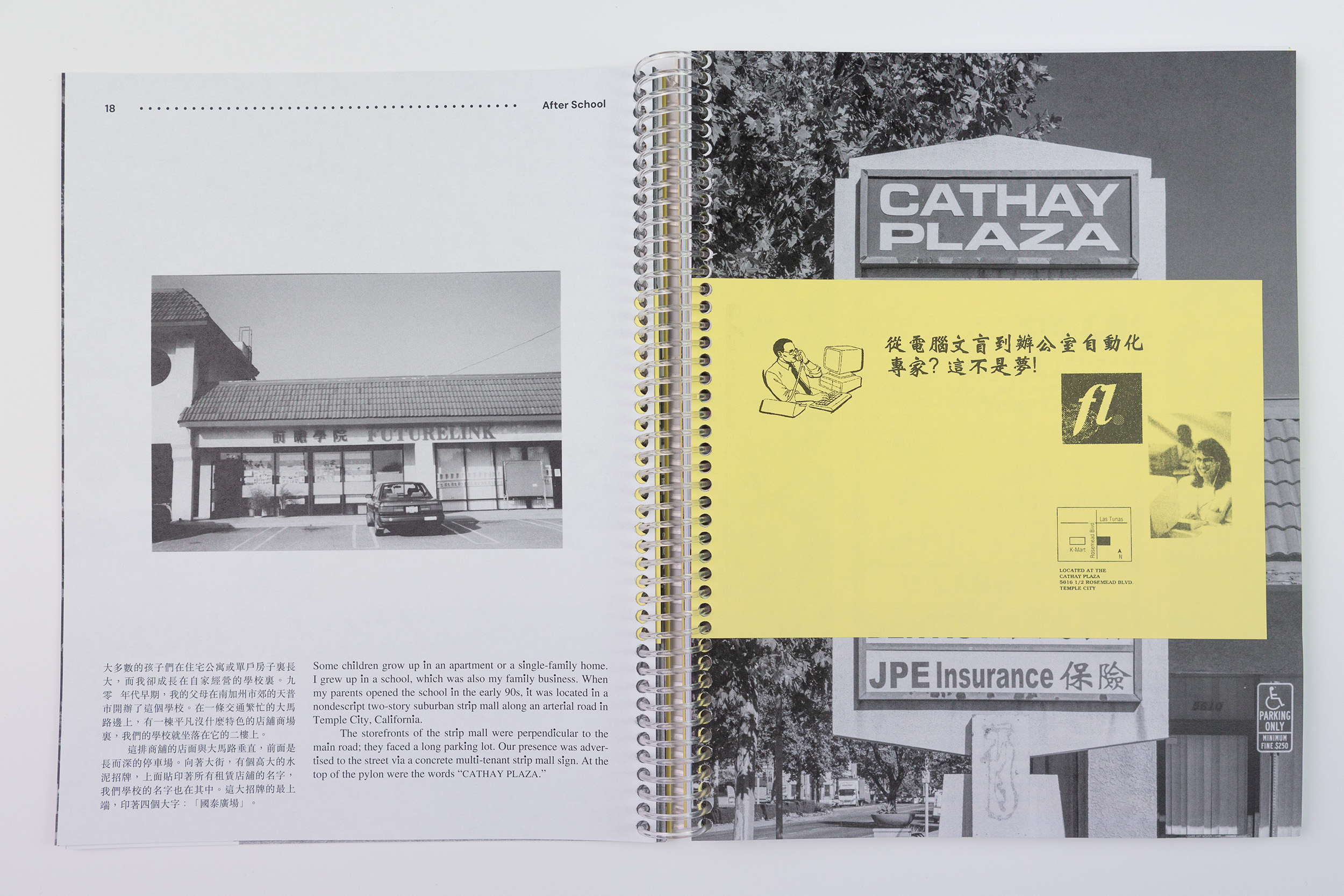
“Everyone in my family, if they were nearby, worked at the school. My sister worked there, along with my cousins, my aunt and uncle. The entire family was involved,” she said.
It was while working full-time at the center after college to help her family navigate the 2008 recession that Chen’s passion for photography surfaced. Looking for a creative outlet outside of her workday, she took a color darkroom photography class at Pasadena City College.
“There was something about being in this very small private space that was very meditative,” she said. “It was relaxing to get away from all the stressors of everyday life and running the business.”
Developing memories
NOMINATE A spotlight
- The weekly Spotlight features faculty and staff members at the university. To nominate a candidate, email the Record staff at [email protected].
Photography plays a central role in both the “After School” book and exhibition, which was on view at Counterpath in Denver last summer. By collaging photographs from Futurelink’s archives with those of historic California Chinese schools from the Exclusion era, Chen draws direct visual and ideological links between past and present.
“I’m trying to connect these histories from the late 1800s, early 1900s, to the situation that we’re in now, drawing parallels between the past and the present,” Chen said.
In a particularly searing example from her exhibition, Chen references government-issued photo identification cards that Chinese immigrants were forced to carry and juxtaposes this with a personal memento from her family’s buxiban: a human-shaped grappling dummy dressed in a vintage Futurelink T-shirt.
The idea stemmed from a memory of her father propping up a punching bag dressed in a Futurelink T-shirt in the center’s parking lot in an attempt to stop families from running into a low fence.
“I wanted to recreate this memory but also pose the dummy in the kind of mugshot identification photo format from the Chinese exclusion era,” Chen said.
This intersection, between immigrant educational striving and state surveillance and between family love and societal suspicion, animates the entire “After School” installation.
One photo assemblage, arranged on a blackboard, displays the text of a California State Assembly bill that maintained segregated schools for “children of Mongolian or Chinese descent” in California, reminding viewers that, for Asian Americans, belonging in dominant U.S. culture has never been assured.
Harmonizing with the chilling historical context of the exhibition, Chen’s book offers a love letter to the Futurelink community and to buxibans like it. Adopting the spiral binding and formatting of Futurelink workbooks, the book interweaves Chen’s personal narrative with archival photos. Illustrations, homegrown logos from the family business, and historical documents are layered atop the main body of text.
“A lot of what I did in this project was to take workbook materials, cut them up, and make collages. I think it could be generative to invite former students to take these instructional materials … and do something else with them — use the paper to tell a different story, or write their own story,” Chen said, imagining possible future public programs for the book.
Nuance and Insight
More online
- Learn more about Chen’s book, exhibition, and related public programs: angelachen.info/After-School-WIP
A striking aspect of Chen’s creative approach is her appreciation of nuance and her affirmation of the complex humanity of buxibans.
“I hesitate to make any generalizations about these tutoring centers, because they’re all quite different. They’re small businesses, and everyone has their own ethos that they operate by. But in general, in the period when I was growing up in the ’90s and the early 2000s, there was an intense emphasis on perfection,” she said, but noting that the experience, however stressful it may have felt at the time, “definitely made me a lifelong learner and someone who really believes in the potential of education to access different opportunities.”
Part of what Chen accomplishes through “After School” is to reach back in time to offer gentle insights to her past self and former students.

“Find out what you’re passionate about and nurture that — whatever that is. A lot of cram school curriculum can feel deadening at times,” she said. “So really think about what you’re interested in, and try to do that.”