Fifteen U-M faculty named as 2025 AAAS fellows
Fifteen University of Michigan faculty members earned election to the American Association for the Advancement of Science in 2025.


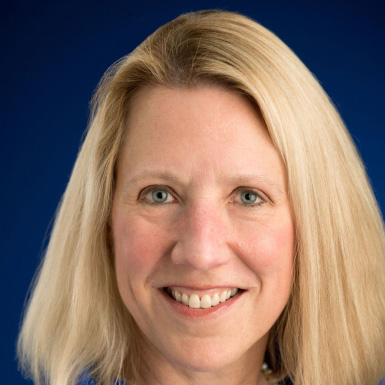


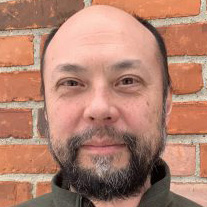
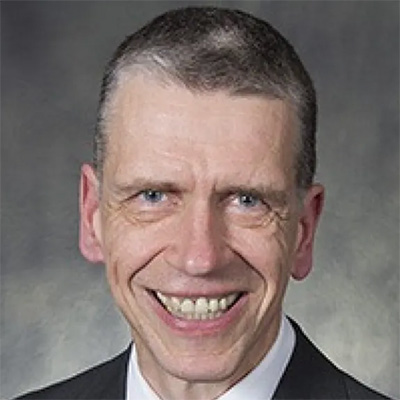

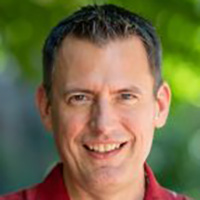
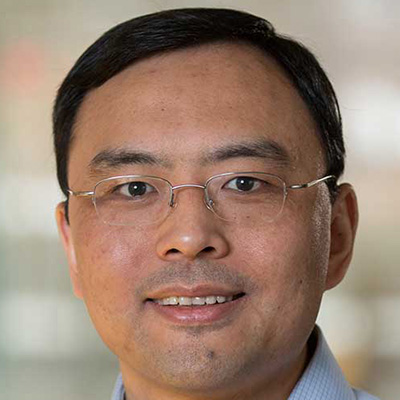


The AAAS, the world’s largest general scientific society, announced 449 members of the 2025 class “whose efforts on behalf of the advancement of science or its applications in service to society have distinguished them among their peers and colleagues.”
The newly elected U-M fellows are:
Anthony Antonellis, chair and James V. Neel Legacy Professor of Human Genetics, and professor of neurology in the Medical School, for distinguished contributions to the field of human genetics, particularly through defining genetic and molecular mechanisms of dominant neuropathies and recessive developmental syndromes caused by mutations in aminoacyl-tRNA synthetase genes.
Allen Burton, professor in the School for Environment and Sustainability and the Department of Earth and Environmental Science in LSA, for distinguished contributions in research improving the ecological risk assessment process for aquatic systems with outstanding contributions and leadership in water sciences, global change biology and environmental toxicology and chemistry.
Andries Coetzee, the Judith T. Irvine Collegiate Professor of Linguistics and associate chair in the Department of Linguistics in LSA, and special adviser to the Provost for Africa Engagement, for contributions to phonology and phonetics, distinguished service to the linguistics research community, and for the furthering of U.S.-Africa academic relations.
Jianping Fu, professor of mechanical and biomedical engineering in the College of Engineering, and of cell and developmental biology in the Medical School, for distinguished contributions to the field of stem cell bioengineering, particularly using human pluripotent stem cells to build advanced embryo and organ models and study human development.
Diane Harper, professor of family medicine and obstetrics and gynecology in the Medical School, and of women’s and gender studies in LSA, for distinguished contributions to the field of cancer prevention, particularly for guiding successful prophylactic and therapeutic human papillomavirus vaccine development for cervical cancer prevention in primary care and underserved settings.
Ping He, professor of molecular, cellular and developmental biology in LSA, for distinguished contributions to the field of plant immunity, advancing understanding of immune-signaling, stress resilience and pathogen defense mechanisms through genetic, biochemical and cellular approaches.
Patricia Hurn, dean and professor in the School of Nursing, and professor of molecular, cellular and developmental biology in LSA, and of molecular and integrative physiology in the Medical School, for pioneering research on stroke and sex differences in brain injury, for advancing translational medicine and for driving transformative innovations in academic medicine and healthcare through visionary leadership.
Timothy James, professor of ecology and evolutionary biology in LSA, and the Lewis E. Wehmeyer and Elaine Prince Wehmeyer Professor in the Taxonomy of Fungi, for uncovering how fungal reproduction and genetic mixing influence disease, diversity, and evolution, with major insights into the origins and spread of deadly amphibian pathogens.
Vesa Kaartinen, associate dean for research at the School of Dentistry and the Dr. Roy H. Roberts Professor of Dentistry in the Department of Biological and Materials Sciences and Prosthodontics in the School of Dentistry, for distinguished contributions to the field of craniofacial and cardiac development, particularly in TGF-beta/BMP signaling and gene targeting approaches to understand birth defects in human newborns.
Karl Krushelnick, the Henry J. Gomberg Collegiate Professor of Engineering, professor of nuclear engineering and radiological sciences in the College of Engineering, and director of the most powerful laser facility in the U.S., for research in high-intensity laser-plasma interactions, ultrafast optics, and laser-driven particle acceleration, advancing applications in fusion energy and high-field physics.
Nicolai Lehnert, professor of chemistry and biophysics in LSA, for pioneering research on nitric oxide interactions in biological systems, bioinorganic chemistry and enzymatic catalysis, with profound implications for medicine and energy applications.
Wei Lu, the James R. Mellor Professor of Engineering and professor of electrical and computer engineering in the College of Engineering, for distinguished contributions to the field of solid-state electronics, particularly for the development of resistive random-access memory devices and neuromorphic computing and in-memory computing systems.
Michael Meyer, professor and chair of the Department of Astronomy in LSA, for leadership in infrared astronomy, exoplanet research, and star and planet formation, as well as contributions to the European Southern Observatory, the James Webb Space Telescope and other major facilities.
Peter Song, professor of biostatistics in the School of Public Health, for distinguished contributions to the field of methodological, theoretical and applied statistics and data science, particularly for complex data in medical and public health sciences.
Jing Sun, the Michael G. Parsons Collegiate Professor of Naval Architecture and Marine Engineering in the College of Engineering, for distinguished contributions to the field of adaptive, nonlinear and hybrid control with applications to automotive and marine engineering
Founded in 1848, the American Association for the Advancement of Science began electing fellows in 1874. The new fellows will be celebrated at a forum May 29 in Washington, D.C. The 2025 Fellows class are also featured in the AAAS News & Notes section of the April issue of the journal Science.