Health Lab by Michigan Medicine celebrates 10 years
Beginning around 2010, local news crews and journalists began to dwindle, with massive layoffs surging far and wide.
“As public relations specialists, we rely heavily on reporters and journalists to tell Michigan Medicine stories, by writing about our discoveries, research and life changing clinical care,” said Mary Masson, senior director of public relations in the Department of Communication at Michigan Medicine.
“Whether it was new research published, a public health concern or a patient story, with less and less staff available in the media, both locally and nationally, it was getting harder to see these stories to run on TV, in newspapers or on the radio,” said Masson, who helped create the Health Lab platform.
The landscape was changing, but to what?
“With conservative advertising budgets but no shortage of amazing stories to tell, we saw brand journalism as the perfect way to connect directly with our audience through content that mattered to them,” said Rebecca Priest, senior director of marketing in the Department of Communication.
Enter: the creation of Health Lab.
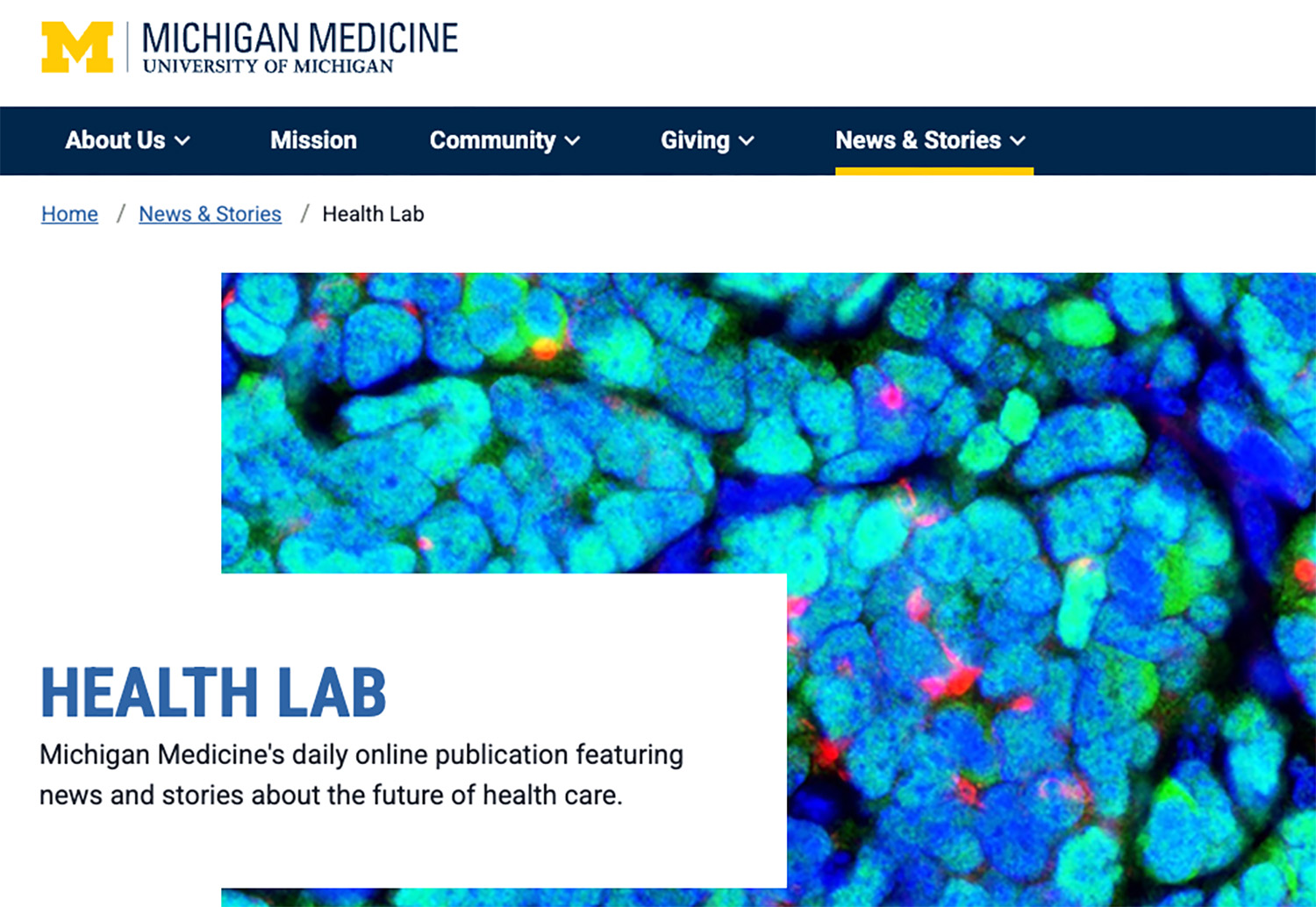
The making of Health Lab
For many years, Health Lab was split into two entities: The Health Blog and the Health Lab blog.
The initial intent was meant to serve two different audiences: one more interested in medical research and innovation, spanning topics such as new technologies in clinical care to papers published in academic journals, while the other was geared toward health and wellness stories, like recapping a patient experience or talking about the latest health trends or news.
But after a few years, the team noticed both audiences were interested in all the topics being covered.
“We were seeing firsthand in our newsletters that many people were interested in reading stories from both blogs. With that, it felt like a natural progression to merge them into one platform called Health Lab,” said Johanna Younghans Baker, editor-in-chief of Health Lab, who joined the Department of Communication in 2019.
Growing over a decade
In the last 10 years, Health Lab has strived to publish at least one story a day (if not a few), five days a week.
“There’s a tremendous amount of stories our dedicated public relations and marketing specialists find to feature on Health Lab with help from our Michigan Medicine doctors, nurses and specialists that allow us to publish in this regular news-cycle type of way,” Younghans Baker said.
Story formats have ranged from traditional expert interviews and expert Q&As to video-only articles (called vlogs) to reposts of articles from trusted entities like U-M, The Conversation and other academic medical institutions with which U-M has partnered with.
Beyond pageviews though, Health Lab has continued to grow in spaces that have become trendy in the media and social media spaces.
The Health Lab podcast, for instance, provides an audio-listening option of published articles with over 500 episodes to date and over 820,000 downloads.
Newsletter readership has also grown from 10,000 subscribers in 2019 to 34,000 subscribers.
And Health Lab’s future remains brighter than ever.
“In a time of massive misinformation all over the media and social media, Health Lab’s original mission remains more necessary than ever,” Masson said.
“It’s a trusted health, medical and wellness resource that you don’t need to second-guess. Reporters can rely on it. Researchers can rely on it. And the public can easily access it, for free, anytime.”