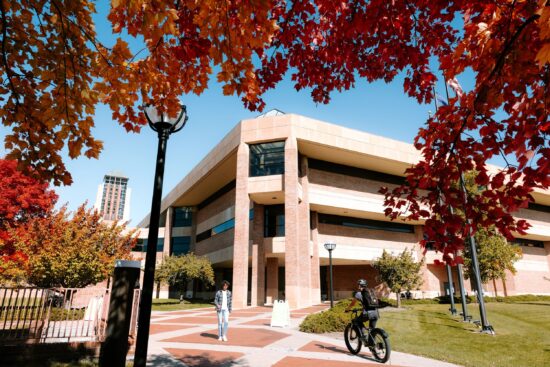
It Happened at Michigan: Mollie Graham was first Black woman to be admitted to U-M
In the spring of 1880, a 22-year-old student was in her final semester at U-M. Her academic focus was Latin and science, she understood German and French, and she hoped for a career as a journalist. Mary “Mollie” Henrietta Graham was the first Black woman admitted to U-M, and she was on the brink of graduating.
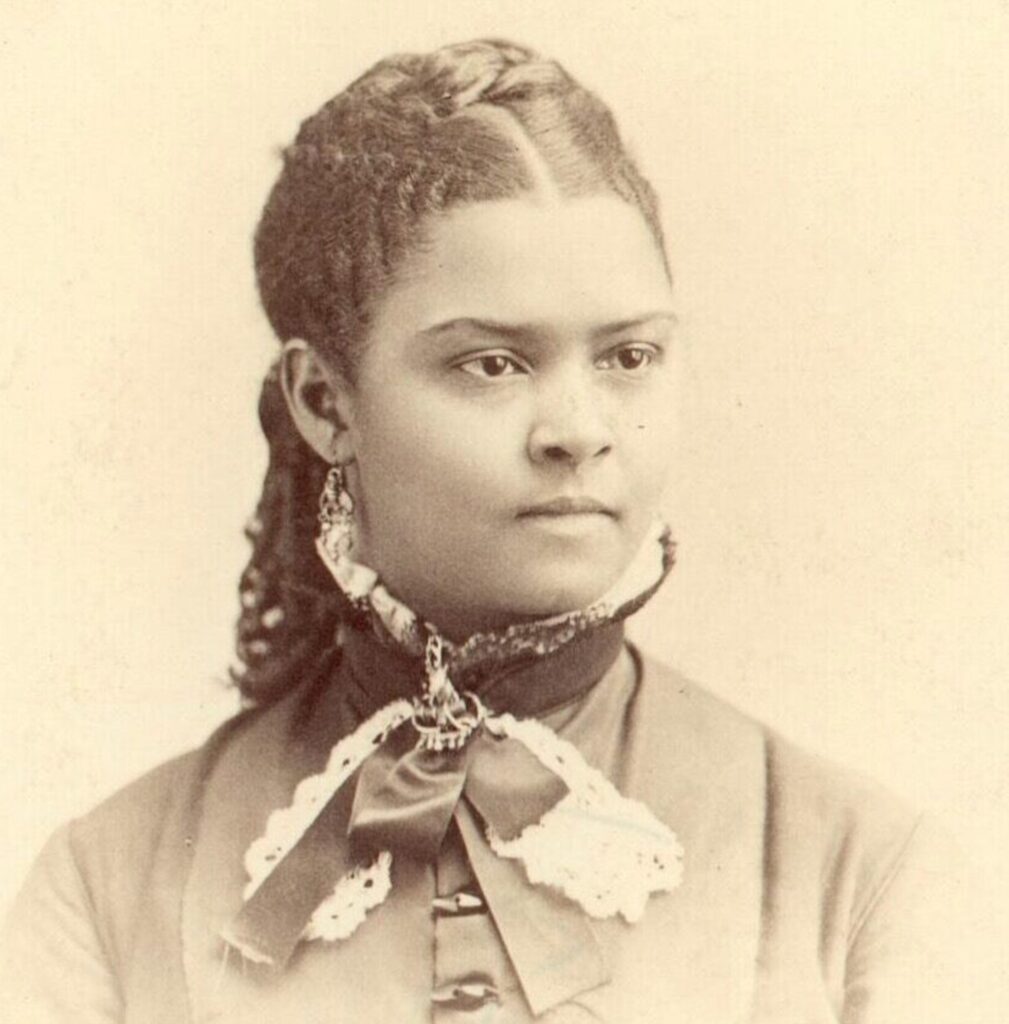
Graham was born in 1857 in Windsor, Ontario. Her mother, Sarah, was a white Englishwoman, and her father, Levi, was a Black man born in Illinois.
Her father worked as co-owner of a Windsor grocery, and her mother stayed home raising the children. Graham was the second of at least four children born to the couple. At some point, Graham moved to Flint, most likely as a teenager. It’s unclear if other members of her family were with her.
What is certain is that she graduated from Flint High School in 1876 and made plans to attend U-M that fall.
Black students were a rarity at U-M when Graham prepared to enroll. The all-white, all-male campus had just started to change in the late 1860s.
Fewer than 50 had graduated from American colleges before 1865. Reconstruction saw the founding of Black colleges and universities in the South: Fisk, Howard, Morehouse and Hampton Institute. Closer to Ann Arbor, two Ohio institutions — Oberlin College and Wilberforce University — had been educating Black students since the 1850s.
Like the other graduates of Michigan’s handful of certified high schools, Graham qualified for automatic admission to U-M.
“Miss Mary Graham, a young colored girl, who graduated from the Flint High School last month, intends entering the University next fall,” shared the Fenton Independent. “She is the first applicant of that persuasion.”
Graham’s enrollment papers were signed by “J.B.A.” — U-M President James Burrill Angell. The date was Sept. 21, 1876.
There is little evidence of Graham’s life as a student. Records show she stood 5 feet tall and wore her dark hair braided and pulled back. She often put on earrings for photographs.
Graham lived in Ann Arbor with her mother and sisters at a time when there was no on-campus housing. She belonged to no student organizations that were open to women.
Perhaps she was shy. Or perhaps it was easier to succeed by keeping a low profile, if that were possible, as the only Black woman in the room.
We know she was a good student. When Graham graduated with a Bachelor of Philosophy in 1880, the Ann Arbor Courier praised her accomplishment, “She has proven herself to be a person of unusual intellect and is entitled to much credit for her perseverance in pushing her way through the university.”
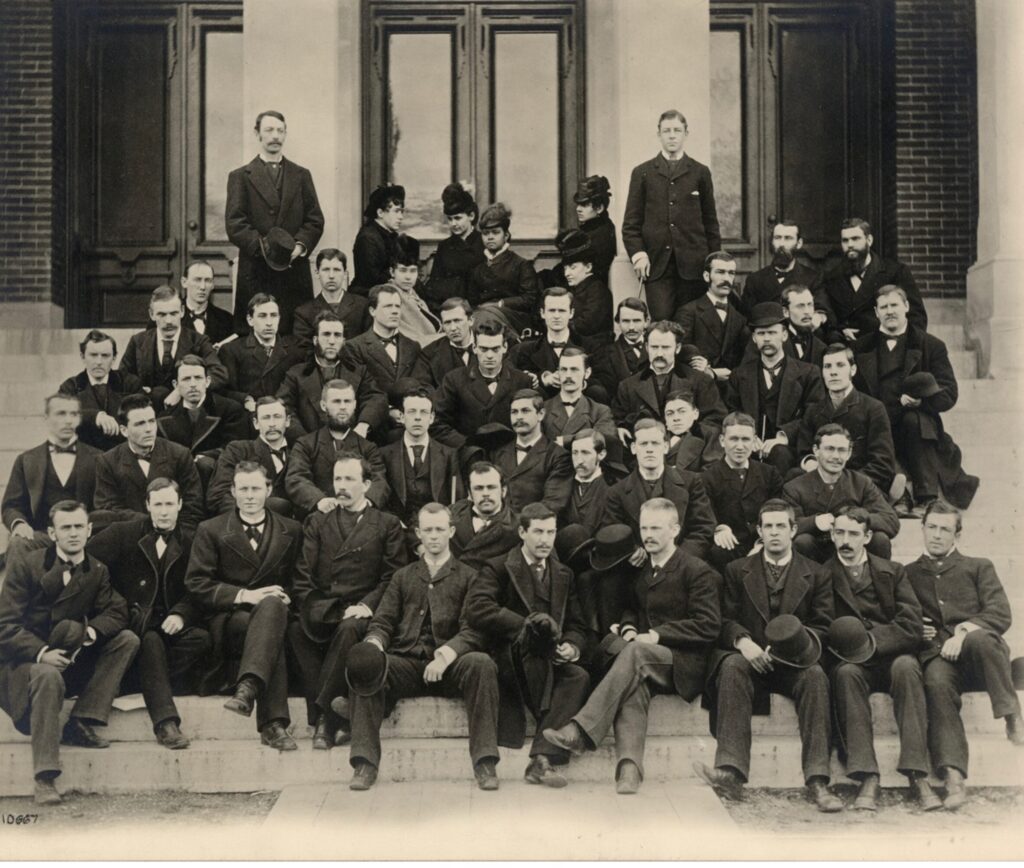
Immediately after commencement, Graham was hired as a teacher at Missouri’s Lincoln Institute (today Lincoln University), a teaching college for Black students founded after the Civil War.
Within a year, she was promoted to matron, in charge of some 60 young women at the institute.
After two years in Missouri, Graham was ready for the next chapter of her life.
She returned to Ann Arbor to marry Ferdinand L. Barnett Jr., the son of a former slave, a graduate of Northwestern University, and a politically active Chicago lawyer.
In addition to practicing law, Graham’s new husband had founded The Conservator, Chicago’s first Black American newspaper, and was president of the National Colored Press Association.
The couple made their home in Chicago.
“Mrs. Barnett has the reputation of being an accomplished scholar, a clever musician, and an agreeable lady,” said The Conservator, “and her advent in Chicago social circles will be hailed with pleasure.”
Indeed, Graham Barnett threw herself into the upper echelon of Black life in Chicago, where the Black community was small — less than 2% of the population in 1880 — but vibrant. She was an alto who sang in the choir at St. Thomas Episcopal Church. She taught Sunday school. She belonged to the invitation-only literary group Prudence Crandall Club.
Graham Barnett also became a mother and went to work at her husband’s newspaper, starting in the typography room, moving on to proofreading, and, by 1888, acting as editor in chief.
In the eight years since leaving U-M, where she said her professional goal was to be a journalist, Graham Barnett had become part of the Black elite in the country’s second-largest city.
It ended too soon. Graham Barnett died suddenly in 1889, early in the new year, of what was believed to be heart disease. She had been ill a year earlier, but her death at 31 came as a terrible loss. She left behind her husband and two young sons, Ferdinand III, 4, and Albert, 2.
Family and friends were “shocked almost past endurance,” wrote a Chicago paper, adding, “No woman in Chicago was more useful in many ways and more beloved and appreciated.”
An obituary of Graham Barnett’s, most likely prepared by a family member, also read: “At the time of her death, she was in the prime of useful vigorous life, the blow coming without a moment’s warning … During her short career of usefulness, she had come to be regarded not only as a woman of highest moral integrity, but of splendid ability and brilliant promise.”
— By Kim Clarke, for the Heritage Project. A longer version of this story may be found on the Heritage Project website.