Pharmacy associate professor works to make oncology care accessible to all
The rules of hockey are fairly simple: Shoot the puck into the opponent’s net, don’t enter the offensive zone before the puck does — and keep your penalties to a minimum.

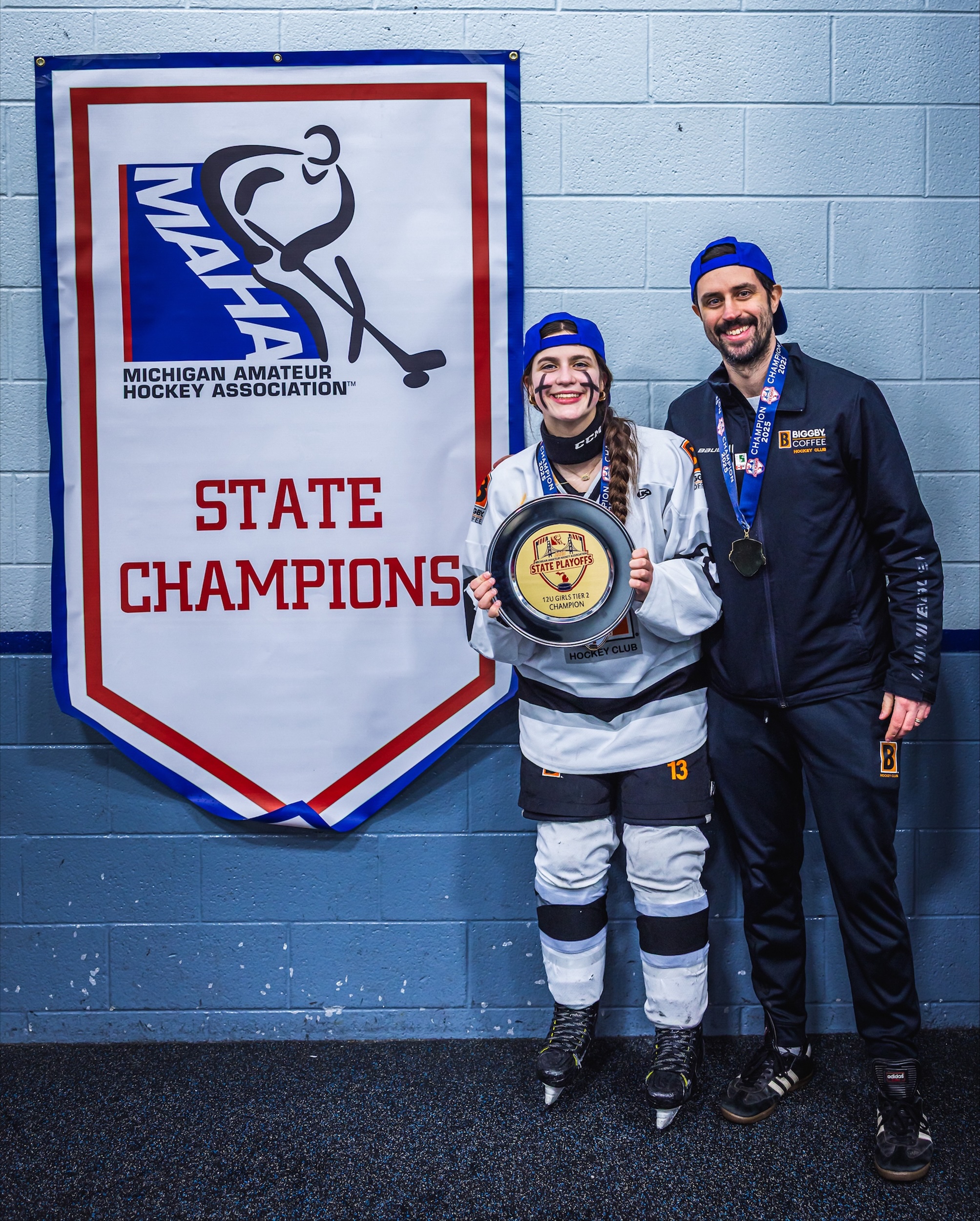
As a coach of his daughter’s travel hockey team, these are rules that Bernard Marini, a clinical associate professor of pharmacy in the College of Pharmacy and a clinical pharmacy specialist in hematology at Michigan Medicine, knows all too well. One day, he hopes accessible cancer care will be just as simple as the rules on the ice.
But he’s not standing by waiting for that change; he’s actively fighting for it every day.
At Michigan Medicine, Marini works on a care team to provide lifesaving services to patients diagnosed with blood cancers, including leukemia and aggressive forms of lymphoma. As the team’s medication expert, he looks at each patient’s genetic makeup, interprets important literature about each drug and interprets clinical trial information to come up with treatment plans.
“As pharmacists, we are consultants for the physicians because we are the experts in drug therapies,” Marini said.
“Cancer and hematology treatments are complicated, and the data is complex, so having a pharmacist on your team to help come to the best decisions for patients is invaluable.”
If the treatment plans need adjusting, Marini is among the first to know and the first to jump in to work with doctors and make those changes.
“We work with the most expensive and dangerous medications you can imagine, but also the most effective — if they’re used in the right setting. We’re there to make sure of that,” Marini said.
Marini is confident that his patients at Michigan Medicine are receiving world-class treatment, but he knows it’s no secret that there are barriers for many others to receive this type of care. That’s why he’s a staunch advocate for accessible oncology practices.
Working alongside 40 colleagues in oncology, Marini brings the pharmacist perspective as a member of Common Sense Oncology, a global organization working to make cancer care more patient-centered and equitable across the world.
“The founding members of the organizations came from all different areas — patients, patient advocates, people in regulatory positions, leaders of cooperative research groups, oncologists from all over the world, and one pharmacist. That’s me,” Marini said.
The organization pushes for change by advocating for better clinical trial design focused on outcomes like survival and quality of life, and by addressing disparities in access to basic cancer treatments.
“Each year, countries like the United States spend billions of dollars on drugs that make a tiny improvement in outcomes while other countries can’t even get access to basic medications that would have a tremendous benefit on their population’s health,” Marini said.
“This organization is working to close that gap, reframe how we spend that money and make the research agenda much more patient-centered.”
As a dedicated member, Marini helps run a journal club online aimed at teaching other healthcare professionals how to critically evaluate clinical trials to ensure they have a patient-centered approach.
“I think things like the journal club are small ways that we can change practice over time to make it better for the patients we serve,” Marini said.
Although Common Sense Oncology, which launched in 2023, is a relatively new organization, the team has already published guidelines for the design of phase-three randomized clinical trials.
“These principles have been presented at several national meeting workshops, including at ASH [American Society of Hematology] and ASCO [American Society of Clinical Oncology], to help teach these principles to oncologists everywhere, and this is hopefully going to result in more patient-centered trials in the future,” Marini said.
Marini said it will likely take years and a culture shift within the field of oncology to reach their goals of more patient-centered care, but they have anecdotally already seen more acceptance of trials that use patient-centered approaches.
NOMINATE A SPOTLIGHT
- The weekly Spotlight features faculty and staff members at the university. To nominate a candidate, email the Record staff at [email protected].
His work to make the world more patient-centered goes beyond his involvement in Common Sense Oncology. He also hosts a podcast called “WolverHeme Happy Hour” with his colleague Anthony Perissinotti, a clinical pharmacist in hematology/oncology and an adjunct clinical assistant professor of pharmacy in the College of Pharmacy. They chat about — no surprise — all things hematology.
“We used to nerd out with the hematologists, fellows and residents at work. It seemed like we were having the same conversations and teaching the same things over and over, and I realized that we should just start recording it,” he said.
Marini hopes that, as an educator — through his work in Common Sense Oncology, behind the microphone of his podcast, and with his students — he is helping make oncology care more patient-centered and accessible to all.