Social Work manager creates movie prop replicas
Nicholas Ketchum was about 5 years old when he walked in on “Ghostbusters” playing on TV at a family Christmas party. He was transfixed.
“We were a PBS household and rarely went to the movie theater,” said Ketchum, who joined U-M in January as web office manager and lead programmer at the School of Social Work.
“Watching ‘Ghostbusters’ in the late ’80s on a VHS player was a transformative moment.”
Shortly thereafter, Ketchum started using cardboard boxes and duct tape to create his own “Ghostbusters” proton packs and other gear.
Then he saw “Batman,” “Beetlejuice,” “Superman,” and “Honey, I Shrunk the Kids,” which gave his creative instinct more fuel.

He built a Batman cowl, inspired by the 1989 movie starring Michael Keaton, by layering strips of garbage bags and thin tape on his head. For Beetlejuice’s titular character, also played by Keaton, Ketchum shaved his hairline to approximate male-pattern baldness (his mom was not pleased) and cobbled together a trench coat and taxicab hat by tearing apart some of his parents’ clothes (she didn’t love that either).
He also attempted to replicate the energy-projecting machine in “HISTK” — and rejected the cape that came with his Superman pajamas, instead enlisting his grandmother to sew a full-length version that felt more like what Christopher Reeve wore onscreen.
During middle school, the cardboard props gave way to outdoor projects, as Ketchum began designing tree houses and go-karts. In high school, Ketchum moved toward guitar and oil painting. By his 20s, Ketchum had pivoted toward technology.
For years, that initial love of movie props stayed mostly dormant. Then, about 15 years ago, the internet handed him a portal back to his childhood passion.
One day, while browsing online, Ketchum stumbled upon an image of the 1989 Batman mask and decided he’d like to try to re-create it. He found some hobbyist forums where he learned how Hollywood prop makers create pieces through sculpting and molding, and he began experimenting in his apartment with clay, molds, latex — and lots of trial and error.
“It got messy and expensive,” he said, laughing.
Eventually, Ketchum produced a wearable cowl with only minor imperfections, and that was enough to motivate him to try another mask, this time inspired by Val Kilmer’s costume in 1995’s “Batman Forever.”
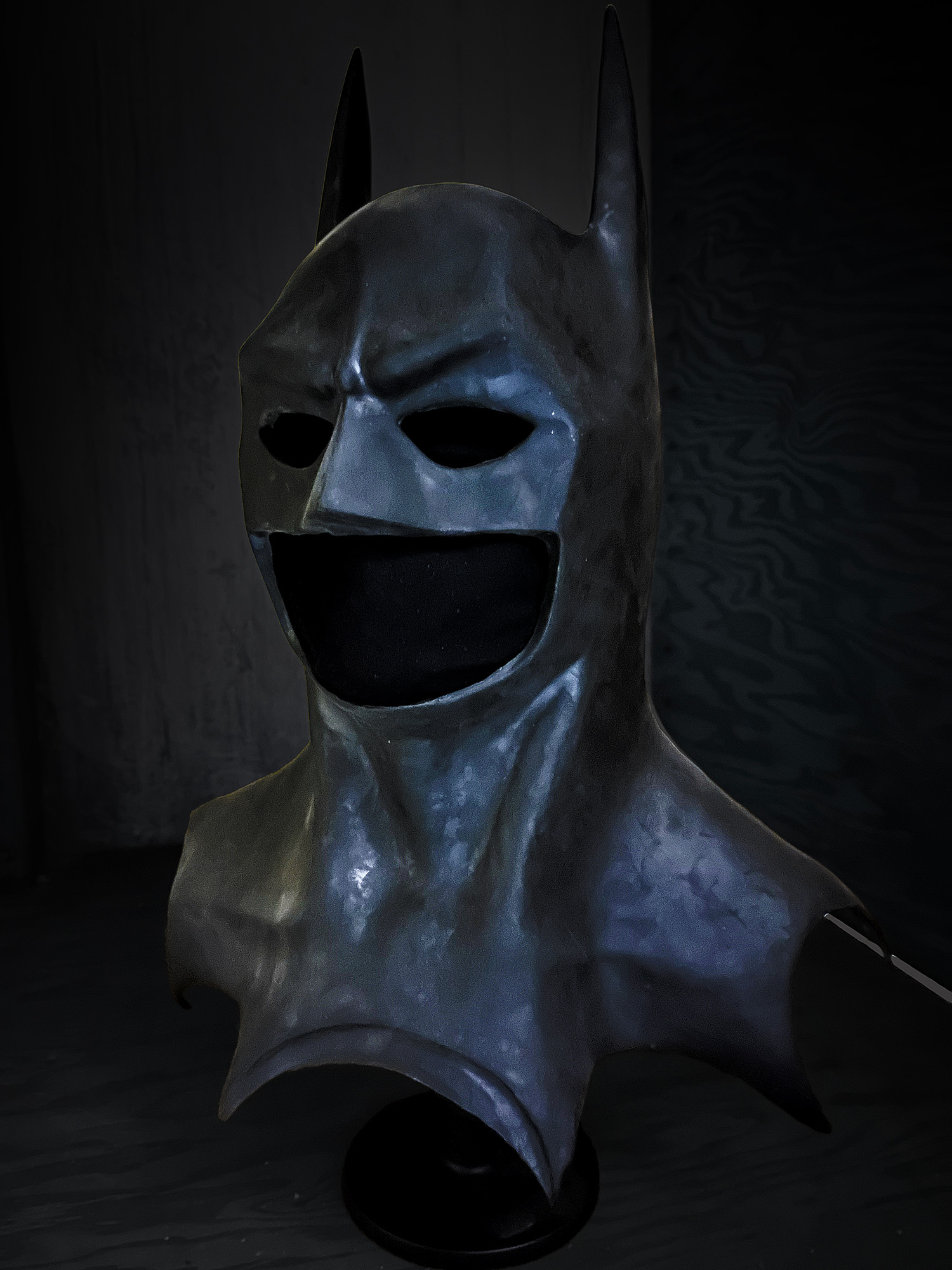
When he finished, Ketchum displayed the new cowl in his office atop a Styrofoam head draped in black fabric. Late one night, a custodian opened Ketchum’s office door, saw Batman’s outline against a dark window, and nearly jumped out of his skin.
“Nick, I’m pushing 45 years old and my heart … I can’t take it,” the man later told him.
Creating movie prop projects became Ketchum’s summertime hobby, and, in addition to the Batman cowls, he created “scissor hands” similar to what Johnny Depp’s character wore in “Edward Scissorhands,” and a replica of the yellow plutonium storage crate from “Back to the Future.”
These efforts eventually led him to attempt the most ambitious build of his life: a screen-accurate proton pack from “Ghostbusters,” the prop that had kicked off Ketchum’s obsession as a child.
But before Ketchum started building, he began collecting.
For years, Ketchum tracked down vintage parts for the proton pack, guided by reference photos of the original packs on display in the Sony Pictures Studio lobby. He learned that the original packs were created by a prop specialist from “Blade Runner,” who’d scavenged components from that movie and junkyards.
“I wanted as much reality as I could,” Ketchum said, adding that he learned a lot from “Ghostbusters” online communities where makers trade knowledge and sources for parts.
To make the pack’s shell, Ketchum had shell pieces created on 3D printers, then shipped to his apartment. Once he assembled those pieces into the base form, he began sanding, priming, painting, and applying texture coats to mimic rough metal.
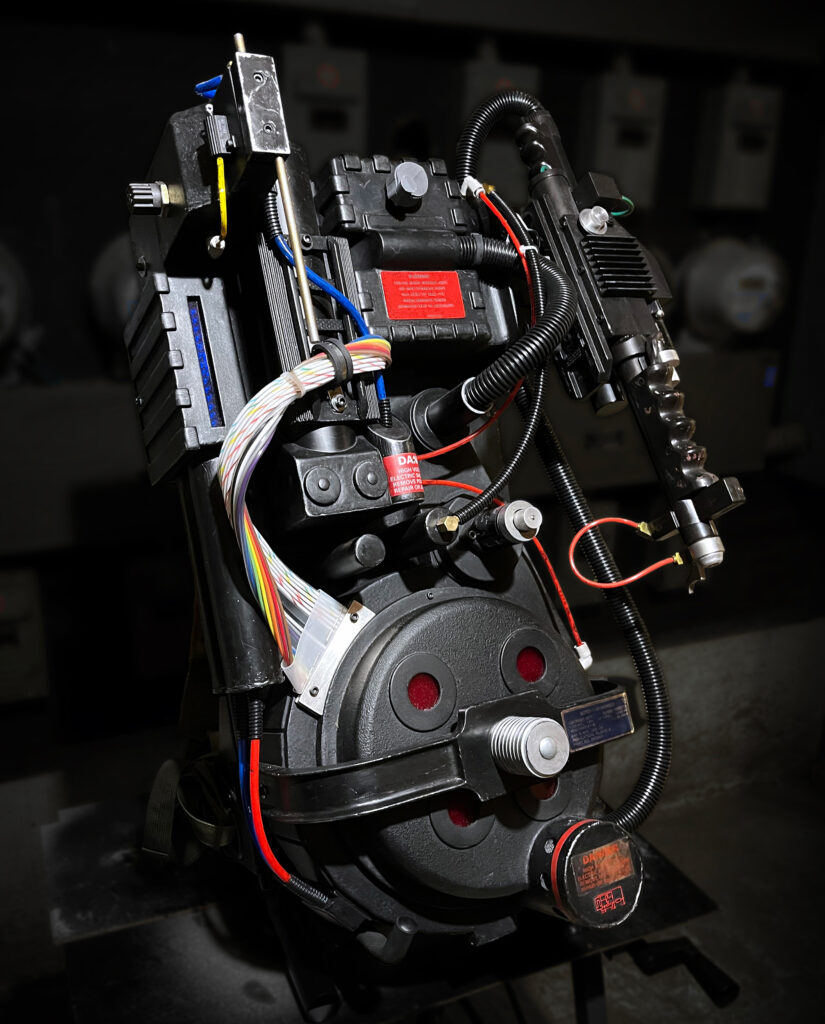
Much of this work happened around his apartment complex, with Ketchum painting in the parking lot, then briefly in a basement space, until a neighbor complained about the fumes. Every step required patience and a willingness to redo work that had already taken weeks.
“A project like this requires patience. You can’t rush because speed could sabotage the final product,” Ketchum said.
“I’ve learned that this applies to the work I do at the university as well. Problems are always going to happen, and I try to avoid rushing to a solution.”
Ketchum also finds value in having a tech-free hobby.
“Building props gets me away from the computer, and I really enjoy doing something challenging with my hands,” he said.
NOMINATE A SPOTLIGHT
- The weekly Spotlight features faculty and staff members at the university. To nominate a candidate, email the Record staff at [email protected].
Around Ann Arbor, Ketchum’s work on the proton pack has sparked conversation, and, occasionally, alarm.
A maintenance worker walked into Ketchum’s apartment a few weeks ago, saw the pack and froze. At close range, Ketchum admits, the realism can be unsettling.
Ketchum also met a fellow builder and “Ghostbusters” enthusiast soon after moving to town. At one of Ann Arbor’s district libraries, Ketchum was flipping through some proton-pack photos on his phone when a staff member walked by, then suddenly stopped. The staffer pulled out his own phone to show Ketchum the “Ghostbusters” proton pack he was building.
There’s a “Ghostbusters” group in Detroit that Ketchum is considering joining as well. They don “Ghostbusters” costumes and take their gear to children’s hospitals and charity events.
“I’d like to be part of something that brings joy to other people. That’s really what the movie ‘Ghostbusters’ was about, making other people laugh.”
As for his proton pack, Ketchum said it may never be completely finished — and that’s OK. He cites future upgrades, like adding more authentic parts, installing electronic elements, and maybe turning the pack into a stereo that plays the “Ghostbusters” soundtracks. Perfection, he said, isn’t the point.
The point is the making: the learning, the revising, and the moment when someone sees the pack and smiles — or jumps.