It Happened at Michigan: Cartoonist’s career took shape at U-M
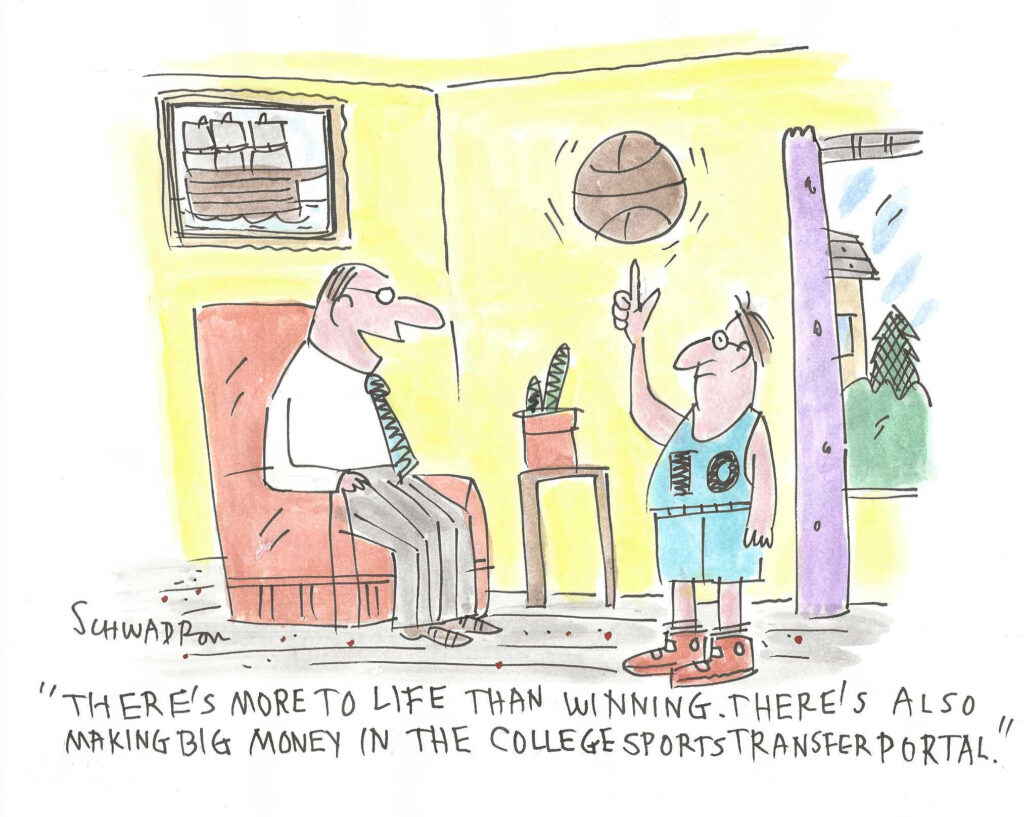
As an internationally acclaimed freelance cartoonist and illustrator, Harley Schwadron makes his living looking for the humor in everything.
It wasn’t the original career plan, and it hasn’t always been easy, but over the course of four decades and some 40,000 cartoons, Schwadron has mastered not just his art, but also the art of perseverance. His work has been published seemingly everywhere: The New York Times, The Wall Street Journal, Barron’s, Harvard Business Review, Forbes, Reader’s Digest, Playboy, and the British humor magazine Punch, among many others.
And while perseverance keeps him working, he credits chance for getting him started.
“My cartooning career really started here on campus,” said Schwadron, who was pursuing a graduate degree in American Studies in 1970 when he landed a job at Michigan News‘ predecessor, U-M News and Information Services.
As a public information officer, Schwadron wrote news releases about faculty research at the Law School and the Institute for Social Research, as well as the School of Natural Resources and the Art and Architecture School, as they were known at the time.
On the side, he dabbled as a self-taught cartoonist. That caught the attention of Lou Cartier, the editor of The University Record. He approached Schwadron about doing a weekly panel called “Off the Record.” Little did anyone, especially Schwadron, imagine that his side gig as an artist would lead to a fulfilling career.
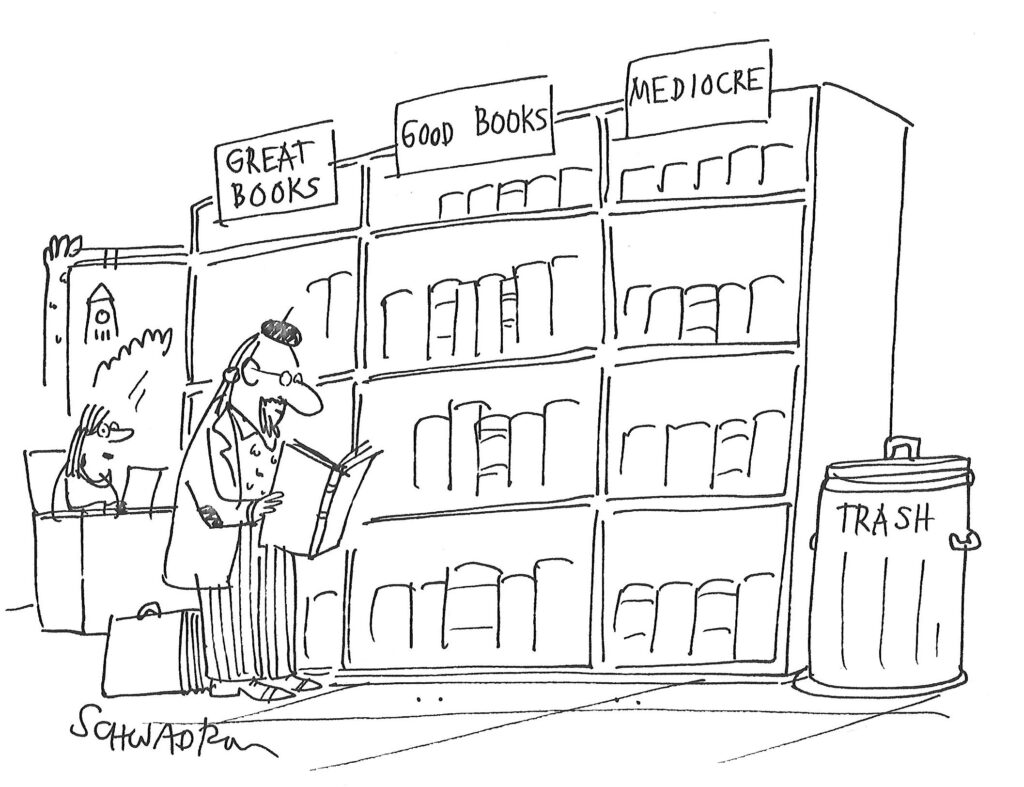
“Off the Record” debuted in 1972, and as Schwadron developed the series, a recurring caricature emerged of a U-M professor wearing a beret and a sports jacket with elbow patches. He often included a simple outline of Burton Tower in his scenes, usually glimpsed through a window. Both the professor and the tower still appear in many current cartoons.
He continued the weekly cartoon while working as a writer-editor for the news service, but when that job ended in the mid-1980s after a management shake-up, Schwadron faced a pivotal point in his professional and personal life.
“I decided to give full-time cartooning a shot, but I didn’t know if I could make it on my own,” he said. “Leaving the security of my U-M job was a big transition for me. Those were kind of scary years.”
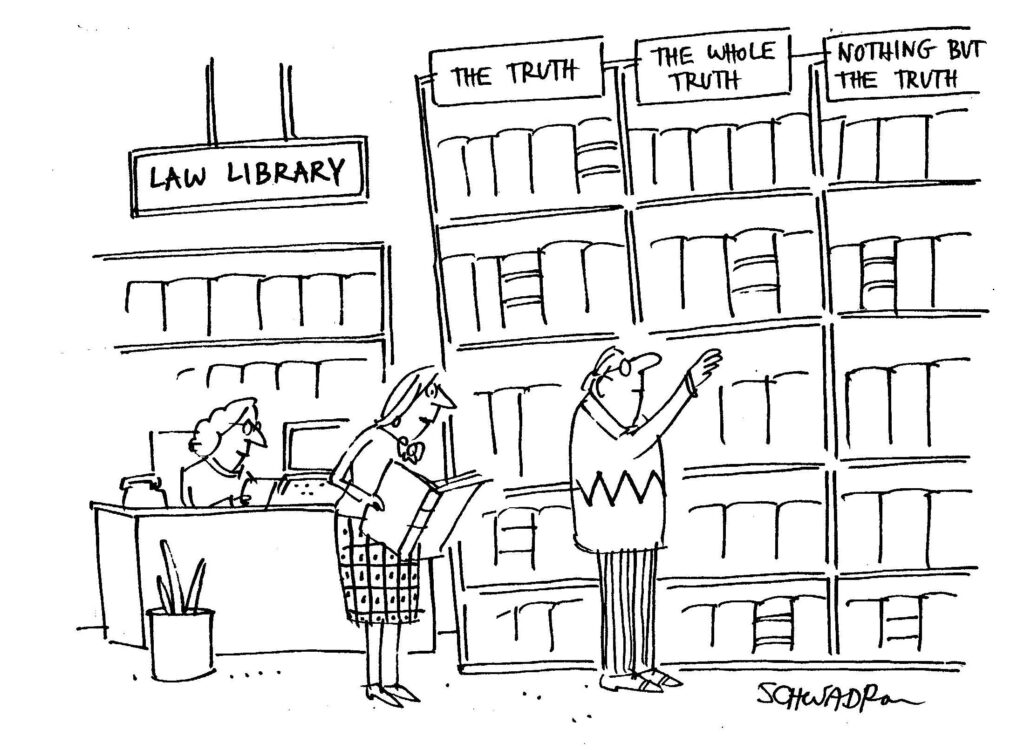
He continued freelancing the Record cartoon until 2012, marking 40 years with the series. His work also popped up on campus in the Michigan Alumnus (now Michigan Alum) and Michigan Ross’ Dividend magazine.
In the meantime, he landed a contract with Barron’s, which paid him $375 for each cartoon. Other publications followed, and gradually he broke into the big-time media markets. He syndicated his daily “9 to 5” panel in 1990 and still produces it today for the Chicago Tribune Content Agency; he also creates syndicated editorial cartoons for Cagle Cartoons and others.
Schwadron’s off-campus credits also include hundreds of illustrations for books, magazines and newsletters, and his quirky cartoons have appeared in more than 25 books in the “Chicken Soup for the Soul” series. His sweet spot for satire is business and the stock market.
“I look for the humor in everything, and I try to bring that humor into people’s lives,” Schwadron said. “In politics these days, that’s difficult to do. But if I don’t like what’s going on politically, then I like to satirize it in my cartoons.”
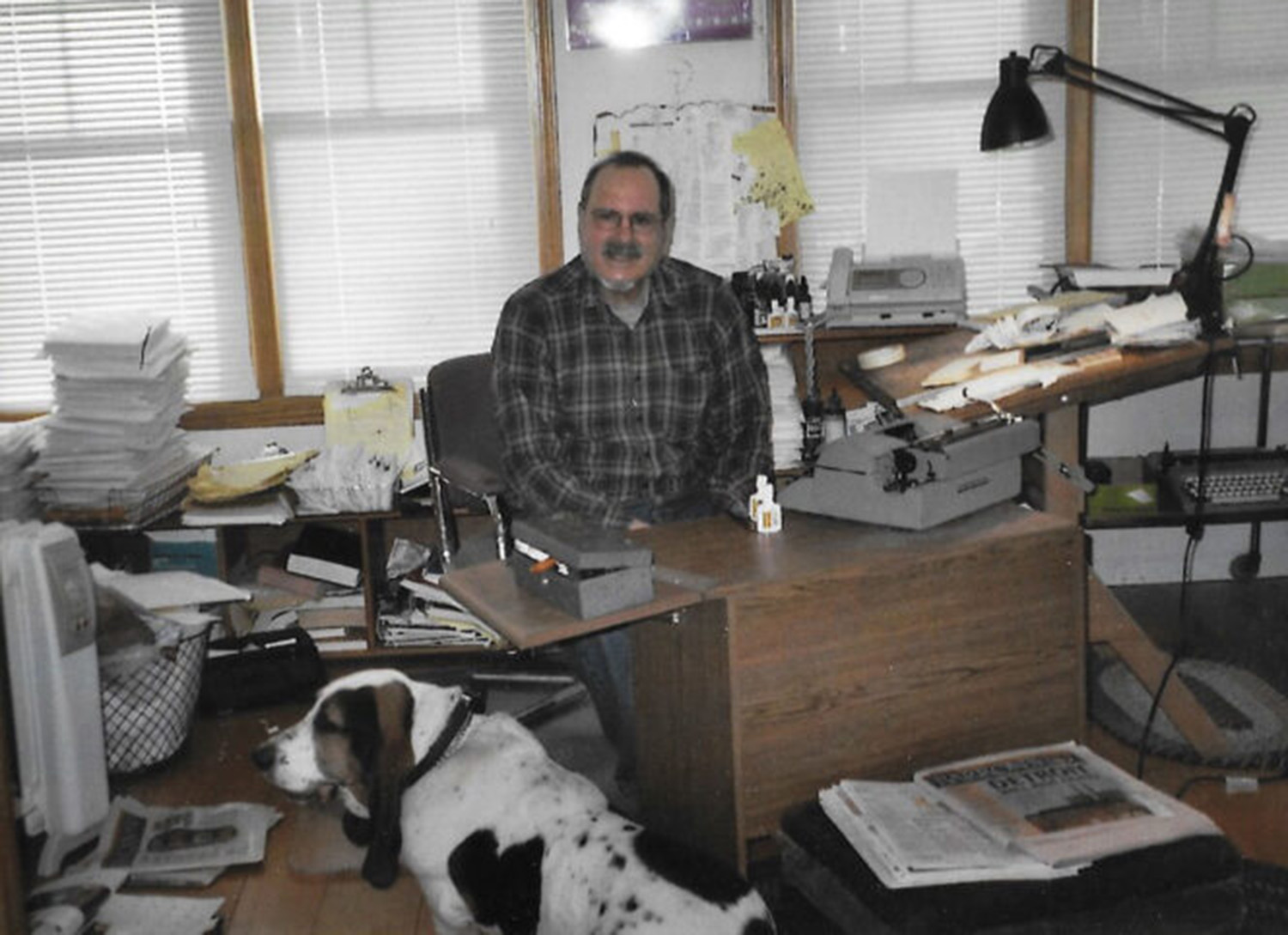
Today, Schwadron works at a cluttered desk in his Ann Arbor home office. He said he tends to start with the caption idea first, followed by the illustration. He favors an “old-fashioned” pencil and paper to draw freehand, then inks the cartoon and colorizes it.
Whenever writer’s block sets in, Schwadron relies on tried-and-true techniques, nothing fancy.
“Often I’ll go back through my old cartoons to try to jumpstart my brain,” he said. “Some days I’ll draw a cartoon and think it’s funny. The next day, it is not that funny. I’ve learned to let my cartoons sit for a while and then go back and switch out a word or two.”
Frequently, Schwadron asks his wife for her opinion. But, he notes, “I think she’s getting tired of it.”
“The cartooning business has its ups and downs,” Schwadron said. “Things were great in the 1990s, but now the market has fallen off. However, I see myself as a person who can ride out the bad times. Besides, if I didn’t do cartooning, I don’t know what I’d do with my life.”
— By Claudia Capos, Michigan Today. A longer version of this story can be read at myumi.ch/z9zVV.