It Happened at Michigan: Looking back at U-M’s commencement speakers
In August of 1845, U-M held a small commencement ceremony for its first 11 graduates — but it wasn’t until 1878 that a keynote speaker became part of the university’s graduation tradition.
The 1878 commencement program lists the Hon. G.V.N. Lothrop of Detroit as the “Oration of Commencement Exercises” speaker, and his delivered remarks were entitled “A Plea for Education as a Public Duty.”
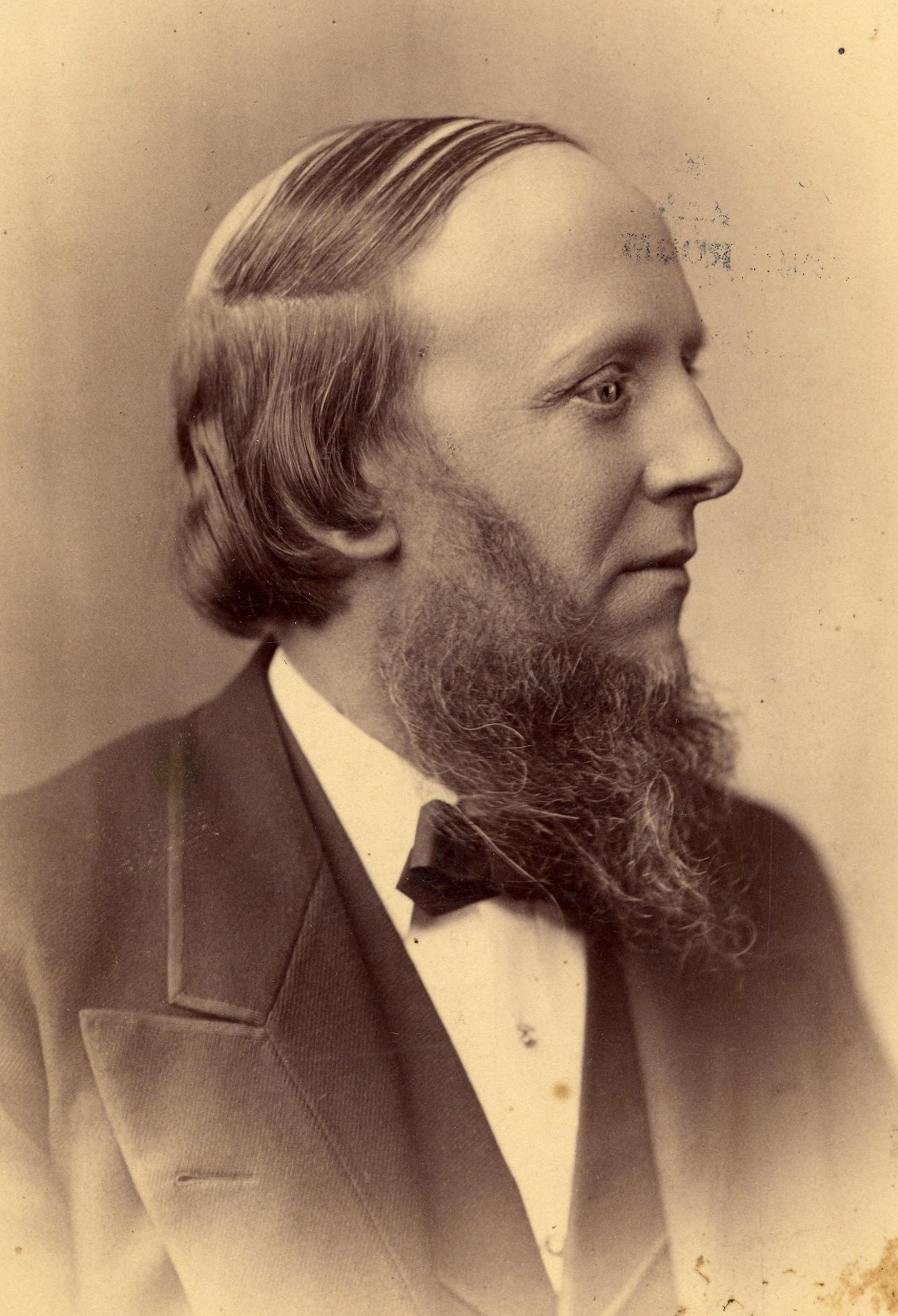
The following year, James B. Angell, the university’s first president, took his turn at the lectern, imploring graduates to consider “The Higher Education: A Plea for Making It Accessible to All.”
A decade ago, NPR released a list of what its editorial team deemed “The Best Commencement Speeches, Ever.” Angell’s remarks were one of seven U-M commencement addresses to land on that list of 350 speeches.
Until the mid-20th century, most U-M commencement speakers were male government and religious leaders, or professors and administrators at U-M or peer institutions, such as Thomas C. Chamberlain, president of the University of Wisconsin (1888); Sir Auckland Campbell Geddes, the British Ambassador to the U.S. (1921); and the Honorable Charles Evans Hughes, who was then the U.S. Secretary of State (1922).
During the early 1940s, U-M President Alexander Ruthven consistently served as the keynote speaker, addressing graduating classes that were, for the first time, populated with more women than men because many male students were off fighting in the war.

In 1959, singer and Civil Rights activist Marian Anderson became both the first woman and the first Black U-M commencement speaker. She told graduates, “You have before you your whole life, and it will bring to you in the end what you put in it from now on. If it has not been sincere, you cannot expect sincerity in return.”
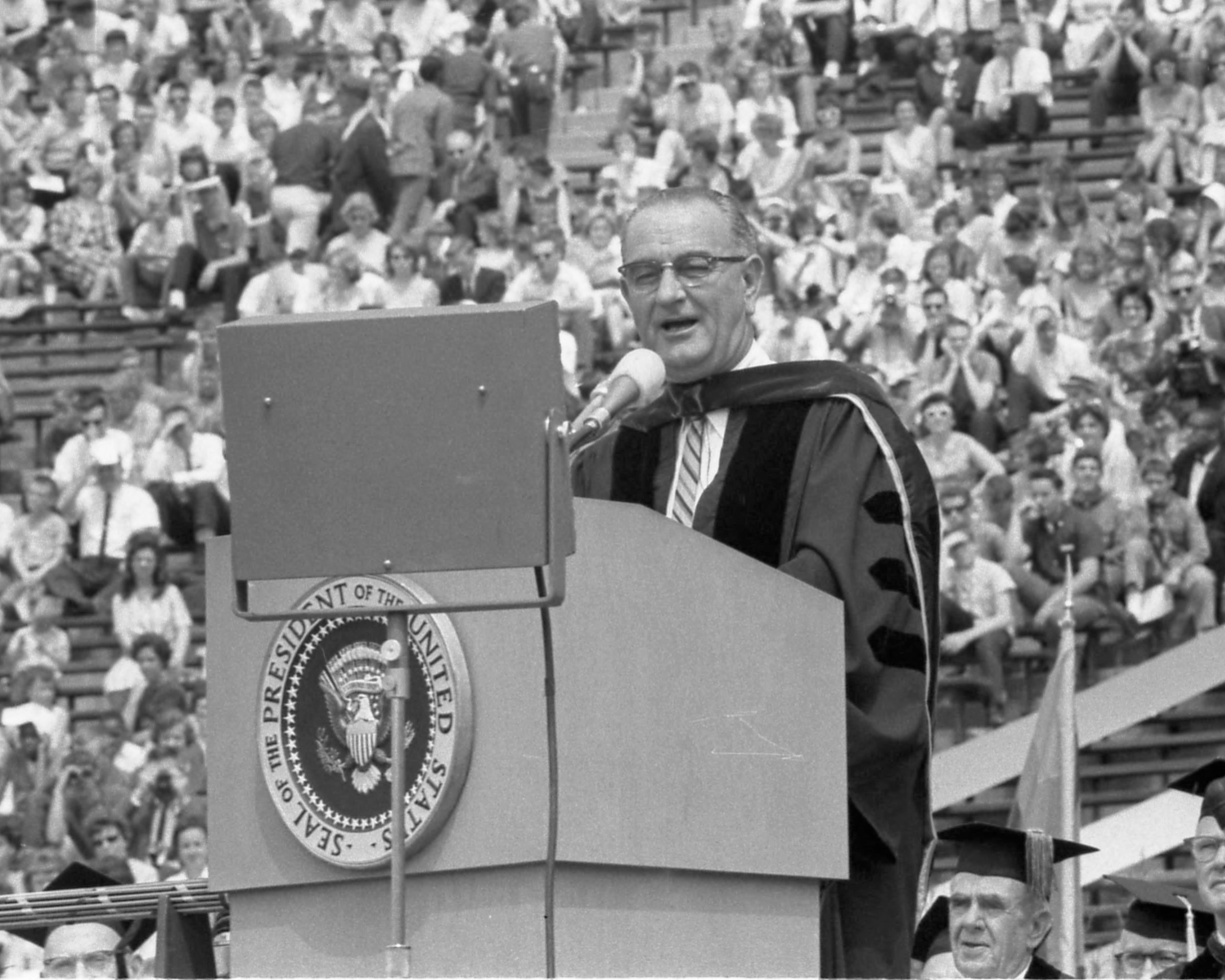
The back half of the 20th century featured a growing number of high-profile speakers, including journalist Edward Murrow (1961), U.S. President Lyndon B. Johnson (1964), and Gerald R. Ford, who was the U.S. vice president in 1974 when he addressed graduates at Crisler Arena.
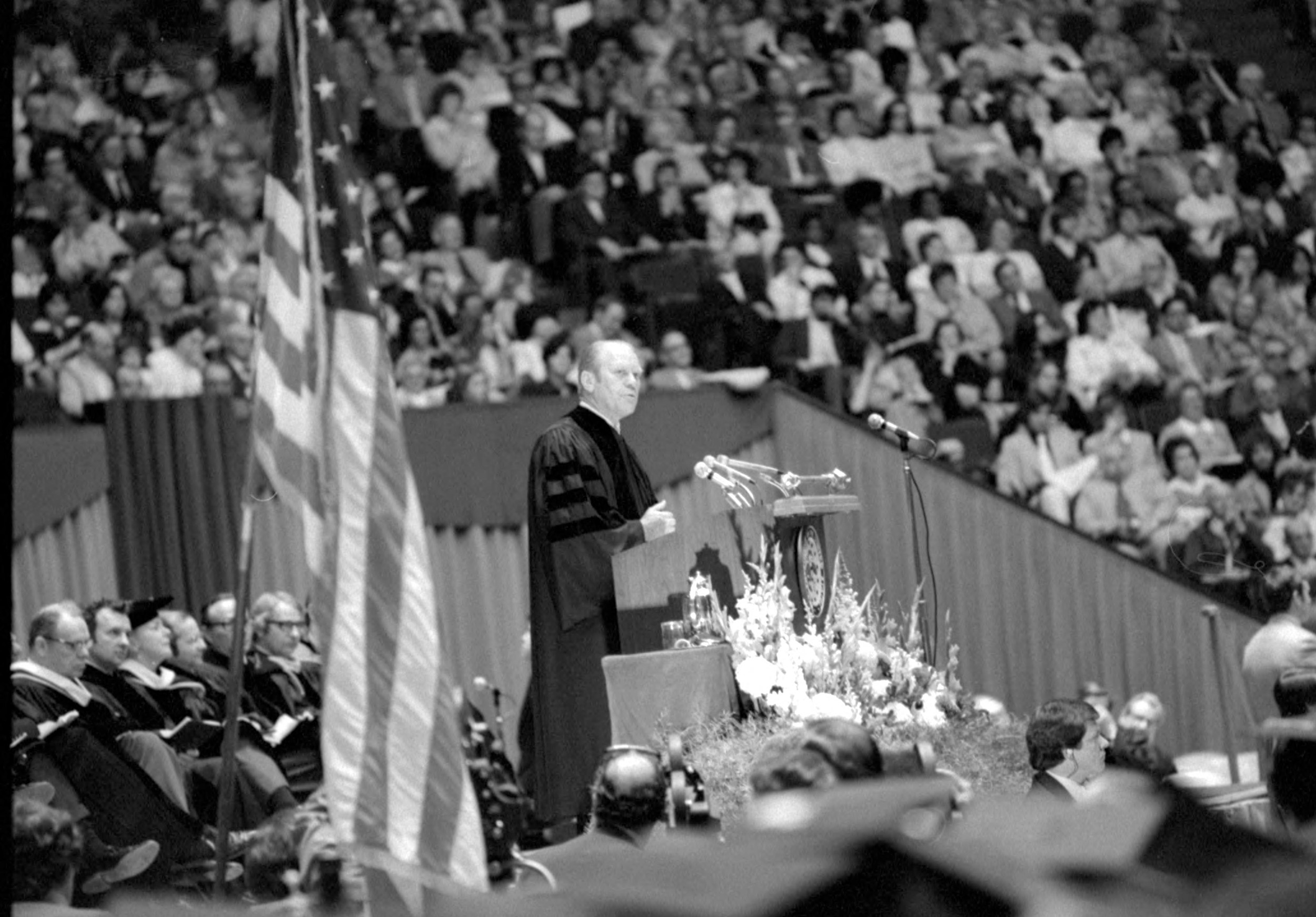
President Johnson’s remarks, which also appeared on NPR’s list of best speeches, introduced the idea of the Great Society.
“Your imagination, your initiative, and your indignation will determine whether we build a society where progress is the servant of our needs, or a society where old values and new visions are buried under unbridled growth. For in your time we have the opportunity to move not only toward the rich society and the powerful society, but upward to the Great Society. The Great Society rests on abundance and liberty for all. It demands an end to poverty and racial injustice, to which we are totally committed in our time,” Johnson said.
Over the past half-century, the university has invited a number of bold-faced names to speak, including this inexhaustive list: Walter Mondale (1978); Jesse Jackson (1979); Lee A. Iacocca (1983); Walter Cronkite (1984); Mike Wallace (1987); President George H.W. Bush (1991); Hillary Rodham Clinton (1993); Christiane Amanpour (2006); President Bill Clinton (2007); Larry Page (2009); President Barack Obama (2010); Sanjay Gupta (2012); Charles Woodson (2018); Gretchen Whitmer (2019); Maria Shriver (2022); and Derek Jeter (2025).
While the Spring Commencement held at Michigan Stadium is the largest U-M graduation ceremony of the year, smaller commencement exercises at UM-Dearborn and UM-Flint, as well as winter term and graduate-level exercises on all three campuses, also feature keynote speakers.
Past speakers at those events include Supreme Court Justice Sandra Day O’Connor (1996), filmmaker Ken Burns (1997) and actor and playwright Jeff Daniels (2009), who all spoke during Winter Commencement in Ann Arbor, and Donna Shalala, the former U.S. Secretary of Health and Human Services, who spoke at Rackham’s graduate-school ceremony in 2002, when she was president of the University of Miami.
This Saturday, May 2, nearly 150 years after U-M’s first commencement speaker addressed the Class of 1878, Jalen Rose, founder of the Jalen Rose Leadership Academy, sports analyst, and former U-M and NBA player, will continue the university’s keynote tradition by sharing a few words of wisdom before sending off the Class of 2026.