Service Design Weekend allows students to re-imagine government
Departments across campus recently came together for an interdisciplinary weekend focused on public service design — how people, processes, and tools come together to deliver effective government services.
The Service Design Weekend provided students and faculty an opportunity to not only reflect on the gaps in current government systems, but also envision a path forward.
Scott TenBrink, a lecturer in the School of Information who teaches on designing information tools to foster civic engagement, appreciated hearing about the history of civic tech from people on the frontlines of that work.
“I came away from the human-centered service design workshop with lots of new activities for engaging people in this type of design work,” TenBrink said.
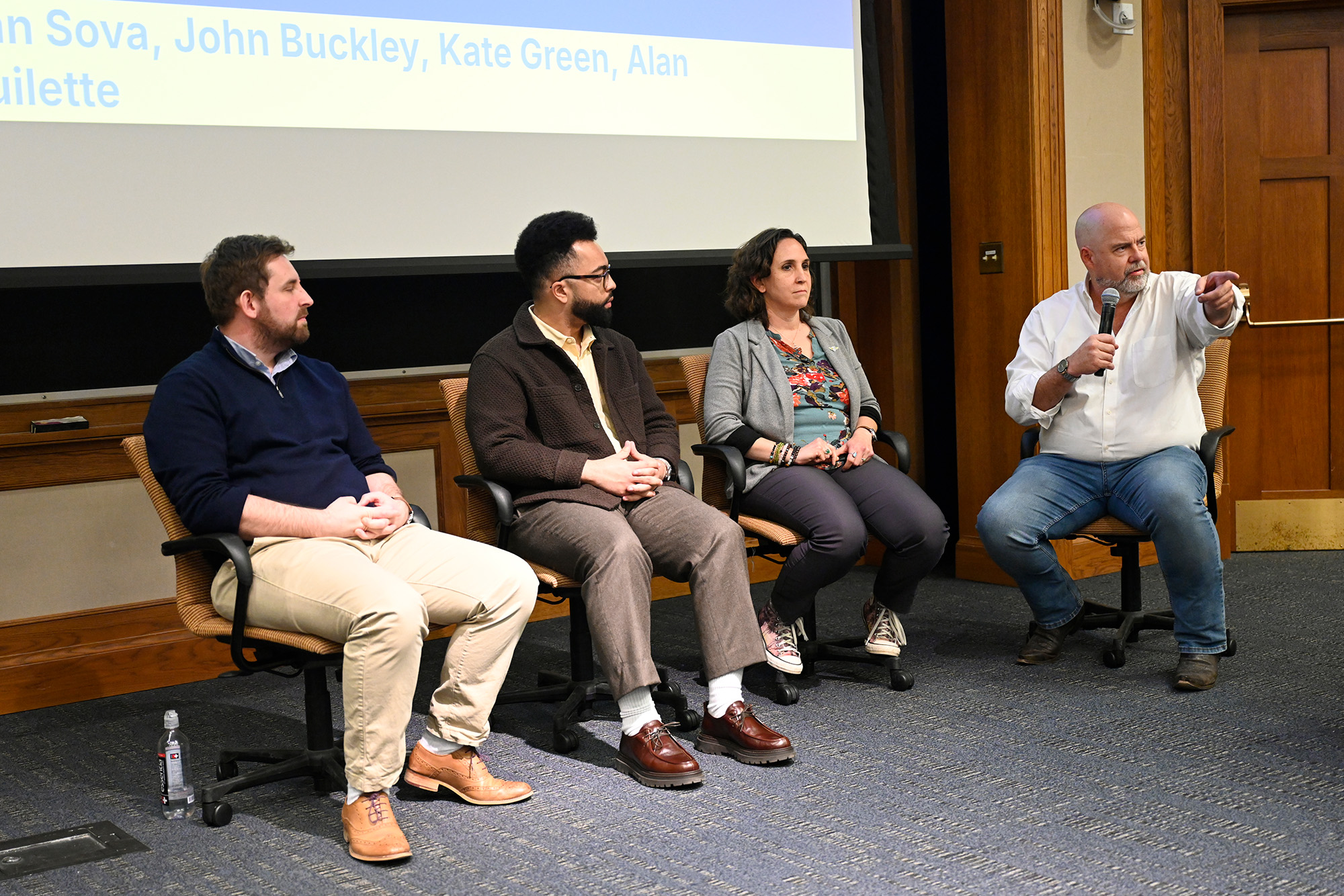
The Service Design Weekend kicked off with Years Ahead, an afternoon for students to learn directly from practitioners who built the first generation of digital government.
“I thought it was important to bring professionals to campus to help demystify all of the slow, often difficult work that goes into making change happen – not to discourage but to inspire our students,” said Ron Bronson, clinical assistant professor of architecture and urban planning in the A. Alfred Taubman College of Architecture and Urban Planning, who organized the Years Ahead panel.
The panels included representatives, past and present, of 18F and U.S. Digital Service, two civic technology organizations that were nested in the federal government; Code for America; Public Policy Lab Midwest; and the Ann Arbor District Library.
A networking reception sponsored by the Gerald R. Ford School of Public Policy’s Kohn Collaborative for Social Policy followed with comments from Pamela Herd, the Carol Kakalec Kohn Professor of Social Policy and professor of public policy in the Gerald R. Ford School of Public Policy. Herd, the Years Ahead panelists, and Julia Dale, CEO of the Detroit-based nonprofit design firm Civilla, engaged in small group conversations with students, faculty and staff.
The following day, 45 students, faculty, and community members representing several schools across U-M joined facilitators John Buckley, practice director of PPL Midwest, and Pallavi Rawla, senior analyst of Public Policy Lab, for an interactive workshop titled “Transforming Government Services with Human-Centered Design.”
The day started with an overview of Public Policy Lab’s mission and case studies of their past projects with NYC agencies. Buckley and Rawla also provided an in-depth overview of Public Policy Lab’s approach to applying human-centered design in the context of government. One of the design steps that stuck out to students the most was “co-design,” which involves collaboratively developing and iterating on prototypes with project stakeholders.
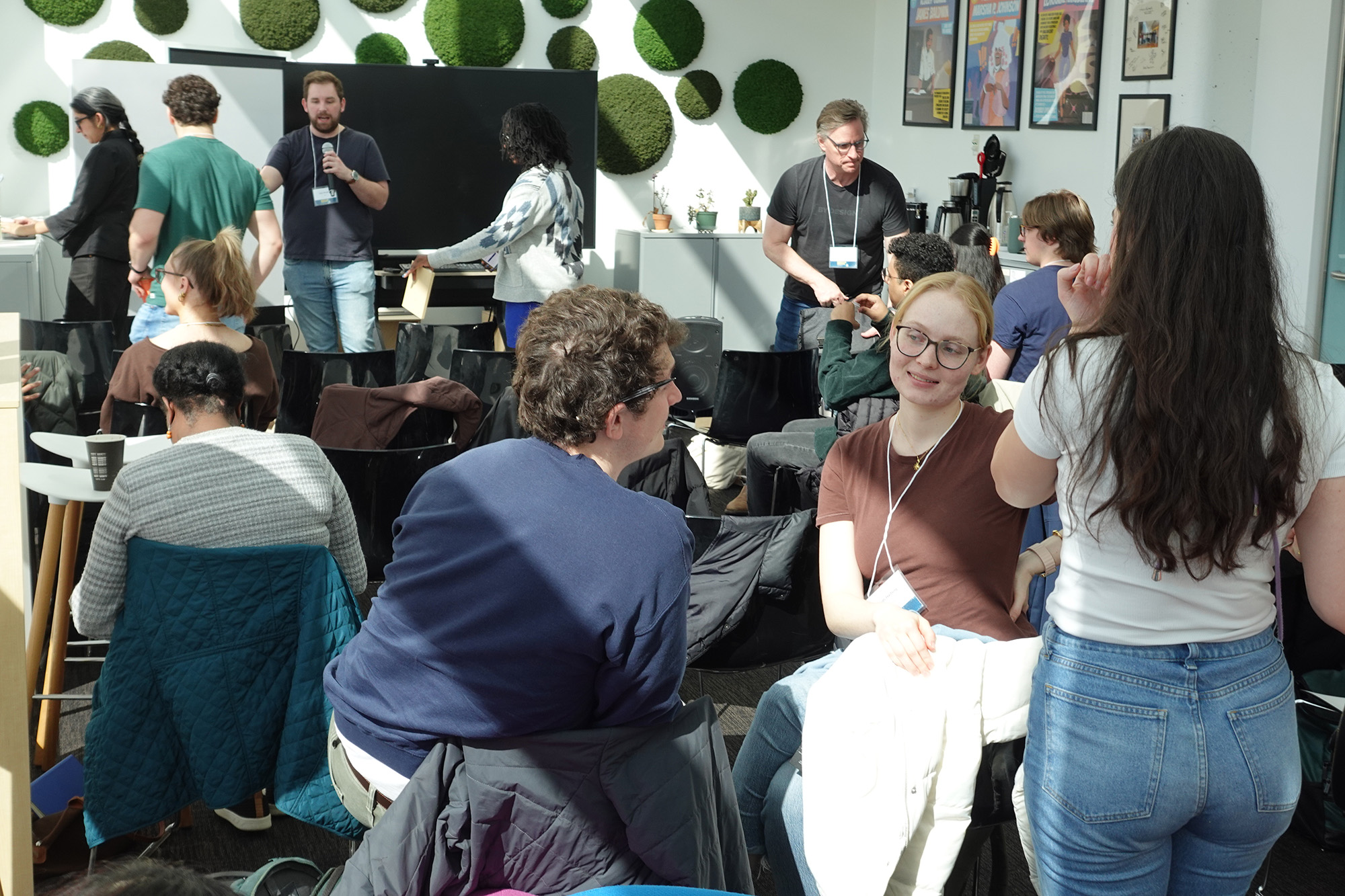
Throughout the remainder of the workshop, students took a deep dive into the “synthesis” step of the human-centered design process. First, using The People Say — a qualitative data platform featuring older adults talking about their lives and the policy issues that affect them — students heard first-hand from three older adults and caregivers about challenges with transportation.
Over the course of the afternoon, students organized this qualitative data, explored insights, brainstormed and iterated on project possibilities to address transportation barriers, and decided a path forward. The workshop culminated with an opportunity to ask Buckley and Rawla questions about the human-centered design process or their careers.
“My colleagues and I are inspired by the passion and enthusiasm that students, faculty, and organizations across (U-M) expressed for human-centered design this past weekend. We’re excited for the growth of human-centered design across public services in the region. And we’re confident that Ford graduates will be leading that charge,” Buckley said.
Service Design Weekend was sponsored by Poverty Solutions, Urban Technology at the Taubman College of Architecture and Urban Planning, Better Government Lab, Kohn Collaborative for Social Policy at the Ford School, Engaged Learning at U-M School of Information, Michigan Ross Business Impact, and School of Social Work’s Community Change Pathway.