Accolades — September 2025
The University of Michigan is the 2025 recipient of the C. Everett Koop Innovation Award. The award recognizes MHealthy’s Resource Coach Program for addressing factors beyond individual health behaviors that influence overall health outcomes. The program offers case management services for faculty and staff experiencing a financial crisis or other personal hardships, helping to navigate transportation, utilities, food insecurity, housing and other basic needs. In certain circumstances, it also provides financial assistance through mini-grants and the Emergency Hardship Program. It has grown to also include food security supports and financial well-being programs. Among those responsible for the Resource Coach Program at MHealthy are Karen Schmidt, senior director of health and well-being services; Alison Nix, associate director for MHealthy; Bri Carpenter, social determinants of health program manager; Alena Williams, health risk reductions program manager; and staff members Aurora Belopolsky, Kristin Duff, Robbyn Hoffman, Leola Hearing and Diana Medina-Urbina. The award is one of the highest honors in workplace well-being, recognizing evidence-based programs that improve employee health and deliver measurable results.
The School of Information has announced the 2025 UMSI Staff Awards. The awards celebrate exceptional contributions of staff members who advance UMSI’s mission and strengthen the school community. UMSI presented five awards in four categories: the Outstanding Staff Recognition Award, Emerging Impact Award, the MUMSI: Collaboration and Service Award, and Innovation Excellence Award. The staff awards committee received nearly 50 nominations across these categories from UMSI staff and faculty. Honorees were recognized at the UMSI Faculty and Staff Community Meeting in September. Outstanding Staff Recognition Award: Lauren Murphy. Emerging Impact Award: Abigail McFee. MUMSI: Collaboration and Service Award: Allison Sweet. Innovation Excellence Award (individual): Laura Marsh. Innovation Excellence Award (team): Online Programs Team: Meryl Baker, Kelly Barger, Hasan Tahir, Jake Hart, Ali Kirwen, Lauren Murphy, Krista Tigay, Shannon Van Gundy, Christen Lesko-Brown and Sarah Regan. For more on the honorees, go online to myumi.ch/qZPme.

Ruma Banerjee, the Vincent Massey Collegiate Professor of Biological Chemistry in the Medical School, has been appointed to the nine-member Searle Scholars Scientific Advisory Board. The Searle Scholars Program is a limited submission award program that makes grants to selected academic and research institutions to support the independent research of outstanding early-career scientists who have recently been appointed as assistant professors on a tenure-track appointment. The program supports high risk, high reward research across a broad range of scientific disciplines. Grants are $300,000 for a three-year term with $100,000 payable each year of the grant. The advisory board is responsible for selecting 15 scholars in biomedical sciences and chemistry from participating institutions, including U-M, to receive support.

Economic historian Joshua Hausman has received the Journal of Economic History’s Arthur H. Cole Prize for best article, a top recognition in the field of economic history. Hausman is associate professor of public policy in the Gerald R. Ford School of Public Policy and associate professor of economics in LSA. His winning article “The Model T,” co-authored with Shari Eli and Paul W. Rhode, investigates how the success of the Model T contributed to the United States’ rapid adoption of the automobile in the early 20th century. “By the 1920s, the United States had twice as many cars per capita as Canada, and ten times more than Europe,” Hausman said. “In Los Angeles County alone there were more cars than in Germany and Italy combined. How the Model T was produced was a decisive factor in that gap.” During that time, the Ford Motor Company was producing cars in the United States at a scale unmatched by the rest of the world until after World War II. Innovations in mass production along with tariffs on trade made the Model T more affordable to U.S. consumers as compared to those in other countries and limited widespread adoption.
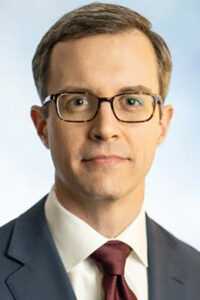
Mark Bicket will receive the American Society of Anesthesiologists James E. Cottrell, MD, Presidential Scholar Award. Bicket, associate professor of anesthesiology in the Medical School and associate professor of health management and policy in the School of Public Health, will be recognized for his work to pioneer evidence-based approaches to patient-centered pain care. He will receive the award, which is presented annually to one physician-scientist worldwide who has dedicated their early career to research, at the ASA Annual Meeting’s Celebration of Research on Oct. 13. “I am honored to receive the ASA James E. Cottrell Presidential Scholar Award. I’m deeply grateful to our extraordinary team, including staff, collaborators, trainees and mentors who have supported me along the way,” said Bicket, who also serves as co-director of the Overdose Prevention Engagement Network. “I remain committed to advancing evidence-based approaches and keeping patients at the center to improve health and care.” Bicket’s research aims to improve care for patients with pain while reducing opioid-related harm. He currently leads three National Institutes of Health R01 studies examining pain-related outcomes for people with complex pain or opioid use disorder who have surgery.

Shobita Parthasarathy has been appointed to the Standing Committee on Advancing Science Communication, a National Academies of Sciences, Engineering, and Medicine committee that was established in 2016 to advance ethical, evidence-based science communication by supporting collaboration, research, and capacity-building across disciplines and institutions. Parthasarathy is a professor of public policy in the Gerald R. Ford School of Public Policy and professor of women’s and gender studies in LSA. She was chosen for her scholarship and expertise in the ethics and policy of emerging technologies, including AI, and their intersection with equity and just social outcomes. “It is a great honor to join the Standing Committee,” Parthasarathy said. “I am particularly excited to provide expertise on how scientists and engineers can develop more equitable and inclusive relationships with the communities they aim to serve, and the kinds of structures and policies that academia and government can adopt to foster more trustworthy science and technology.” Fellow committee members include public health, data science, and journalism leaders affiliated with the American Enterprise Institute, The COVID States Project, The Open Notebook and Ciencia Puerto Rico. Others represent academic institutions such as Duke University, Morehouse School of Medicine, Cornell University, Indiana University and Harvard Medical School.
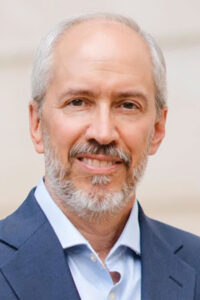
Charles Shipan was selected as the recipient of the American Political Science Association Public Policy Section’s Excellence in Mentoring Award. Shipan is the J. Ira and Nicki Harris Professor of Social Science and professor of political science in LSA and professor of public policy in the Gerald R. Ford School of Public Policy. This award recognizes his outstanding commitment to mentoring within the field of political science. His exemplary guidance and support have significantly impacted the academic and professional development of numerous students and colleagues, and this award is a testament to his exceptional contributions.
The Dark Energy Spectroscopic Instrument collaboration will receive the 2026 Lancelot M. Berkeley — New York Community Trust Prize for Meritorious Work in Astronomy. Awarded annually since 2011 by the American Astronomical Society and supported by a grant from The New York Community Trust, the Berkeley prize includes a monetary award and an invitation to give the closing plenary lecture at the AAS winter meeting. The 247th AAS meeting will take place from Jan. 4-8, 2026, in Phoenix, Arizona. DESI is an international experiment with more than 750 researchers from over 70 institutions around the world — including U-M — and is managed by the U.S. Department of Energy’s Lawrence Berkeley National Laboratory. The state-of-the-art instrument, which captures light from 5,000 galaxies simultaneously, was constructed and is operated with funding from the Department of Energy Office of Science. For more on DESI and the prize, visit the AAS website.
— Submit requests for faculty or staff Accolades to [email protected]. Please attach a digital photo if you wish for one to be included.