Professor uses art as both a teaching and research tool
Rogério M. Pinto was born in Belo Horizonte, Brazil, shortly after the Brazilian coup d’état of 1964. He grew up under a military dictatorship that lasted 20 years.
“You learned early on that there were things you couldn’t say directly, so we created other ways to speak — through songs, stories and symbols that carried meanings we all understood, even if we couldn’t name them aloud,” said Pinto, University Diversity and Social Transformation Professor and Berit Ingersoll-Dayton Collegiate Professor of Social Work in the School of Social Work, with courtesy appointments as professor in the School of Music, Theatre & Dance and at the Penny W. Stamps School of Art & Design.
“Under a dictatorship, people learn how to express themselves in metaphor. Art becomes a vehicle for survival.”
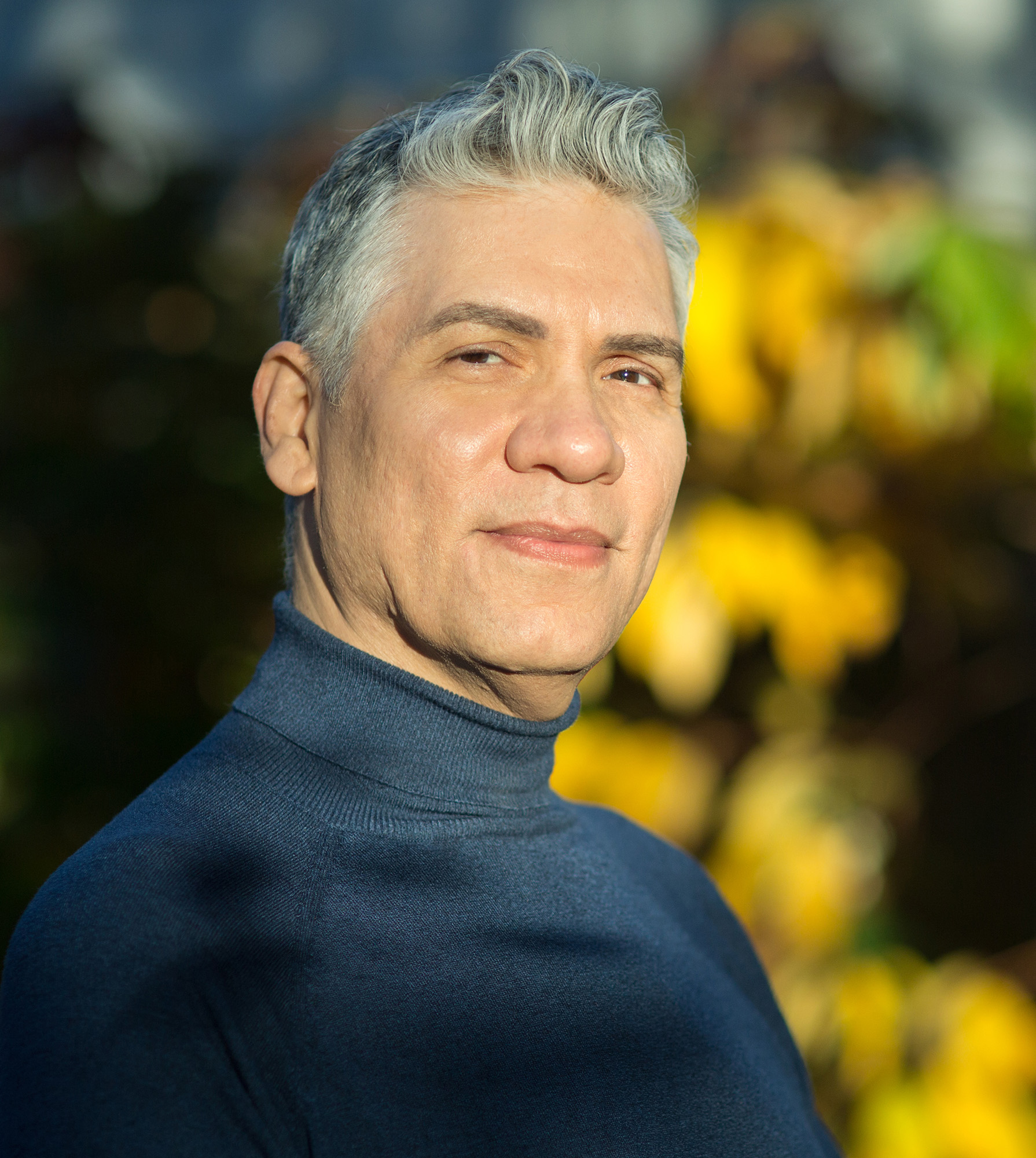
As a young person in Brazil, Pinto was both poor and queer in a repressive environment. Later, he faced new forms of bias as a racial and ethnic minority in the U.S. Those experiences, plus his early exposure to coded language, influenced his life’s work.
“I have used myriad art forms in social work research and teaching to study and to inspire critical consciousness,” he said.
Sharing his experience
Pinto earned a degree in biological sciences with a minor in education in Brazil before moving to the U.S., where he pursued graduate studies at Columbia University. He spent nearly three decades in New York City before joining the U-M faculty in 2015.
In Pinto’s classes, students may find themselves drawing, performing and participating in what Paulo Freire, an influential Brazilian educator, termed “critical dialogues.”
Pinto’s approaches are grounded in the works of Freire’s “Pedagogy of the Oppressed,” and the Theatre of the Oppressed movement, founded by Brazilian theater practitioner Augusto Boal. Both asserted that creativity could awaken critical consciousness, as well as the ability to question one’s reality and work to change it.
Freire’s model used pictographs to spark discussion among rural Brazilians about the forces shaping their lives under a military regime. Boal took those ideas to the stage, inviting audiences to intervene, rewrite scenes and imagine different outcomes.
“Freire believed that even when people are lied to, they can still recognize the truth if given the chance to reflect,” Pinto said. “And Boal suggested that we should embody those reflections and act them out.”
Art as a teaching tool
For Pinto, teaching through art is not just about creative expression. It’s about helping students discover empathy and self-healing.
“When people describe a painting, sculpture or music, they’re often describing themselves without realizing it,” he said. “That moment of vulnerability, of recognizing your own story in someone else’s, is where empathy begins.”
One of Pinto’s recent projects at U-M, The Dream Flag, was inspired by a workshop he attended at Brazil’s Center for the Theatre of the Oppressed, where participants reimagined a national flag.
“The flag, as a symbol, carries so much meaning,” Pinto said. “It can unite people, but it can also be used to exclude them or make them feel they don’t belong.”
Pinto adapted the exercise for the School of Social Work Art Collective by asking Collective collaborators to paint the American flag from memory. As they worked, he posed a series of critical questions, such as, “How many stripes are there?” “What do the colors mean?” “Who decided that meaning?”
“People realized they didn’t know as much as they thought,” he said. “And that’s when the real conversation began, about what the flag represents, and who gets to define its meanings.”
Next, participants painted new flags that reflected their own identities and ideals. For this phase, the group discussed questions, such as “What colors or formats might best represent who you are?” “What new colors might mean?” “What is your dream flag?”
“It’s a healing process,” Pinto said. “The first flag exercise is about questioning what you’ve inherited. The second is about creating something that represents you now.”
The third phase involved the entire group of 10 individuals creating one flag together. This larger flag often featured vivid colors and ample negative space. “When you looked at them,” he said, “you saw people leaving space for others to fill.”

The Dream Flag Project was the primary project undertaken in 2024 by the Art Collective, which Pinto founded in 2018. In May of last year, the project culminated at the SSW’s annual Impact Awards event, developed by the FLOURISH Office. More than 40 faculty, students, and staff members created eight collaborative flags.
“The room was alive,” Pinto recalled. “There was paint everywhere, music playing, people talking and laughing. It was exactly what Freire meant by critical consciousness, with reflection and action happening together.”
Art as a means of research
Pinto’s research also uses art to examine trauma and healing.
In one study, he collaborated with incarcerated men to explore how internalized homophobia and sexism shape substance use. Participants engaged with illustrations designed to provoke dialogue about identity, stigma and power.
“Art gives people permission to talk about difficult things,” he said. “By externalizing internalized oppression, we can begin to dismantle it.”
Another project took the form of an autobiographical monologue titled “Marília” that was named for Pinto’s sister, who died in a childhood accident. The piece blends personal memory with social history. Pinto performed the play in New York City and South Africa.
“My research question for this play was simple: how did my family deal with grief and loss under the dictatorship and under such poverty?”
Pinto interviewed siblings and former neighbors, then turned their recollections into a performance.
NOMINATE A SPOTLIGHT
- The weekly Spotlight features faculty and staff members at the university. To nominate a candidate, email the Record staff at [email protected].
In 2021, he performed the same story on a site-specific art installation, “Realm of the Dead,” in commemoration of the School of Social Work’s centennial. The installation included 25 sculptures arranged like graves in a cemetery. Audience members moved from piece to piece, guided by the ringing of a bell.
“At the end of ‘Realm,’ everyone held a small white box, symbolic of my sister’s coffin, filled with things they’d gathered along the way,” he said. “They could choose to keep it or leave it. It was about what we carry (trauma), and what we let go (healing).”
For Pinto, an artistic performance is similar to academic inquiry. “The writing of a play is akin to the results section of any of my other publications. Instead of publishing in a journal, the play is performed on a stage or published as a book.”
“The pursuit of art and science is quite similar,” he continued. “They are both about curiosity. They both ask, ‘What is happening here?’ and ‘How can we change it to make life better?’”
Up next
While his art often explores painful histories, Pinto’s outlook remains hopeful. “Critical reflection is not just about despair,” he said. “It’s about possibility. When people begin to see themselves as part of the story, they can imagine writing a new one.”
On the topic of writing, Pinto has been off campus this term, preparing for the publication in May 2026 of his new book, “Freire and Drama: ‘Marília,’ a Play – Anti-Oppression and Healing in the Arts.” The book includes the original script of “Marília,” along with essays exploring how Freire’s educational theories and Boal’s Theatre of the Oppressed use drama and biographical narratives to spark critical dialogues.
“I hope the innovative nature of this book will engage those involved in the arts and social sciences, particularly social work,” Pinto said. “It will serve as a springboard for artistic research and practice to address contemporary issues such as racism, xenophobia and colorism and move us toward liberation.”