U-M leads responsible AI and supercomputing for public good
At the University of Michigan, powerful computers running many calculations at the same time are helping researchers solve problems that would otherwise be out of reach.
The approach, called high-performance computing, combines powerful hardware and sophisticated computational algorithms. Artificial intelligence plays a central role, accelerating scientific computing and helping researchers draw insights from complex, high-dimensional data and simulations.
“When computational algorithms, infrastructure and AI advance together, they dramatically expand what we can model, predict, design and discover,” said Karthik Duraisamy, Arthur B. Modine Professor of Engineering and Samir and Puja Kaul Director of the Michigan Institute for Computational Discovery and Engineering. “Computationally driven medical and engineering breakthroughs at U-M are already saving lives and delivering significant societal benefits.”
As U-M embarks on a new partnership with Los Alamos National Laboratory to launch a supercomputing facility in Washtenaw County, the work of the university’s researchers illustrates U-M’s broader strategy: using high-performance computing and AI together to deliver lifesaving discoveries in the service of the public good.
AI spots hidden cancer during surgery
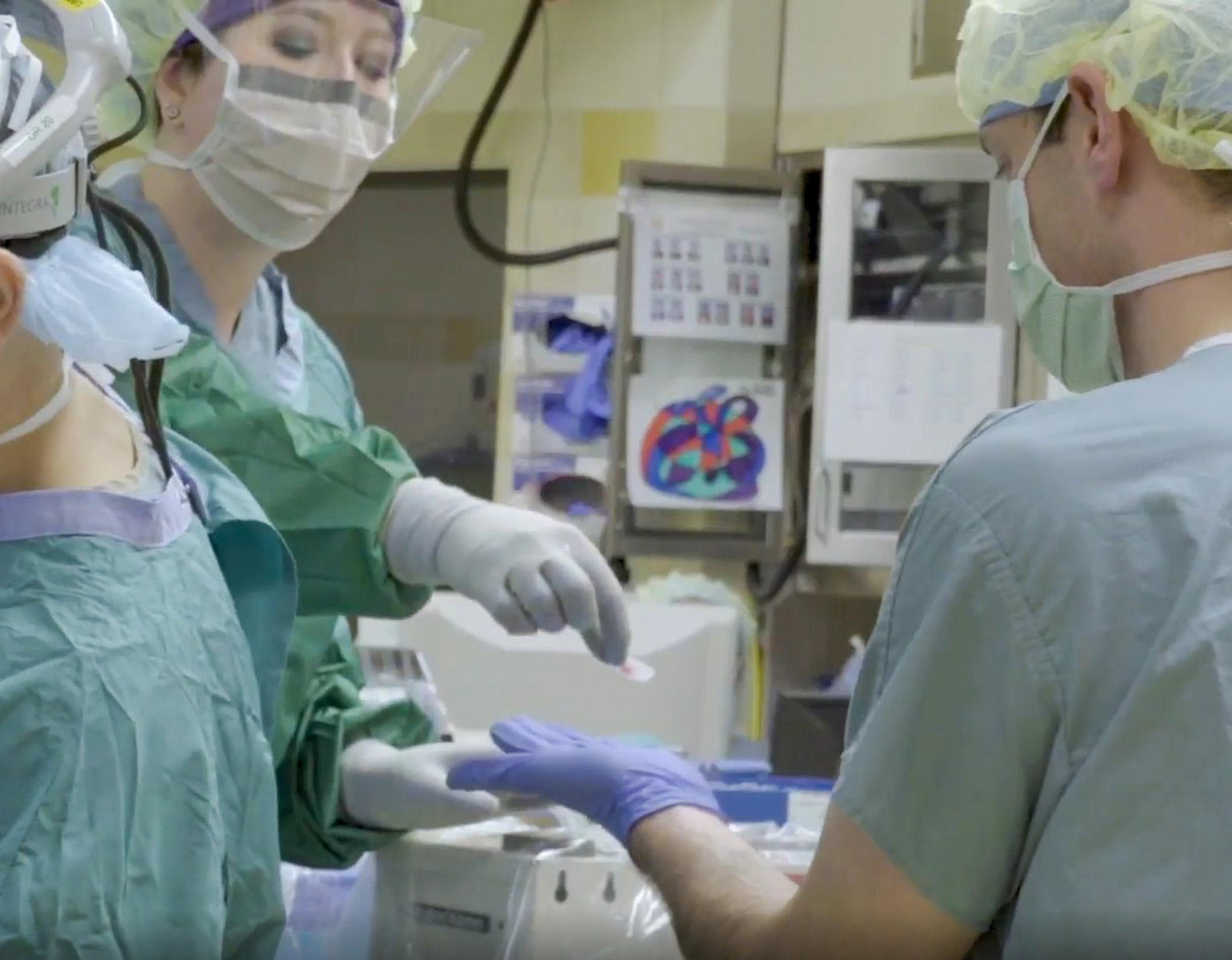
At Michigan Medicine, Todd Hollon is using AI with advanced imaging to improve diagnosis and treatment of gliomas, the most common type of adult brain tumor.
Hollon is the Joseph R. Novello M.D. and Alfredo Quinones-Hinojosa M.D. Research Professor of Neurosurgery and program director of artificial intelligence in neurosurgery,
Gliomas present a challenge because cancer cells often blend into healthy brain tissue. Traditional methods, such as MRI scans or fluorescent dyes, can leave residual cancer cells undetected.
A recently developed AI system at U-M identifies these leftover cells during surgery, providing real-time diagnostic feedback in about 10 seconds. This method lowers the rate of undetected residual tumor from 24% with conventional techniques to just 4%, greatly reducing the risk of cancer recurrence and improving long-term survival.
This technology is already used daily on the surgical table with the potential to extend to pediatric brain tumors and other cancers.
“Our AI system improves surgical accuracy by up to four times compared to standard methods,” Hollon said. “This leads to safer, more effective brain tumor removal and longer survival for patients. With potential applications for other cancers, this technology showcases the life-saving promise of AI in medicine.”
Rebuilding the body
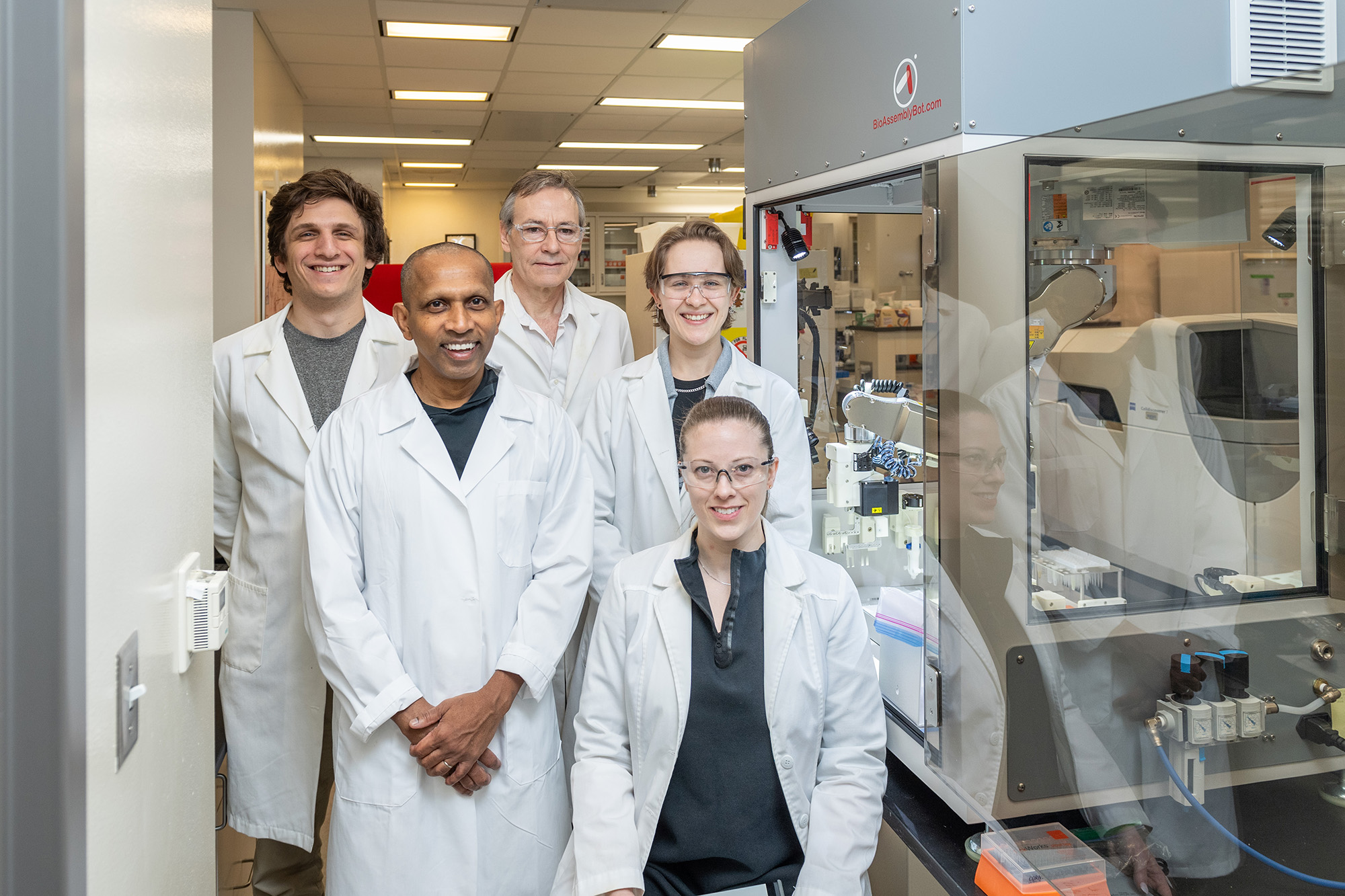
Indika Rajapakse, associate professor of computational medicine and bioinformatics, and his team are using AI and HPC to reprogram skin cells to regenerate bone marrow lost after chemotherapy.
Bone marrow produces blood cells that fight infection, aid clotting and help heal tissue.
Every cell in the body contains identical DNA, but only certain genes are active in each type of cell. By activating the right genes, Rajapakse’s team can reprogram a patient’s skin cells into bone marrow cells. Because the new cells are the patient’s own tissue, the body recognizes them as its own, greatly reducing the risk of immune rejection or organ damage.

This approach may open future possibilities, from regenerating heart muscle cells after a heart attack to creating insulin-producing pancreatic cells for diabetes to repairing macular degeneration in the eye.
“We call this work the treatment for the treatment,” Rajapakse said. “By combining high-performance computing and AI, we’re advancing the technology to reprogram a patient’s own skin cells into bone marrow cells after chemotherapy. This represents a major shift from traditional approaches, allowing us to address bone marrow transplant complications and tailor recovery to the patient. The power of these technologies is opening doors in medicine we never thought possible.”
AI and HPC modeling allow researchers to “experiment” in ways not possible in the physical world. Unconstrained by time, cost or safety concerns, scientists can recreate and test entire systems inside a computer model to see how factors interact.
In the lab, progress happens step by step, similar to climbing a staircase. But computational modeling provides an elevator, allowing researchers to explore thousands of possibilities at once, revealing patterns and insights that would be impossible to uncover through traditional methods alone.
Beyond medicine, U-M researchers are using AI in other fields with the potential to save or improve lives.
Anticipating danger, saving lives
As the sun approaches the peak of its 11-year activity cycle, geomagnetic storms are becoming more frequent, drawing renewed attention to the vulnerability of modern technology to solar disturbances. These storms can disrupt systems that depend on satellites, long-distance power transmission and precise timing, including communications, navigation and the power grid.
To address these threats, U-M researchers are using HPC and AI to model “space weather.” By predicting solar wind, which consists of streams of charged plasma moving over one million miles per hour, they aim to provide early warnings that protect satellite communications, power grids and GPS systems.
In aviation, U-M engineers are also using computations and AI to develop lightweight, durable electric batteries powerful enough for real-world flight. These batteries are being tested in electric vertical takeoff and landing vehicles, or eVTOLs, which are expected to play a critical role in applications from cargo delivery to emergency response.
Their potential is vast, with the ability to deliver donor organs to hospitals within narrow timeframes or emergency medical care directly to remote or congested locations faster than ground ambulances. Their compact size and vertical takeoff capabilities allow them to reach areas that helicopters cannot. This combination of speed and agility could save lives when every minute counts.
Researchers at U-M are using HPC and AI to simulate how buildings respond to severe events such as earthquakes and impacts. Detailed analyses help identify factors that contribute to progressive collapse, where failure in a single component can set off a chain reaction throughout a structure. These insights are informing improvements in building safety, with the goal of preventing collapse and protecting lives.
A strategy for the public good
These examples underscore U-M’s broader strategic vision to harness HPC and AI as interconnected systems that advance the public good. U-M is committed to ensuring these technologies are not only powerful, but are also used to advance the university’s mission to serve the public good.
“AI is advancing at a pace unlike any technology we’ve seen before,” said Arthur Lupia, vice president for research and innovation. “While there are challenges to overcome, the potential benefits are extraordinary. We recognize both the promise and the responsibility. It’s not enough for U-M to simply participate. We have a duty to lead, setting ethical standards, shaping policy and ensuring that these innovations truly serve the public good.
“As stewards of this transformative era, we’re committed to making sure AI’s remarkable potential is realized responsibly and to its fullest, for the benefit of all.”