U-M launches climate fellowship to strengthen workforce pipeline
New pilot initiative builds pipeline for environmental justice leadership, statewide community partnership
The University of Michigan has named the inaugural cohort of the Michigan Community Climate Action Fellowship, or M-CCAF, a new pilot initiative designed not simply as a scholarship program, but as a scalable model for climate leadership, workforce development and community partnership.
Launched by the Office of the Vice Provost for Sustainability and Climate Action and managed by the Graham Sustainability Institute, M-CCAF is open to undergraduate students of all majors across the Ann Arbor, Dearborn and Flint campuses. The fellowship connects students with grassroots climate and environmental justice organizations across Michigan through summer internship placements, academic coursework, faculty mentorship, and a structured, cross-campus cohort experience.
From its inception, M-CCAF has been conceived as infrastructure — a durable pipeline that strengthens communities, prepares a climate-literate public, and trains the next generation of leaders for a rapidly evolving climate workforce.
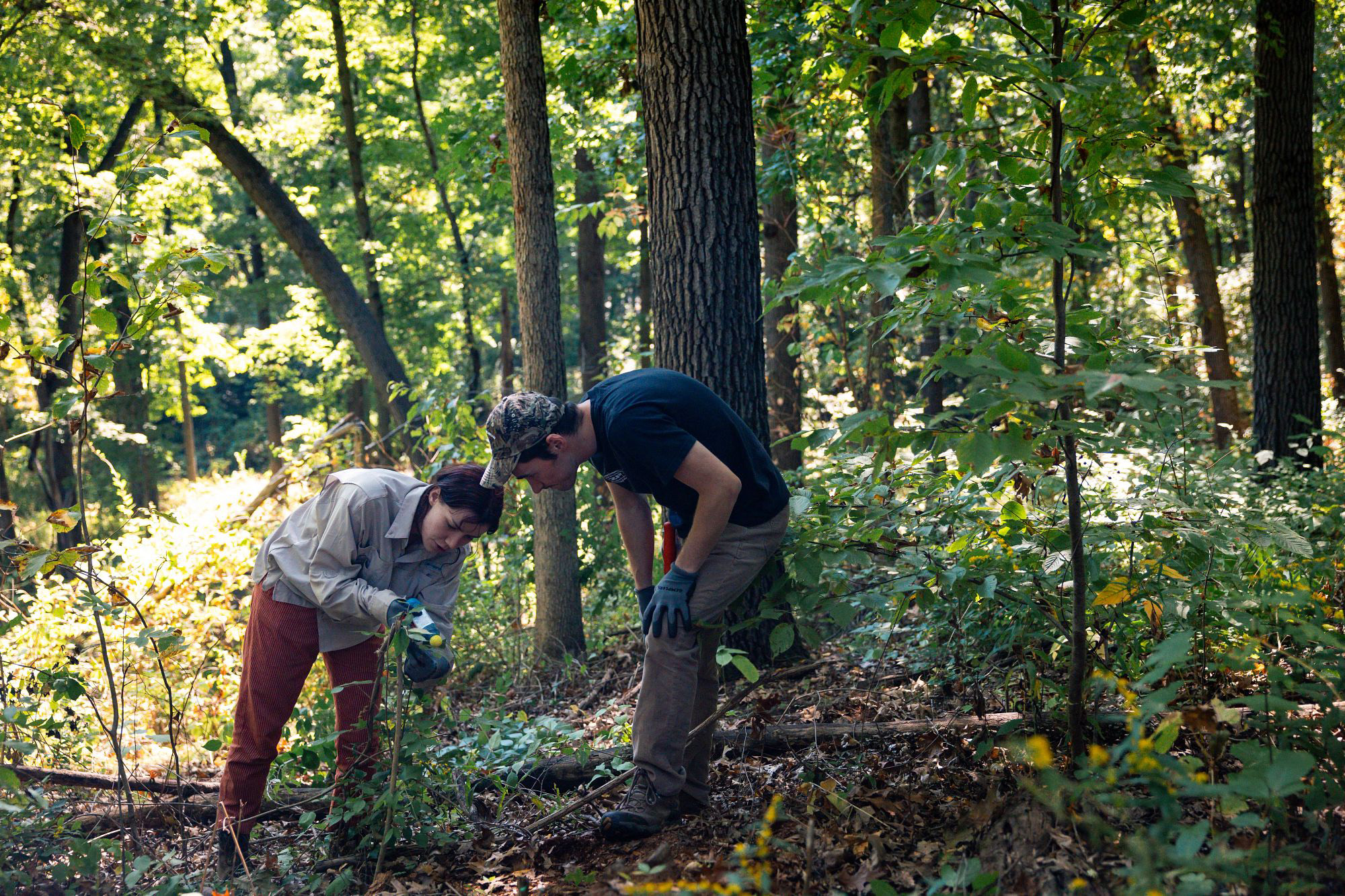
The idea emerged from conversations between Shalanda Baker, inaugural vice provost for sustainability and climate action, and Denise Keele, executive director of the Michigan Climate Action Network, a statewide coalition advancing equitable climate solutions. Both leaders saw an opportunity to align the university’s academic strength with the urgent needs of frontline organizations across the state.
“In this decisive decade on climate, universities — particularly public universities — are well positioned to lead,” Baker said. “We are not only centers of research; we are anchor institutions in communities. Public universities have both an obligation and an opportunity to help build the human capacity needed to respond to climate change.”
For Baker, that responsibility is inseparable from equity.
“Climate change is layered onto historic patterns of exclusion and disinvestment,” she said. “If we are serious about solutions, we must center environmental justice. That means investing in people — especially students and communities who have too often been left out of decision-making — and ensuring they have the tools and pathways to lead.”
She emphasized that M-CCAF is about building a pipeline across diverse disciplines.
“We face an urgent need to scale up our climate workforce and support the public to become more climate literate to navigate the changes ahead,” Baker said. “M-CCAF prepares students, regardless of chosen course of study, to carry climate understanding and a commitment to equity into their careers and communities.”
Designed as a model for growth
INAUGURAL COHORT
- The Michigan Community Climate Action Fellowship’s first cohort includes students from across all three campuses:
- ANN ARBOR
- Kassidy Allen (psychology, environment)
- Leah Casavant (data science)
- Brianna Deghetto (ecology and evolutionary biology)
- Nicole Giang (engineering)
- Asher Hickey (earth and environmental science, international studies)
- Min Hollweck (environmental engineering)
- Alice Pan (statistics)
- Isabel Rivera (political science)
- Adriana Sankah (public health)
- Jasmeher Singh (public policy)
- Julieta Turon (environment, ecology and evolutionary biology)
- Arush Vatul (chemistry)
- Suzanna Wilkinson (urban technology)
- DEARBORN
- Dean Beach (political science)
- Dominic Gomez (social work)
- Adam Hraybi (biological sciences)
- Chelsie Melki (political science)
- Phillippe McRae (environmental science)
- Noor Raza (health and human services)
- Tasnim Rahman (economics)
- Aniqa Usha (psychology)
- FLINT
- Mya Aird (finance, marketing)
- Anna Bakhador (wildlife biology)
- Jorge Cruz (interdisciplinary studies)
- Reese Gammicchia (data analytics)
- Sharnell Johnson (social work)
- Abigail Lagueux (environmental engineering)
Though in its first year, the fellowship is part of a long-term strategy to develop climate-literate, action-ready graduates while strengthening partnerships across the state.
The pilot year includes 27 students participating in paid summer placements with MiCAN-affiliated organizations. The program unfolds in three phases:
- A winter semester mini-course introducing climate literacy, equity-centered leadership, and professional preparation.
- A summer internship with a partner organization.
- A fall semester mini-course focused on reflection, interdisciplinary integration, and leadership development.
Students receive a stipend and faculty mentorship as part of the program, while cohort gatherings build community across campuses. A special convening at the annual MiCAN Summit will also bring fellows together with climate leaders from across the state.
Lily Eligator, M-CCAF program manager, described the first cohort as foundational.
“These students are trailblazers,” Eligator said. “They’re not just participating in a program — they’re shaping it. The pilot allows us to test and refine so that when we scale, we do so with clarity and intention.”
The inaugural fellows were selected through a competitive review process involving sustainability-affiliated faculty and staff from all three campuses, along with input from partner organizations — an approach designed to ensure thoughtful matches and shared accountability.
In the coming years, the university envisions growing the fellowship from its pilot size to several hundred students annually. At full scale, M-CCAF would function as a university-based climate corps, placing trained and supported students into communities each year through a sustained, structured pathway.
“This is experiential learning with a purpose,” Eligator said. “It’s workforce development. It’s sustainability leadership development. It’s about preparing students to work across disciplines and in partnership with communities most affected by climate change.”
Centering equity and environmental justice
M-CCAF is grounded in environmental justice. Many partner organizations work in communities disproportionately affected by pollution, energy burden, flooding, extreme heat, and long-term infrastructure disinvestment.
“Our member organizations operate at the intersection of climate, housing, public health, water access, and energy justice,” Keele said. “They are deeply embedded in their communities and often working with limited capacity. By connecting them with talented students in a structured, supported way, we strengthen the ecosystem on both sides.”
Keele noted that the fellowship emerged from a broader question about the university’s role.
“We asked: What would it look like for a major public institution to invest in grassroots climate work in a sustained and reciprocal way? M-CCAF is one answer. It recognizes that expertise lives in communities, and that students have as much to learn as they have to contribute.”
This year’s placements span organizations across Michigan, from Groundwork Center for Resilient Communities in Traverse City and Up North Advocacy in Sault Ste. Marie to Climate Stick in Bay City, Grand Rapids Climate Coalition, Kalamazoo Climate Crisis Coalition, and White Lake Area Climate Council.
Additional partners include Michigan Environmental Justice Coalition, Third Act Michigan, Ann Arbor for Public Power, Detroiters Working for Environmental Justice, Transportation Riders United, Soulidarity in Highland Park, People’s Water Board, We Want Green Too, and Citizens’ Resistance at Fermi Two.