U-M’s ROTC program officially opens new home in Observatory Hall
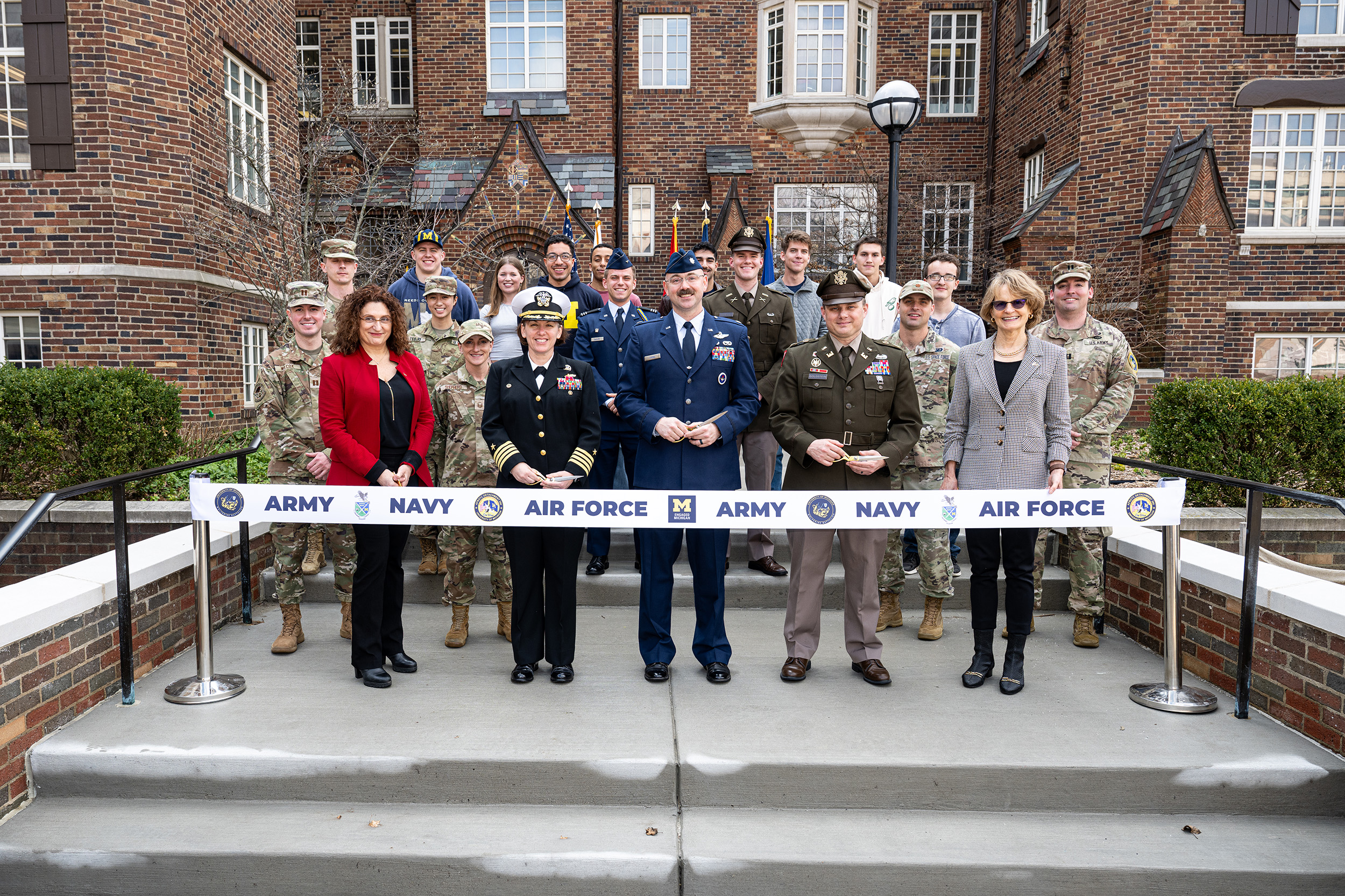
On an unseasonably warm late-winter afternoon, members of the University of Michigan community gathered outside Observatory Hall to mark a moment years in the making: the formal opening of the new home of U-M’s ROTC program.
During a March 10 ribbon-cutting ceremony, university leaders, ROTC commanders, cadets and midshipmen spoke about service, community and history, as they recognized what the move means for the more than 200 students who participate in Army, Navy and Air Force ROTC at U-M. (The program also includes Marine midshipmen, who are part of the Navy, and Space Force cadets, who are part of the Air Force.)
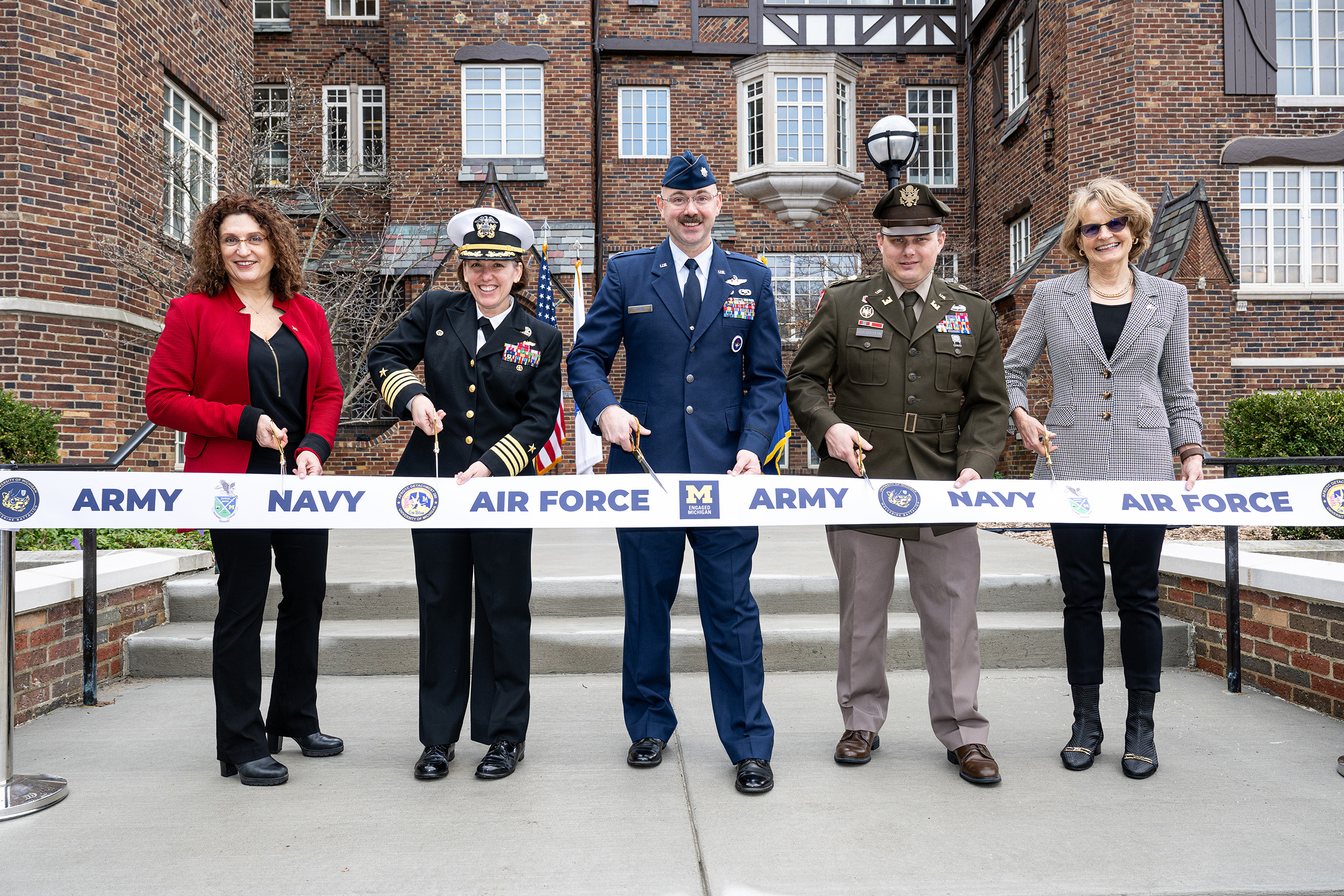
Valeria Bertacco, vice provost for engaged learning, framed the occasion as both a celebration of a newly renovated building and of the people who will fill it.
“Today we are here not just to honor this remarkable building, but also our military-connected community — students, staff, faculty and alumni,” she said. “We’re deeply grateful for all that you contribute, and it is a true honor and a joy to celebrate you today.”
In the 1940s, the first ROTC program was housed in North Hall, a building on central campus that was demolished a decade ago to make room for the Biological Science Building. The ROTC program then temporarily moved to the Chemistry Building. But pandemic-related delays to the renovation of Observatory Hall, once the home of the School of Kinesiology, stretched that arrangement longer than anticipated.
At the start of the 2025-26 school year, the ROTC community moved into Observatory Hall, gaining what Bertacco called “the visibility, access and resources that they deserve, and they’ve been waiting for.”
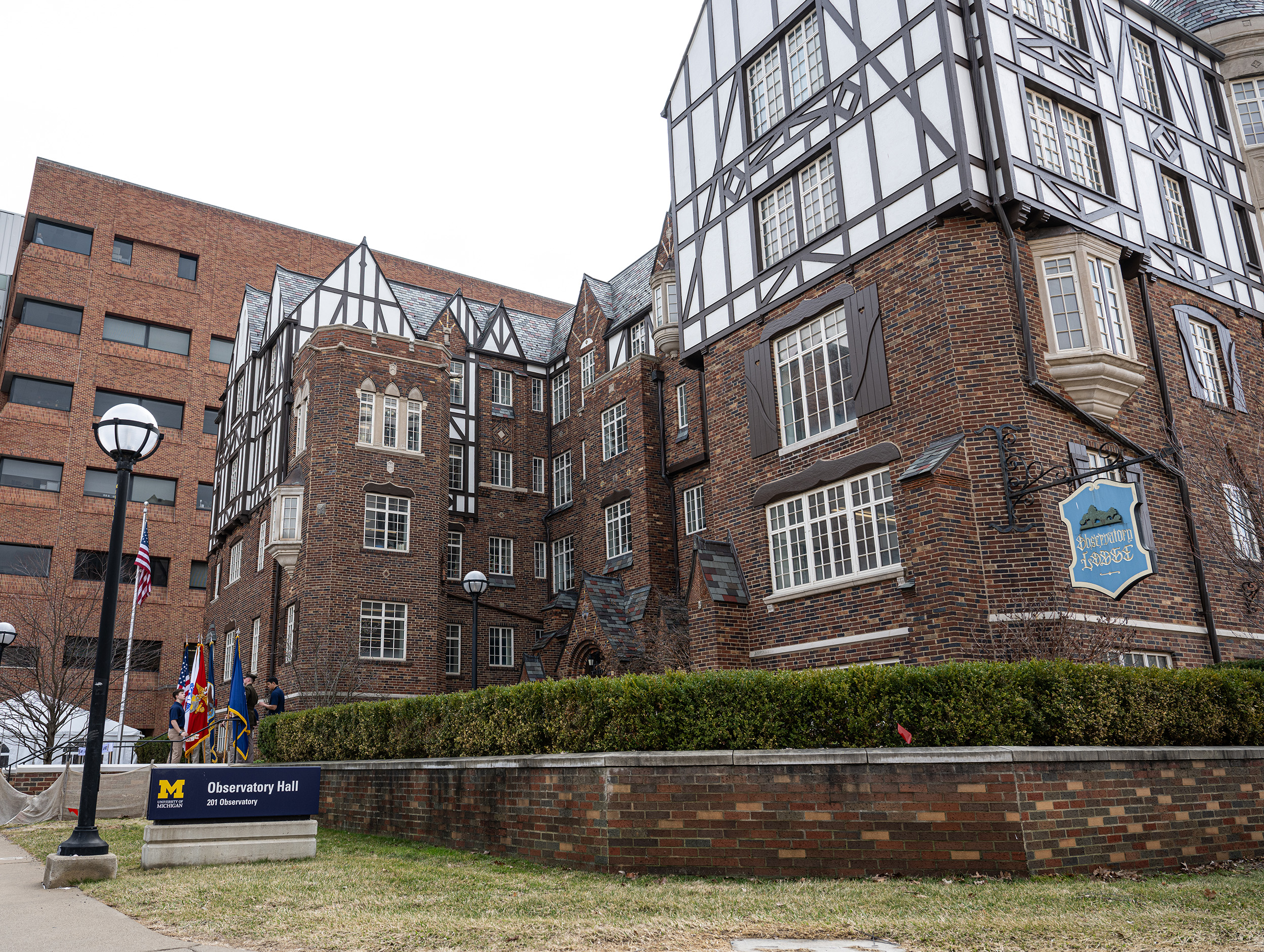
In her remarks, Provost Laurie McCauley underscored the significance of the ROTC community’s history at U-M.
Military-connected students, faculty and staff have been part of U-M for more than a century, she said, and ROTC reflects a longstanding belief that the best officers are broadly educated — shaped not only by military training, but by studying engineering, public health, political science, literature and more alongside peers from across campus.
“The officers who come through Michigan bring something with them that a purely military education cannot provide,” McCauley said. “The perspective that comes from studying at a great public research university.”
She also praised ROTC students as an inspiring presence on campus. “I see these future leaders exercising in the early mornings,” she said. “I see the way they conduct themselves with uncommon rigor and professionalism.”
Captain Michele Day, commanding officer of U-M’s Navy ROTC, emphasized that the value of Observatory Hall lies in what it will help create among cadets and midshipmen.
“Observatory Hall is now more than just a building,” she said. “It’s a symbol of cross-service collaboration where Army, Air Force and Navy ROTC will break down silos, build relationships that reflect the joint ethos of today’s military.”
Day also pointed to the university’s long partnership with officer education. Army ROTC was established in Ann Arbor during World War I, Navy ROTC arrived in 1940, and Air Force ROTC followed in 1949. For generations, Day said, the university has been “a proud partner in preparing officers to serve with excellence and integrity.”
The student speakers brought the significance of the move into a more personal focus.
Sam Roberts, a senior in Army ROTC, called the dedication “a very special moment” for both him and the broader military-connected community at U-M. Participating in ROTC at U-M, he said, was “by far the best decision I could make. Hands down.”
While the experience has taken him far beyond Ann Arbor — from the desert of New Mexico to Morocco to France — Roberts said the new building is now a welcome reminder to the ROTC program that they also have a lasting home here at U-M.
“There is nothing, no project, that represents that desire to enhance visibility and permanence of the military on campus more than the dedication of Observatory Hall,” he said.
“It’s a place that we can live and work and train and have a home. This has just been an incredible gift from the university.”
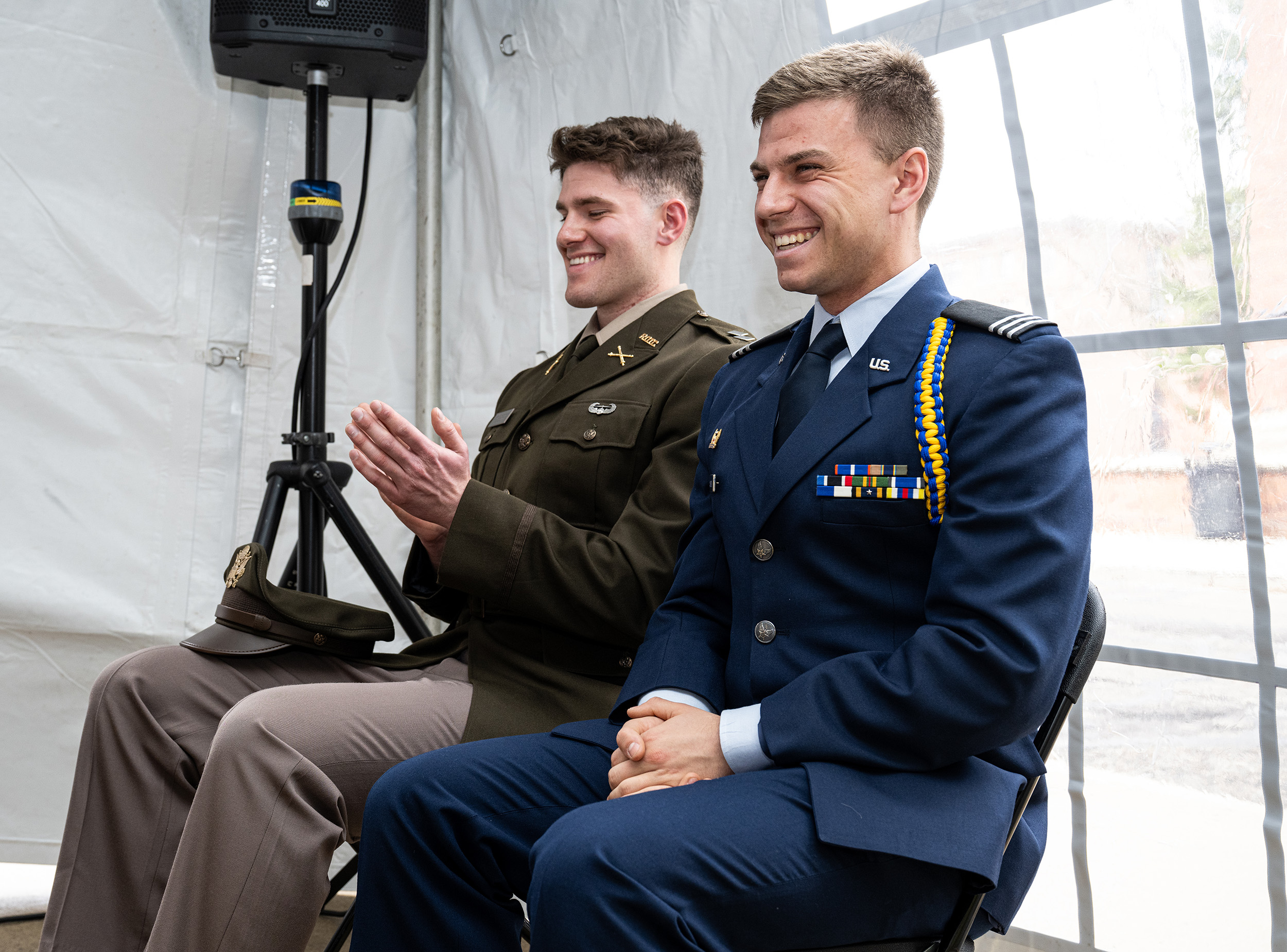
Benjamin DeGuire, a senior in Air Force ROTC, spoke about what it means to finally occupy a building where heritage can be built and preserved. On military bases, he said, heritage rooms often display the patches, photos and memorabilia of those who served before. But in the Chemistry Building, a temporary space, it was difficult to create that kind of enduring environment.
“Here we can put up that type of heritage memorial, that type of reminder of what our daily mission is,” DeGuire said, “to train and become the next generation of leaders in the United States Air Force, the United States Army, the United States Navy, Marine Corps and Space Force.”
That sense of heritage is built into the renovated facility itself. Each of the three branches has its own floor and a gathering space shaped by each of the branches’ traditions and identity. The Navy’s common room is called the Ward Room, the Army has its Cadet Room, and the Air Force gathering space is known as the Hangar. There are also classrooms, study spaces and training areas designed for ROTC coursework and activities, along with room for branch-specific equipment and displays.
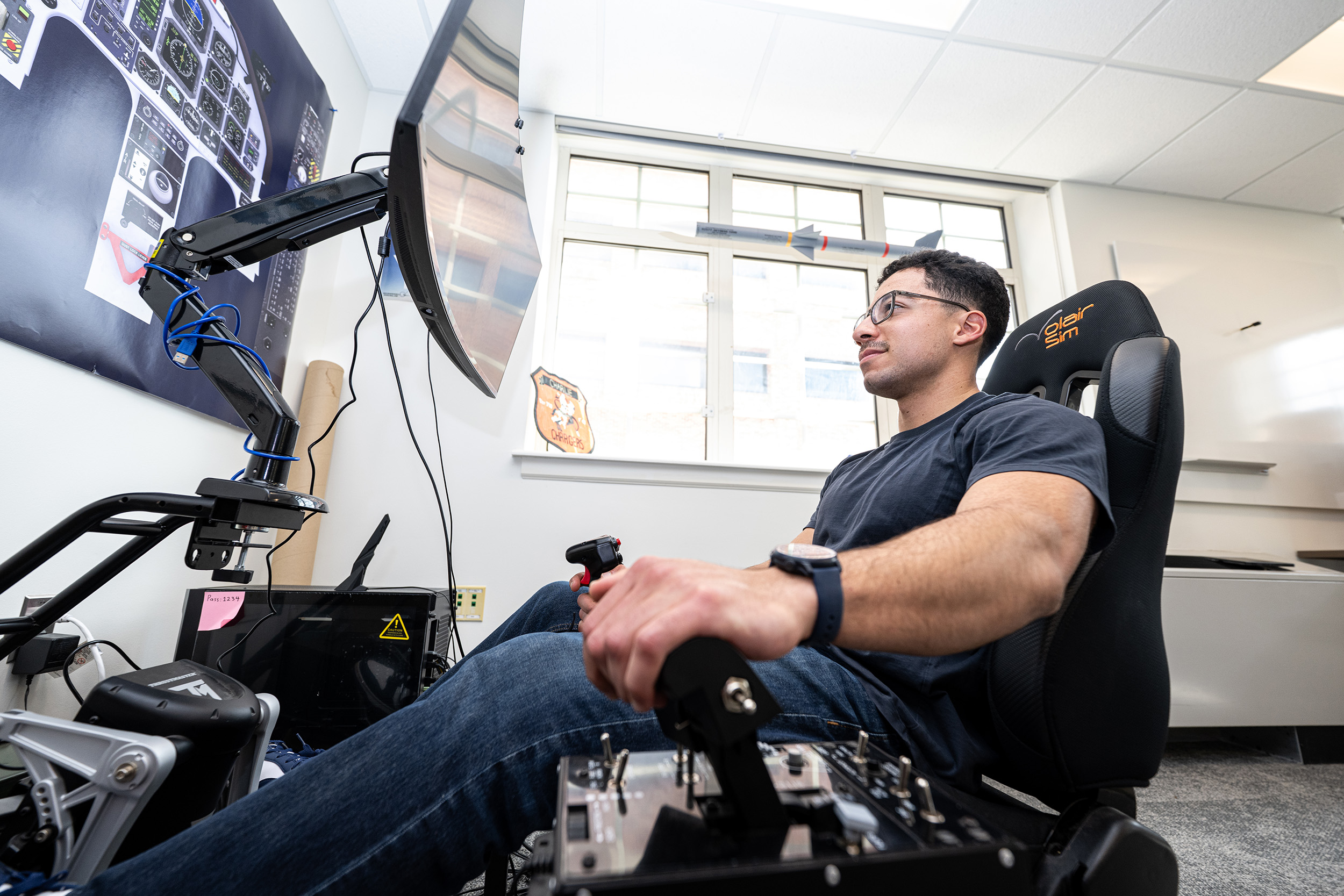
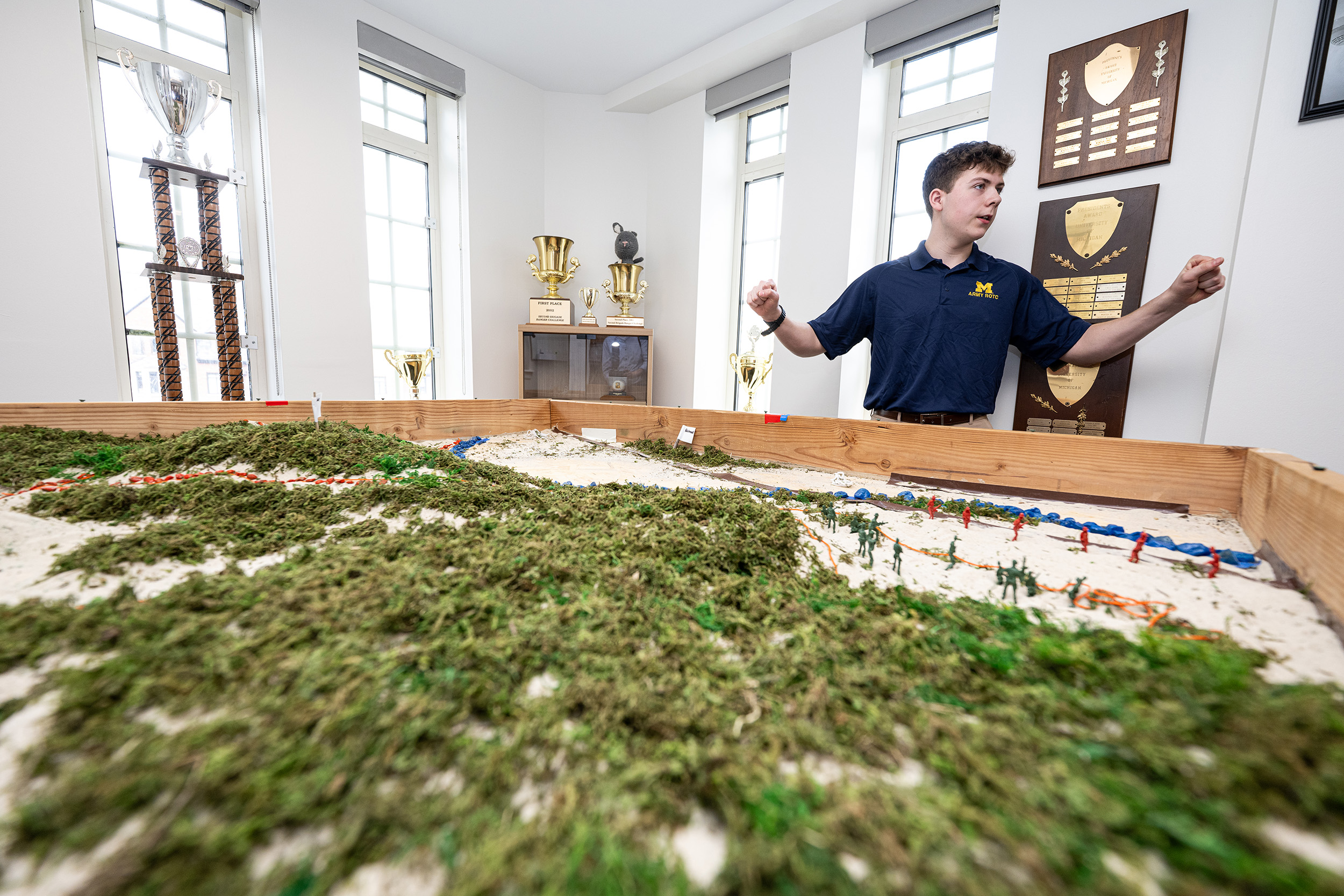
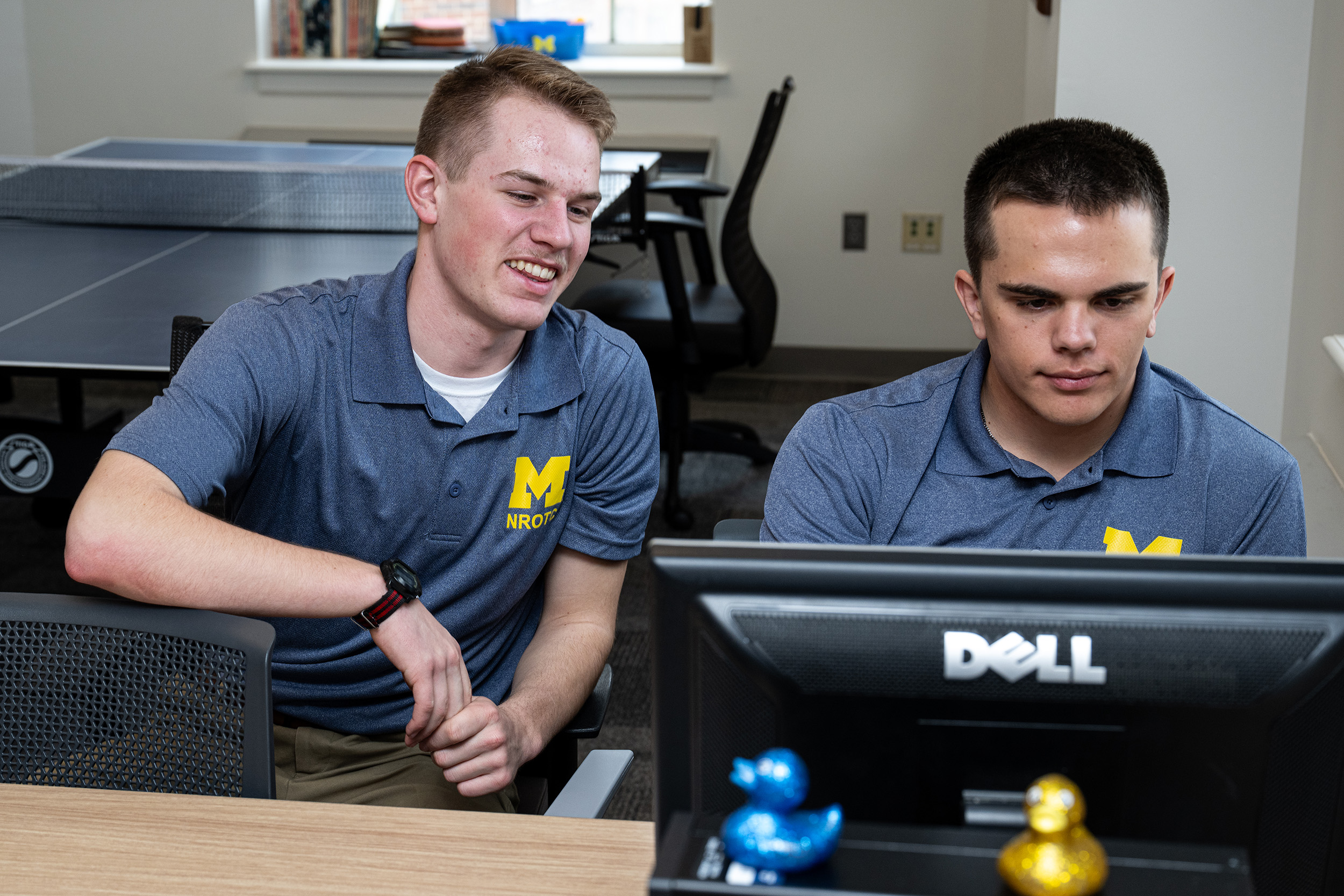
Bertacco said one of the renovation’s central goals was to support community-building. In the Chemistry Building, ROTC occupied space that “screamed temporary,” she said. But Observatory Hall finally gives cadets and midshipmen the chance to strengthen their own identity on a campus of more than 50,000 students.
As for the students who train at U-M in the years ahead, DeGuire suggested, the new home is also a place where they can begin leaving something behind for those who follow.
“With this new home at Observatory Hall, we have that opportunity,” he said. “We are building that heritage. We are leaving our mark.”