U-M researchers, global partners seek solutions
U-M researchers and their global partners are building international learning communities while wrestling with a transformative possibility: that the communities they work with might already have solutions to problems Michigan hasn’t solved.
IF YOU GO
- What: 2026 Institutional Global Health Summit
- When: 1 p.m. March 23
- Where: Rackham Graduate School Amphitheatre
- Register
- More event information
- What if diagnostic approaches designed for clinics without reliable electricity could work better in Michigan’s under-resourced hospitals than the high-tech tools we assume are superior?
- What if community health worker models proven in refugee settlements hold keys to reaching populations American health systems consistently fail?
- What if climate adaptation strategies developed in informal settlements could teach us how to protect our own heat-vulnerable neighborhoods — if we were willing to learn?
Their work doesn’t offer neat success stories about knowledge transfer. These aren’t solo investigators parachuting into communities — they’re embedded collaborators, often outnumbered by and accountable to the local partners who shape every question they ask.
The next generation of health equity research may begin not with solutions to export, but with the humility to ask: What if our global partners are already several steps ahead?
Cheryl Moyer
Professor of learning health sciences, and of obstetrics and gynecology, Medical School; professor of health management and policy, School of Public Health; and associate director, Center for Global Health Equity
Moyer and her colleagues in Ghana approach diagnostic challenges as opportunities to disrupt the status quo. Standard jaundice screening requires equipment and training unavailable in many rural clinics, leaving newborns at risk of preventable brain damage and death.
Her team is piloting validation of screening methods that work in northern Ghana’s reality: inconsistent electricity, limited lab capacity, and minimal specialized training. The work doesn’t just test a device — it co-designs diagnostic pathways with the nurses and midwives who will use them daily. Success is measured not in sensitivity and specificity alone, but in whether the tool actually changes outcomes for babies who would have been missed.
HaEun Lee
Assistant professor of nursing, School of Nursing
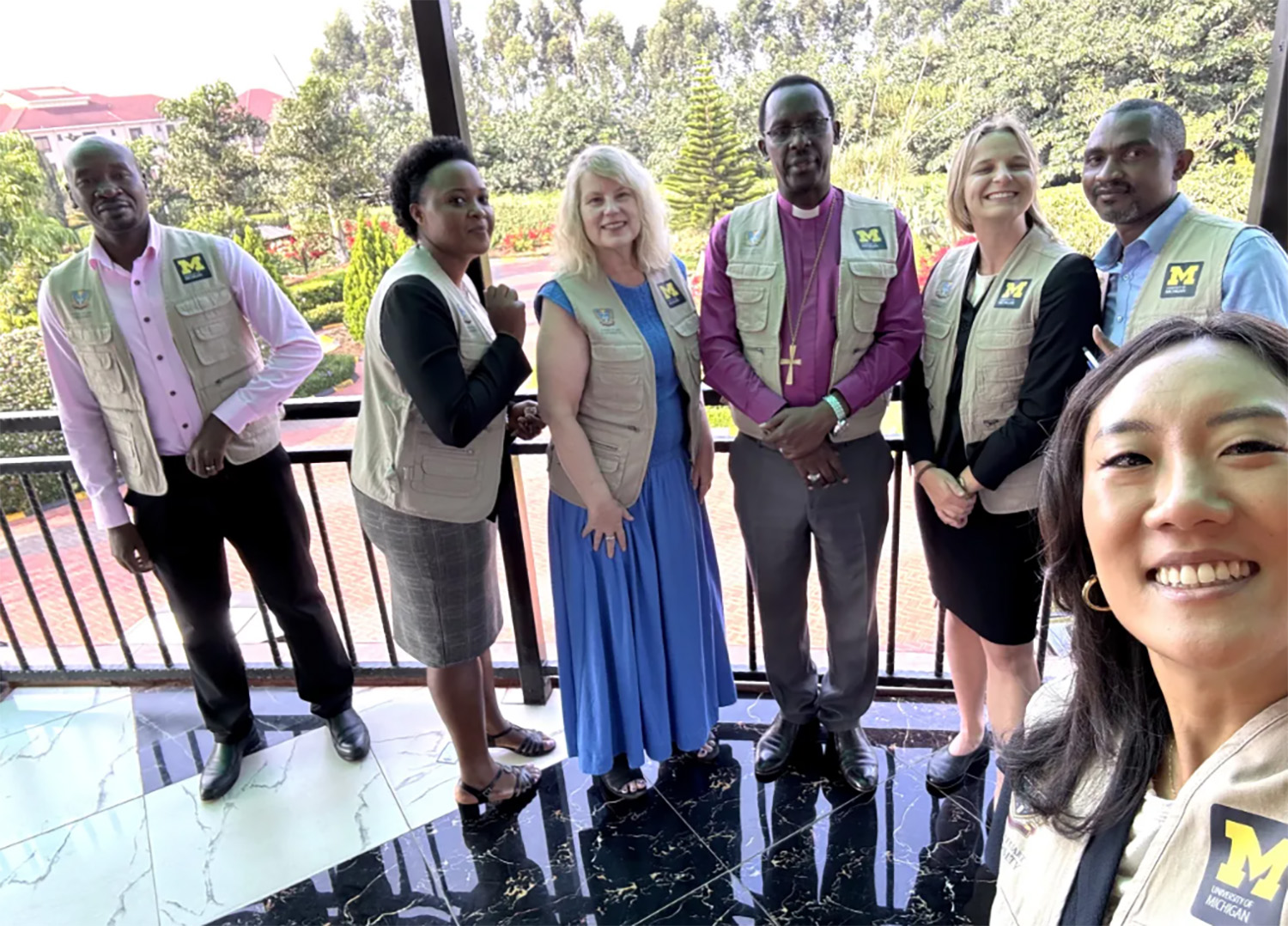
Lee is piloting a male-engaged family planning intervention in Nakivale Refugee Settlement, Uganda — adapting evidence-based approaches to a context where displacement, trauma, and uncertain futures shape reproductive decisions. Her work recognizes that family planning in crisis settings requires different conversations than in stable communities.
The intervention brings couples together to strengthen communication, deepen mutual understanding, and reframe family planning as a shared decision — not a burden women carry alone. By engaging men in group settings, it reshapes norms around gender, power and reproduction — without dismissing the cultural values families hold.
Eliza Steinberg
Ph.D. student, College of Engineering
Steinberg is co-developing a device to quantify uterine blood loss in low- and middle-income countries, where postpartum hemorrhage remains a leading cause of preventable maternal death. But the innovation isn’t just technical — it’s in how the device is designed.
Her team isn’t just testing a new device — they are building it with the people who will use it. Working alongside midwives, nurses, and patients, they started by listening. Semi-structured interviews become design dialogues, with the prototype on the table as a catalyst for honest conversation about what actually works.
Sylvia Takyi
Research fellow, Center for Global Health Equity
Takyi’s work addresses metabolic health effects of informal e-waste recycling in Ghana — where workers (often women and children) dismantle electronics without protection, exposing themselves to heavy metals and toxins. While advocating for regulation and safer conditions, her research implements cost-effective nutrition strategies that help mitigate exposure impacts now.
It’s pragmatic equity work: acknowledging that environmental justice takes time while protecting people who can’t wait. The nutrition interventions reduce metabolic harm from toxic exposure, improving health outcomes for workers bearing the burden of global consumption patterns.
Abu Hasan Sajili
Ph.D. student, Gerald R. Ford School of Public Policy
Sajili’s research evaluates community health worker interventions to improve vaccine uptake — not inventing new approaches, but documenting the effectiveness of trusted community members doing essential work. His research builds the evidence base that community health workers need to secure sustainable funding and recognition.
The work captures both outcomes (vaccination rates) and mechanisms (how trust, language, cultural understanding, and relationship enable uptake). It’s research that validates community health workers as skilled professionals, not volunteers, and makes the case for investing in their training and compensation.
Érinn C. Cameron
Research fellow, Center for Global Health and Equity
Cameron and her partners in Brazil and Colombia are tackling one of the defining health threats of our time: what happens inside the walls of informal housing when temperatures rise. Standard heat research relies on outdoor air measurements and hospital records — missing the reality of how heat is actually experienced in self-built homes with heat-absorbing roofs, poor ventilation, and no reliable electricity.
For pregnant women in these communities, that gap can mean preterm birth, hypertensive complications, and deteriorating mental health.
Gary W. Harper
Arthur F. Thurnau Professor; professor of health behavior and health equity, and of global public health, School of Public Health
Harper believes that sustainable health equity requires shifting who leads research, not just where it happens. He co-founded the Imarisha Institute to strengthen community research capacity in Kenya, training local leaders of LGBTQ community-based organizations to design studies, secure funding, and drive their own evidence agendas.
The idea for this project came from community leaders who shared in conversation with Harper: “We are tired of others telling our story…we want to tell our own story.”
Maria Muzik
Professor of psychiatry, and of Obstetrics and Gynecology, Medical School
Muzik approaches stress reduction as fundamentally relational work. Her Ecorazón project brings women together in Esmeraldas, Ecuador — a region facing economic instability, violence, and climate impacts — to build collective resilience through peer support, traditional practices, connection to place, and love for their children.
The intervention doesn’t pathologize stress or medicalize responses. Instead, it creates space for women to name shared experiences, draw on cultural strengths, and support each other through challenges that can’t be solved individually.
Mental health becomes something communities cultivate together, not something experts deliver.