Campus briefs

30th annual exhibition helps incarcerated artists build connections
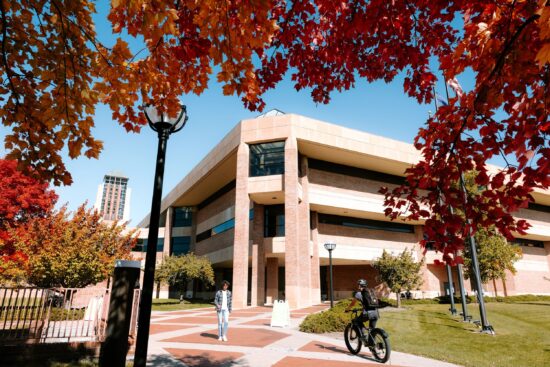
The annual Exhibition of Artists in Michigan Prisons, one of the largest and longest-running exhibitions of its kind in the world, returns for the 30th year with the help of a new curatorial resident working to shed light on experiences of incarceration in Michigan. The show — which runs at the Duderstadt Center through March 31 — will feature 872 artworks by 613 artists incarcerated in 26 Michigan prisons. A variety of styles and media are featured in the exhibition, including paintings, portraits, tattoo imagery, landscapes, sculpture, fiber arts and found materials. The pieces are selected each fall by a team of volunteers, including students, who visit every prison in the state and bear witness to the unique challenges incarcerated artists face in practicing their craft. To commemorate its 30th anniversary, PCAP has welcomed its first curatorial resident, Omari Booker, a former incarcerated artist. A visual artist and social justice advocate, Booker collaborated with incarcerated artists throughout Michigan during the curation process. Attendees can also see a digital version of the exhibition on PCAP’S website.
Pharmacy Class of 2025 achieves perfect 100% NAPLEX pass rate
The College of Pharmacy is celebrating an extraordinary milestone: The Class of 2025 has achieved a 100% pass rate on the North American Pharmacist Licensure Examination (NAPLEX) — a feat accomplished by four pharmacy schools. “I’m absolutely thrilled,” said Gundy Sweet, assistant dean for curriculum assessment. “Our students have always performed strongly, but this moment is truly special. It’s a reflection of the rigor of our curriculum, and the dedication and talent of our students, faculty and staff.” Of the 75 students who graduated in 2025, 68 graduates (91%) sat for the exam, and every one passed. This achievement is especially notable against a national backdrop that continues to challenge pharmacy graduates. While the national NAPLEX pass rate rose to 86.8% this year, up from 76% over the previous two years, a 100% pass rate remains exceptionally rare, especially for classes of this size. The NAPLEX assesses general practice knowledge and is a key requirement for pharmacist licensure in the United States.
Event promotes safe disposal of sharps, medication
In partnership with Environment, Health & Safety and the Division of Public Safety and Security, the College of Pharmacy APhA-ASP and Phi Delta Chi student organizations are co-hosting the college’s annual Safe Medication and Sharps Disposal event from 8 a.m.-2 p.m. April 7 at Ingalls Mall. Community members are encouraged to bring unused or expired medications and used sharps (needles, syringes, and lancets) for safe, responsible disposal. Participants may either drive up or walk up to the drop-off location. This event is free and open to the public, and there is no limit to the amount of medications or sharps that community members may bring for disposal. Medications do not need to be in their original bottles to be accepted. Pill bottles may be brought with medications inside, and student volunteers will remove personal information and recycle bottles whenever possible. Detailed information about accepted items and sharps preparation guidelines is available online.
Nanoscale hotspots in OLEDs may shorten their lifespans in phones, TVs
The pixels in phone screens and other OLED displays appear to provide a uniform glow, but a team of College of Engineering researchers has discovered the light actually originates from nanoscale hotspots, some of which flicker. This might be hurting device lifespans. “If some areas are carrying more current than others, they’re likely to burn out faster,” said Steve Forrest, the Peter A. Franken Distinguished University Professor of Engineering and one of the senior authors of the study in Nature Photonics. “This phenomenon could affect the reliability and performance of devices, such as the efficiency of solar cells or the charge mobility in transistors. It permeates everything that’s organic, so it’s very fundamental but also very practical.” The team also suggests a fix for organic, or carbon-based, electronics: crystalline structures, rather than the typical amorphous structure, may last longer. The research was supported by the U.S. Department of Energy and Universal Display Corp.