Student turns compostable forks into sustainable 3D-printing material
An everyday lunch sparked a campus transformation for Peter Fabe, a Ph.D. student in the College of Engineering. As he sat with his meal at Pierpont Commons on North Campus, Fabe considered a big question: Could a compostable fork become the foundation for a new era of sustainable 3D printing at U-M?
Fabe is one of hundreds of U-M students who Michigan Dining has helped to test their sustainability ideas since 2014, turning campus into a living-learning lab where future leaders first start building a more sustainable world.
An idea struck Fabe as he stuck his compostable fork into a plate of food: These utensils, with some prodding, could provide U-M students with a sustainable supply of 3D printing material.
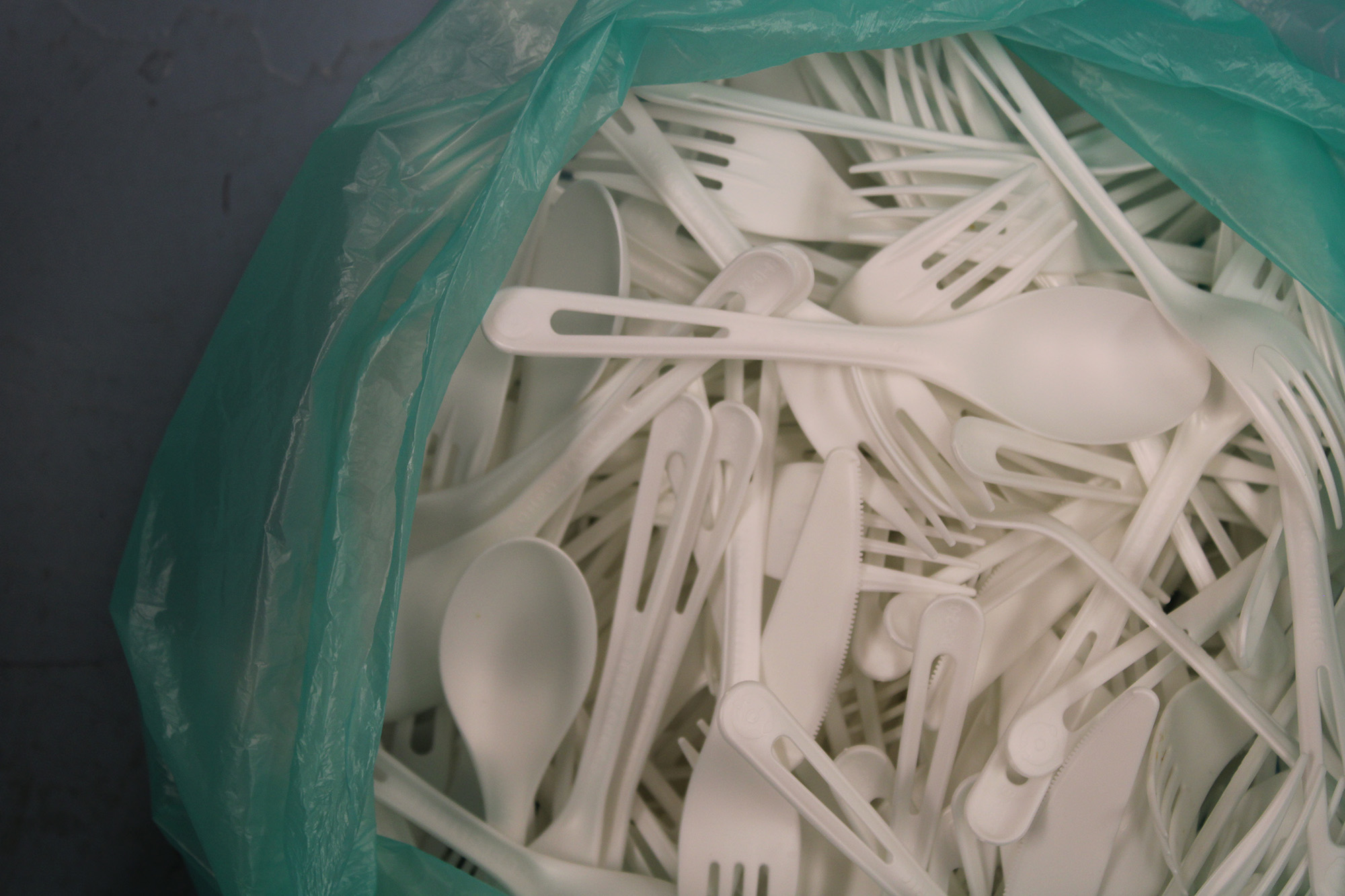
Years earlier, Fabe discovered that many compostable utensils are made from materials such as polylactic acid, bamboo, and Forest Stewardship Council certified paper.
Some also incorporate sugarcane bagasse — the fibrous byproduct left after extracting juice from sugarcane — which is often repurposed into compostable packaging and tableware. One of these plant-based utensils made from PLA surprisingly shares material usage in 3D printing.
“Colors, dyes and plasticizers in 3D printing PLA plastics can make composting difficult, even impossible, as industrial composting facilities will not accept them without compostability certification. However, PLA utensils from a certified compostable source are readily accepted by composting facilities and may just be able to be recycled into 3D printing material,” said Fabe, a third-year Ph.D. student in CoE.
The missing ingredient? Connections that would let Fabe give campus waste new forms and diversion from landfills.
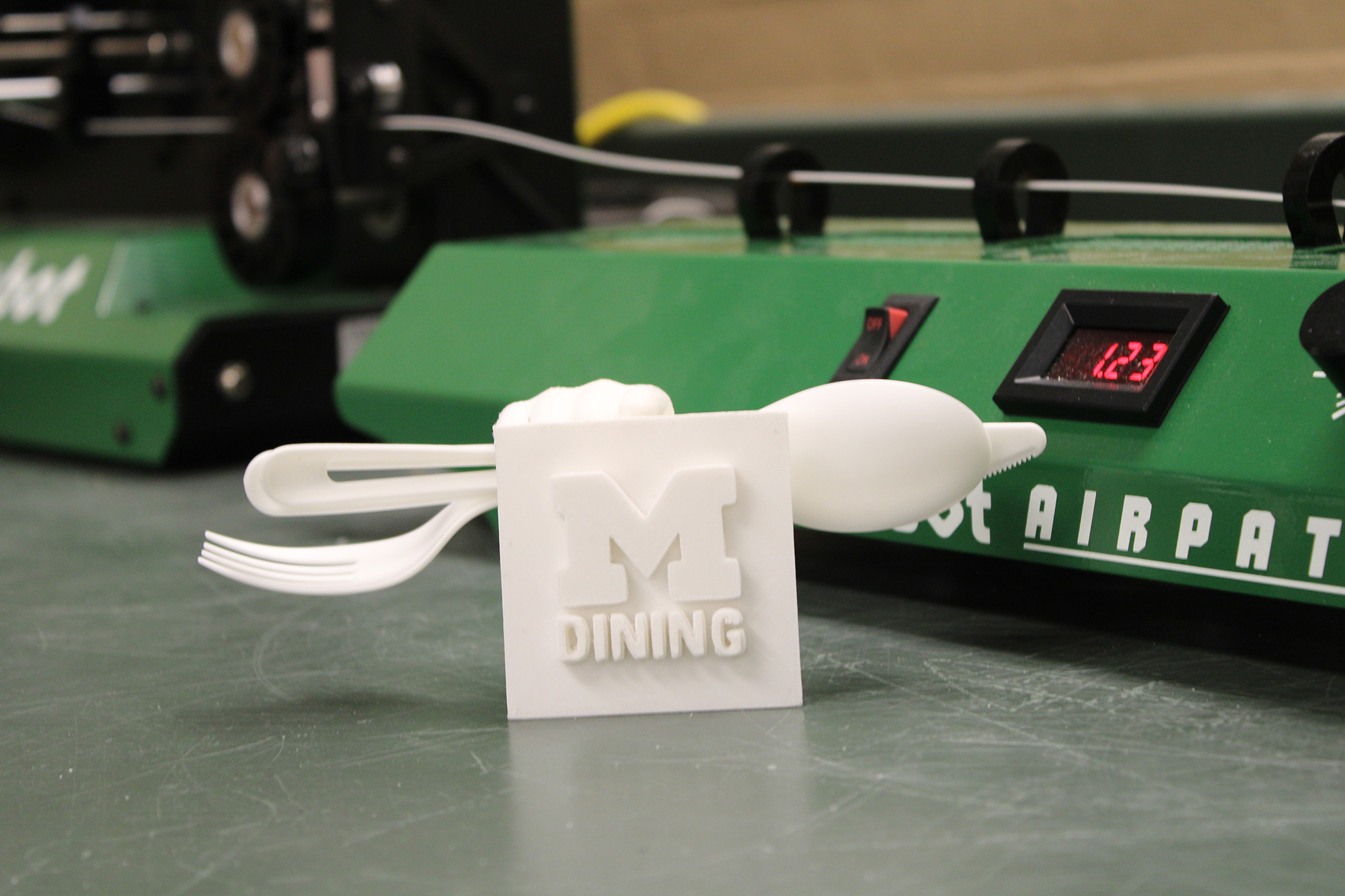
Working with Michigan Dining, Fabe piloted a program in fall 2024 that gathered compostable utensils from across campus and recycled it into filament, the strands of material that 3D printers melt to then build custom designs, layer by layer.
From idea to action
For Fabe, sitting in North Campus’s Pierpont Commons and staring at his compostable utensils, the thought of giving his cutlery a second life was just the seed of an idea. His fascination with innovation stretched back nearly a decade, to when a childhood friend first unwrapped a 3D printer for his birthday.
Together, the duo taught themselves how to work it, building more and more complex designs as their ability improved. But for every new, prized creation, ribbons of plastic scraps and failed prints followed — all destined for a trash can, and, later, a landfill.
The mess gave Fabe pause. Could he find a way to offset his experimentation’s environmental waste? This question helped shape his academic studies. Fabe’s fascination with 3D printing followed him to the University of Dayton, where, as an undergraduate student, he started an organization dedicated to 3D printing. And another trail of trash. But instead of seeing this as a failure, Fabe saw it as an opportunity.
After discovering the popularity of using polylactic acid plastics to 3D print, he launched a program to lengthen PLA’s life cycle, collecting and recycling scraps from across campus for use in new projects.
Later, as a University of Dayton graduate student, Fabe made a discovery that would provide the foundation of his future Michigan Dining partnership: Compostable utensils used across campus offered a low-cost method for sourcing PLA.
PLA utensils are compostable in commercial facilities, but reusing them for 3D-printing material elongates their useful life even further.
Campus connections
In 2024, Fabe came to U-M to start his doctoral program, focusing on design, education and sustainable additive manufacturing. Or, in non-technical speak, to pursue a career teaching others about sustainable 3D-printing methods through CoE.
Soon after Fabe sat in Pierpont Commons, realizing he could use his doctoral research to develop a compostable utensil recycling process, he made a second connection.
Alex Bryan, Student Life Sustainability’s director, noticed Fabe’s funding request to the Student Sustainability Coalition, an organization that supports campus improvements through grants like the Planet Blue Student Innovation Fund.
Seeing potential in Fabe’s project, Bryan introduced Fabe to Keith Soster, Michigan Dining’s sustainability director. And that’s when the project really began to take root.
Michigan Dining’s long history of sustainability-focused campus collaborations had never included recycling utensils into new materials — until Fabe.
Working closely with Fabe to refine the proposal, Soster leveraged his knowledge of the university’s campus to connect Fabe to additional resources, like funding opportunities and potential utensil collection sites.
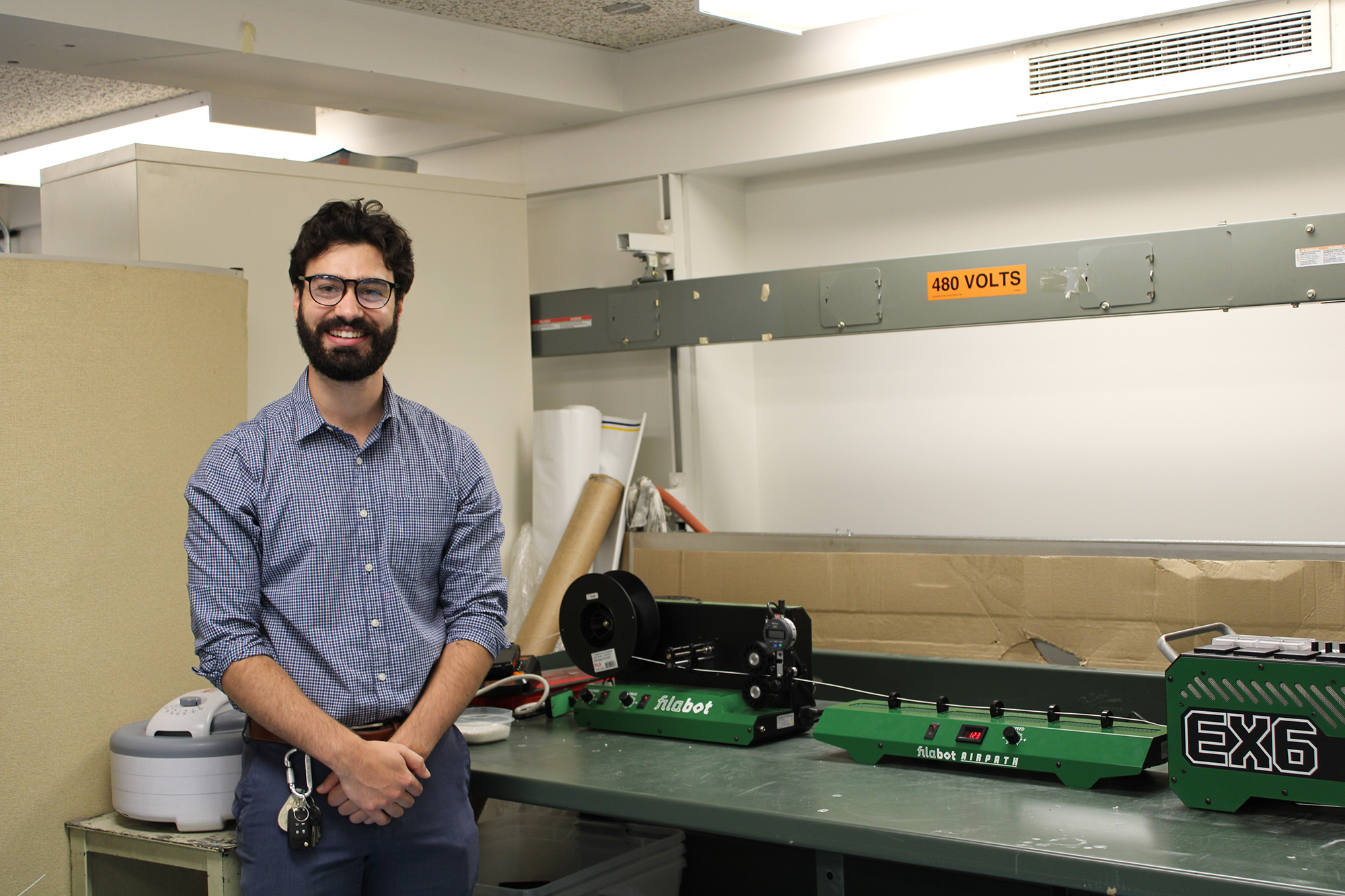
With Soster’s support, Fabe secured funding from the Planet Blue Sustainable Initiative Fund, which finances student-led sustainability projects. This funding enabled the purchase of specialized equipment, including a grinder, extrusion system and direct extrusion 3D printer, while also covering tooling and research costs essential to the project’s success.
The funding is expected to support the installation of a plastic-usage-themed public art display outside Pierpont Commons, created by Fabe using the materials collected, which will challenge students to consider alternative ways to impact sustainability and reuse items for multiple purposes.
Soster prioritized regular connections to provide mentorship and ensure the project’s momentum. He also guides the dining staff with information so that each staff member can support Fabe individually, whether that be through active engagement with the project or encouragement from the sidelines. This type of collaboration helps build community as well as ownership into the sustainability work and goals of the campus.
Soster is enthusiastic about the project’s potential to make a measurable impact.
“While this project is still considered a pilot, discussions happen along the way to understand how this work might advance sustainability not only on our campus, but also beyond the campus community,” Soster said.
A sustained effort
Without Michigan Dining’s support, Fabe said his project would still be only an idea.
Michigan Dining staff took a hands-on approach, from connecting Fabe to funding opportunities to preparing the utensils for recycling.
“They were excited about the project and wanted to help in any way they could,” Fabe said.
What began as Fabe’s idea soon grew into a group project. Michigan Dining staff collected used compostable utensils from Fireside Cafe in Pierpont Commons since its sit-down format makes collecting the used silverware quick and easy. Fireside staff manually sort the utensils to ensure no other materials are mixed in and wash them in preparation for research and recycling.
This is a big undertaking, but it makes Fabe’s research process much less complicated. Michigan Dining provides the utensils, leaving Fabe more time to clean, grind and re-extrude this material into usable 3D-printing stock.
Making an impact
Michigan Dining’s initiatives throughout the last decade — such as Tapas (small plates) style dining and trayless dining, which encourage students to take what they can carry and come back for more if desired — helped MDining reach and exceed the campus goal of 40% diversion by 2025. MDining is currently at a 58% diversion rate.
Fabe’s contribution to sustainability is driving that number in a positive direction and encouraging others to think innovatively as well. Fabe’s dream: that utensils from all corners of campus will find a second life, reduce single-use items, and continue to support the overall goal to reduce waste.
More material means bigger and better 3D printing projects. For instance, he would love to create an art installation, 3D printed with PLA plastic, modeling how much waste the average person produces in one year. Recycled material could potentially be used to create preforms (or molds) for concrete, which could then be composted, significantly reducing construction waste.
Fabe hopes that by next winter, every student enrolled in Mechanical Engineering 250 will be able to get experience with 3D printing — they will be able to learn using the same material that they eat off of in the dining hall.
“I hope my project inspires other students to think about how they can come up with sustainability solutions themselves,” Fabe said.
— Student Life Communications, Marketing & Design contributed to this report